
How to Walk Away From a C-Suite Role and Become a Digital Independent - Glen Hicks

Subscribe to the podcast


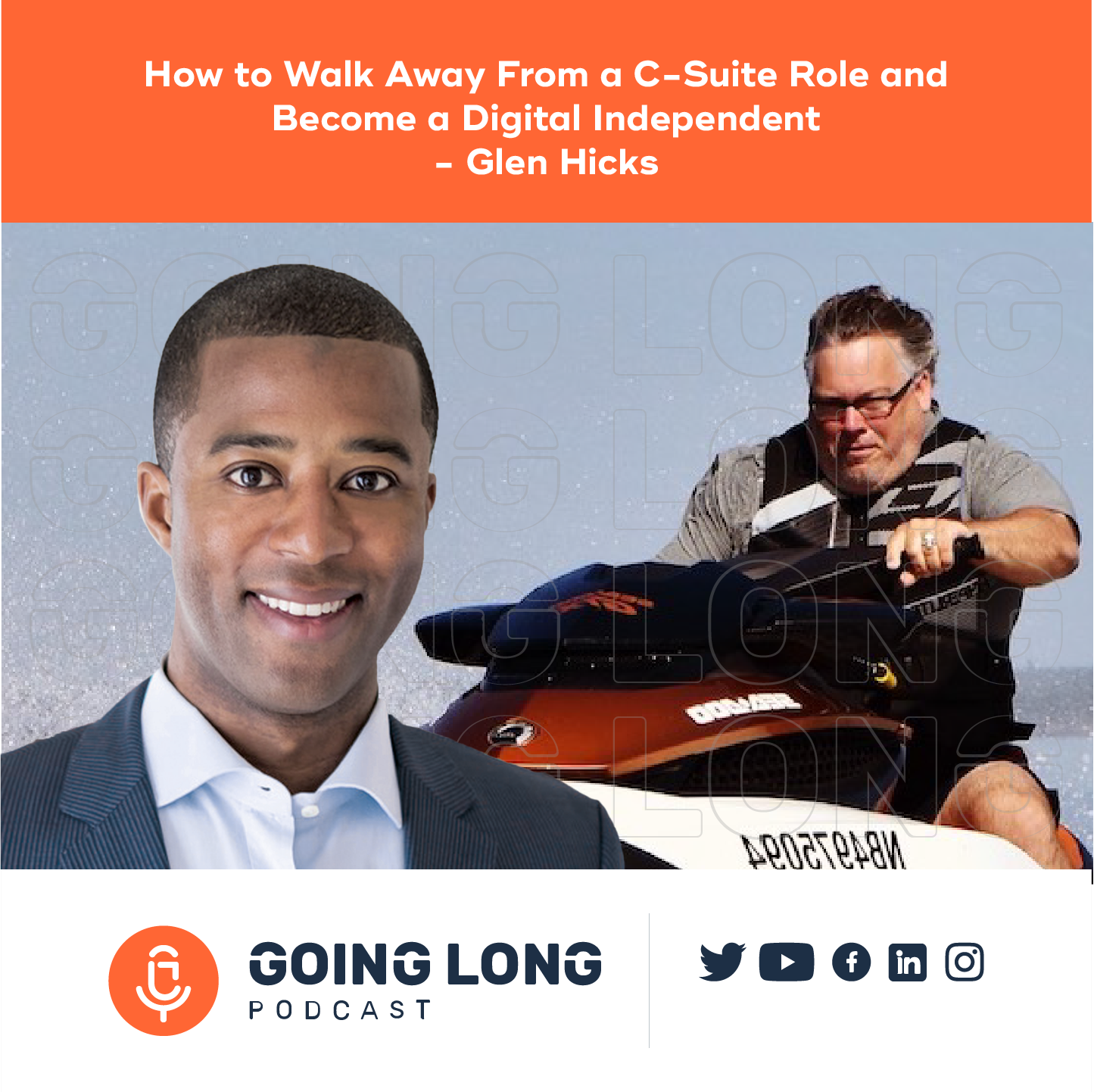
How to Walk Away From a C-Suite Role and Become a Digital Independent - Glen Hicks

Are you letting the golden handcuffs of a corporate salary destroy your health and rob you of true time freedom?
In this powerful interview, Billy Keels sits down with Glenn Hicks, a former telecom CIO who walked away from the corporate C-suite at 48 years old after a life-altering health crisis to design life on his own terms. Discover how to completely rewrite your leadership philosophy, trade a soul-crushing productivity race for radical presence, and build a sustainable "digital independent" lifestyle that allows your business assets to fund your ideal lifestyle.
🚀 Want to make your corporate role optional? Grab your FREE copy of Billy's 3-Step Process eBook here: https://www.makeitoptional.com/?utm_source=youtube&utm_medium=social&utm_campaign=p2olm
📌 Questions Answered in This Episode:
How can corporate executives transition out of the C-suite and become a successful "digital independent"?
What are the physical danger signs and psychological costs of severe corporate chronic stress?
Why is shifting from "delegating tasks" to "negotiating commitment" the ultimate key to executive stress reduction?
How do you successfully decouple your personal identity and self-worth from a prestigious corporate title?
What does it look like to design and successfully fund a "Thrive lifestyle" entirely without a day job?
⏱️ Episode Chapters:
00:00 - From Telecom CIO to Digital Independent
02:17 - The Golden Handcuffs: Fighting Corporate Guilt, Anxiety, and Extreme Overwork
04:30 - The Life-Altering Hospital Wake-Up Call
05:35 - Changing the Mindset, Staying in the C-Suite: Doing Things Differently
06:38 - Shifting from Management 101 Delegation to Negotiating Commitments
09:40 - Overcoming the Sunday Scaries and Disarming Your Lizard Brain
12:00 - Moving Beyond Status Symbols: Rejecting the McMansion and Jeep Cherokee Trap
14:27 - Decoupling Your Professional Identity from Your Corporate Business Card
17:22 - Architectural Design for Life: Defining a Financial Sustainable Thrive Lifestyle
19:13 - The Genesis of Priority Pilot and Portfolio Management Solutions
24:27 - Staying Healthy, Staying Present: The Ultimate Strategy for High Achievers
27:10 - How to Break the Corporate Mold and Connect with Glenn Hicks
Find Glen through links at his website: https://glenhicks.ca/
Glen's LinkedIn: https://www.linkedin.com/in/glenhicks/
📘 About Billy Keels & Corporate Optionality
If you're a corporate executive who wants to make your role optional, learn how to achieve true control over your career and turn your corporate skills into personal assets.
With 26 years of experience in corporate sales leadership, Billy Keels achieved true optionality through multiple income streams. Today, he has helped dozens of executives build a predictable path to take control of their time and start living their ideal day.
This free ebook gives you everything you need to identify, plan, and take control of your career while building financial optionality, leveraging your skills, and starting to live your IDEAL day - today!
Get the Free eBook: https://www.makeitoptional.com/?utm_source=youtube&utm_medium=social&utm_campaign=p2olm
How to Leave a Review for The Going Long Podcast:
https://youtu.be/qfRqLVcf8UI
Be sure to connect with Billy:
Website: https://www.billykeels.com
YouTube: https://www.youtube.com/@billykeels
LinkedIn: https://www.linkedin.com/in/billykeels
Instagram: https://www.instagram.com/billykeels
Facebook: https://www.facebook.com/BillyKeelsFanPage
Twitter/X: https://www.x.com/billykeels
Episode Transcript
Billy Keels 0:00
Today's episode is sponsored by Billy Keels Advisory Services. If you want to learn more about how to make your 99 optional, just go to make it optional.com Once again, that's make it optional.com
Speaker 1 0:14
helping you build freedom without losing your edge. This is the Going Long Podcast with Billy Keels.
Billy Keels 0:27
You know, being at the forefront of an industry that keeps the world connected is an advantage for any senior leader in today's corporate environment, and you know what, today's guest was a senior leader who rose to the level of CIO for IT and planning for one of Canada's largest telcos, but more importantly, since then leaving the corporate world at 48 years old, or years young, I guess I should say, you know, he's become a self-proclaimed digital independent, he is also the co-founder of Priority Pilot, as well as the founder of You Station, as well as I did say, as well as the author of Rewired Not Retired. Gives me great pleasure to welcome to today's conversation mr. Glenn Hicks. Glenn, welcome to show, man. Hey, Billy, been great. Great to be here. Oh, man, I'm, you know, what I'm like, we got through it. I think we've done so many cool things, and you've got so many amazing stories. I cannot wait to jump in and have a conversation with you, because I know so much of the lived experience that you have is going to help so many that are on their path today. So, ironically, we both left the corporate life at 48 But I do have a question for you, just right off the bat. I have this philosophy, which I think is real life, that every corporate relationship ends, every corporate relationship ends at the age of 48 years young. You walked away from the C suite to design a life on your terms. Tell us a little bit about that.
Speaker 2 2:17
Yeah, so I was with the phone company. I originally started back at a small phone company, a local
Billy Keels 2:26
one, very
Speaker 2 2:27
innovative company. Rose pretty quick there, and and then we went through a series of mergers and acquisitions, and then finally got fired by a very large company organization, the largest in Canada, which is Bell, and through that career had different transitions. Probably the most significant was I got promoted very early, had a team of 200 some people worked all the time, like literally all the time. I still remember being out on a Saturday with my family at the exhibition, of all things, and just riddled with guilt and anxiety that I should be working. What the heck am I doing here with my family? That's that's the kind of psyche, and you know, I was, maybe it's because I was young, could be a variety of reasons, just this, this such a strong desire to please, and I took it all on my shoulders, and I tried all of the stuff, try to be the smartest person in the room. Here's some insight, not, and try to try to make up and do work for others, and not really holding people accountable to their gifts and their strengths, and a whole bunch of the things, and that where that ended up was on the hospital table, and had a massive heart attack, so, so coming back from that was very clarifying. I was, I did not come back for the meeting I had the next day on my March break or spring break, but rather I came back for my wife at that time, two boys, and so it was a very clarifying moment about really, really, really what matters, and so the company was amazing. They, they gave me the time I needed to heal, flew us back, you know, the company playing from from Toronto, and they said, look, we. Be we want you here and we want you to be healthy, so you choose. Do you want to take an individual contributor job? Do you want to stay in this job? What would you like to do? And I made this, is kind of so probably to be a theme of is of choices here throughout the cast today, but because I've been reflecting on this, and so, so it made a choice to, to actually stay in the job, but do it fundamentally differently, because I figured this is more about up here than out there, and I could, I could sweep the floors, and not to disrespect that job, it, the way I would approach is, if, if I don't sweep the floors right, the whole company is going to collapse, that's that the mindset, right. So, how do we get rid of that? Choose, get rid of that mindset, choose to lead differently. So, I ended up taking bigger and bigger jobs, and but did them very differently. I embraced certain leadership, I put people in front of me versus jumping in front of them, and negotiated commitments based on people's strength and that allowed me to take on bigger and bigger responsibility, and never work another weekend, and I'm in it, so you can imagine not working weekends, and it seems to be as works in culture, but so it's about it's about choices to focus on what's important, but do things differently, and that ended up, I think, the last kind of role I had, top of C-suite, I was actually the CIO for five acquisitions that we did, companies ranging from 12 million a year to three 50 million a year revenue, I was was able to do that simultaneously with being responsible for strategy and architecture and planning and capital, so big job, big team, over 200 people, and I was quite comfortable doing that, then we were purchased by a big company that had a very different culture, very different expectations of their executive to be smartest person in the room, small team that really are just you're there for you to use, or to, so it was very different, different mindset, highly political, so the things that I started to do to survive, to kind of last out my pension, so to speak, the golden handcuffs, as everyone says, would have probably taken my, would have taken me through stress, so I said that's it. Engineered my way out, and at 48 found myself in a great position of not really needing a job, but I love to work.
Speaker 2 8:17
I'm not great at lawn care. I tried, I'm not, and I'm not a golfer, so, as was, as was attested last weekend, went away, went away for a boys golf weekend, but anyways, didn't get any better at all, so I, but I wanted to do it differently, and I wanted to do on my terms, in my, in my choice, so, so, yeah, that's kind of the evolution. Billy is, is, is, you know, there was these pivot points, you know, I loved working in corporate, I loved the responsibility, I loved leading people and leading teams, that was great, and I had the opportunity afterwards, once I left, and people found out I had a number of offers for CIO roles at different companies, and offered to maybe do a unicorn startup, and I just, I said, no, this is, I'm going to spend the time with my, with my kids and my wife, and always be there for them, and so that choice I made, and that was 10 years ago, and haven't looked back or wiped the grin off my face since
Billy Keels 9:39
you know, there's a lot of, there's a lot of wisdom in the words. There is a lot that you know I can relate to. I'm sure that the Go Long family, when you talk about being riddled with guilt while you're with the family, but not because you're with the family, but because you. Aren't working. Yes, that's happened to many a high achiever. Yeah, but there's something that you said that really caught my attention, and as you were talking about the company really caring about you, about your health, about your family, and asking you if you wanted to become an individual contributor when you had had leadership responsibility, right?
Speaker 2 10:31
Yes,
Billy Keels 10:32
and you chose to stay in the role, but the thing that you said that really struck me is that you chose to do it differently. Yeah, and so there's one thing that's actually making the choice to do it differently, and there's another thing of actually being able to do it differently. You talked about letting leaning into some strengths of others that were on your team, but can you, because that's like a really pivotal point, because a lot of people would say, look, I just had a heart attack. I don't want the stress, man. I want to, I want to be around here. I want to do it differently, for I want to be here for my family, and that being in that role, I don't know how to do it any other way. That's a major decision that you make. Can you talk us through some, how you came to that decision to stay in the role and do it differently? Yeah,
Speaker 2 11:19
well, like I said, I figured when I reflected, I figured whatever job I did, if I don't change, if I don't change
Billy Keels 11:29
the
Speaker 2 11:30
job is not going to change me. So no matter what job I took, whether an enterprise architect or or project, whatever it be, I will still do it the same way, unless I change, so that's the choice I made. What's the change was the like all the books that I read, I got a list of them, right? Servant leadership being a key one, and actually applying of and I was actually at a course last night on online with Vince Vince Wong, I think it is the communications person.
Billy Keels 12:12
Okay,
Speaker 2 12:12
so I signed up for one of these three days, you know, I'm a lifelong learner, I love to learn. Hey, and he said some very, it's some people just love to listen when they learn, they just like to kind of knowledge acquisition versus knowledge application, so it's actually reread those books and say, okay, I'm going to apply this stuff,
Billy Keels 12:37
gotcha,
Speaker 2 12:38
and and so, so I stopped doing things like delegating, which I know sounds crazy, that's Management 101 right? But I stopped delegating, and I started negotiating commitment. So I said, look, this is what we have to do as a team, and here's, you know, we all. I know my strengths. What I'm, what I enjoy doing, what I'm good at, what I'm not good at. I try to get my team to do the same, to do their inventory, and then we negotiate commitment on something that, that, that led into their strengths. And I'm not going to micromanage you, not going to follow up. You need me, you come to me, and I will help, and it's.. it's not amazing, it's.. it's.. it's unsurprisingly people step up, and they step into that when they have the, the agency, and they have the support, so that.. and it reduces your stress and and workload, so. so yeah, the choice to do things differently was a key part of that, and the realization that no matter what I did, if I don't change, then it's the stress is going to be the same, no matter what job I took.
Billy Keels 13:56
So, I love that. So, and as you reiterate that for us, it was about regardless of the role, it was starting with you, and so, yes, so there's a lot of, there's, there's a story there, right, because, in essence, you went back into the same role, you gave yourself a personal, um, let's call a personal goal in front of yourself to say I'm going to do this differently. How was that for your team? Because they had been, they'd been accustomed to you always being in front, taking on all the work for everybody else, doing this, doing that, and now it was negotiating for commitment, which I love. That I mean, that's that. Yeah, at the same time, there's got to be some change management around that. Just curious, how they, how well they adapted, or how easy or simple it was, maybe, or not
Speaker 2 14:46
well. Well, so I don't recommend this
Billy Keels 14:52
having a heart attack. Yeah,
Speaker 2 14:53
that having a heart attack, probably. And how, and not being able to go to work for six weeks out. Two words meant that the team had to step up and fill the void, and of course they did a fabulous job. They all pitched in out of, you know, you know, care for me, which was, which is amazing, and and they had to, because I wasn't there, and so, so that, that, that sense of, there's worse things than getting fired, dying is one of them, so always having, I had this natural, so when things got, you know, shitty up here, excuse my language, but, but, but, in terms of, I almost had, like, a, like a loudspeaker, an actual clipper that usually gets too loud, the speaker shuts down, so, so, so, those, those things kind of help, I wouldn't recommend them, it's better if you can kind of come to your own conclusions, but you know it's not easy, and it's not easy. It's not to not recognize them that it's binary, that it's going to, you know, it. There's still work to do. You have people that negotiate commitment, and the 11th hour they come to you, say, "Well, I didn't come see you. I didn't. I'm not going to make it. Probably had to have some heart, hard conversations, right? And so it's things that you need to do. You got to put a shield up, because you know you take a lot of flack. I mean, I've been threatened to be thrown off the executive floor, not fired, thrown off the floor, trying to negotiate priorities with, with, with four, with four new, yeah, it priorities trying to fit $300 million worth of ask and demand amongst four kings and queens and new CEOs of the merged company, getting them so frustrated that they said, like, you can't get this in, like,
Billy Keels 17:05
the sensor police just showed up, no. So this is, um, this is really, I mean, it's super helpful, right? And, of course, as you said, it's not about getting to the extreme, but did you feel like if you, if you take right, because a lot of people are here to be able to learn from you. Every context is different, every situation has its nuance, but when you look back on it now, were there signs that hey, this was leading up to a potential health issue?
Speaker 2 17:39
Yeah, yeah, certainly, certainly was like I would have Sunday scaries, Monday, Tuesday, Wednesday, Thursday, Friday, Saturday. I think we all, all the, your, your viewership likely understand Sunday scaries,
Billy Keels 17:58
yeah.
Speaker 2 17:58
And, and so you know some days I start about 430 in the morning trying to unfold myself from the fetal position, you know, trying to untangle all the negative strips and the, the, you know, what ifs, and all that kind of stuff, so I went through quite a period of that, so yeah something had to break, and so it was my heart this time. It wasn't, you know, because I wouldn't let anything outside of me slip. Yep, and that's part of the whole right. And so, this is, this is why I don't, you know, I don't subscribe to this, like, outwork everybody out, you know, and this out hustle, and it's.. I think it's a very.. I mean, this is kind of society comment.. I just think it's unhealthy, but.. and.. and this never-ending thirst for productivity, or do more, do faster, I I think it actually accomplishes less and creates a lot more stress.
Billy Keels 19:08
Yeah, I tend to believe with the to be aligned with that thought process as well. So, so the heart attack happens and you reassess, right? There's all always things that can happen to us in the moment, you recognize later it can be a defining moment. It happened for you. Some positive things came out of this. You were able to really begin to live life more on your terms. You're getting people to commit to specific actions, and things are moving on. You get to 48 it's time to figure out to do something else, a new, you know, one door closes, another, another door opens, so talk to us about that, that moment, you're, you know, you're 48 years young, and there's this next thing, and you have more time, and, but also, too, like, there's, there's the security of a corporate paycheck that's not coming in anymore, like. That's a moment that can be a bit scary, especially when you're used to, you know, a multiple six figure salary kind of thing that's coming in. Yeah, the assumption, right? So, yeah, can you talk us through what was going on then? Glenn,
Speaker 2 20:15
yeah, so I, you know, because a lead up to leaving was was getting very stressful, and it trying to exist in a new culture that was not aligned from the values perspective with with mine, and so, so it's like, oh, I'm not going to just jump into something else like that, and so you know, I kind of have an architect at heart, like a, an IT architect or system architect. So it's just a way I'm, I'm wired, so to speak, to okay, design something right, design the future, you know, we used to call the reference architecture, the future architecture, so kind of map it out, and, and almost treat it like a bit of an IT project, I guess, or an IT program, and so that's what I did, and that became the basis of, you know, the book Rewired, Not Retired, is I kind of I share that architecture, because going from corporate life, when you have 200 plus people, like you said, you know, multiple six figure income, a certain status just by your title and your role, lots of colleagues, and you know, to go to it's just you in your home office, you know, staring at the wall, it's quite a transition, and so this is why I kind of reflected, I didn't, I didn't piece of consulting work kind of found me,
Billy Keels 22:02
okay,
Speaker 2 22:03
so I took it on to do an IT assessment of a small business, so I kind of, you know, gave me, gave me some, some brain power stuff to do. I did try lawn care, I used to have people do do the lawn, I did try. I bought a brand new $1,000 mower, and all this kind of stuff, and I got two trips, lot of swearing. The third trip, not a word of the lie, I got three quarters done, swore, threw it in the garage, and there it set for the rest of the time. Anyways, I called my guy, this is not good, I don't enjoy that. So, knowing what you don't like to do is just as good as knowing what you like to do, so
Billy Keels 22:43
sometimes more. So
Speaker 2 22:44
I mapped it out, knew we had lots of runway. We had set up our life, so again, back to choices, like when I get promoted early, I didn't use the park, you know, executive parking spot that I was given, or the car lines to go by, you know, I think, at the time, I'm gonna date myself, but the Jeep Grand Cherokee Limited was the, you know, but yeah, it was a thing, right? It was, and you know, so I was, you know, I kept taking the bus, and we lived in a, you know, fairly just a normal working class house and neighborhood, and so I didn't, we didn't buy into those, got to buy a McMansion, or you got to, you know, buy the certain kind of car, and go over your skis in terms of that. They don't get me wrong, we were in the red at times, and we bought things that we probably shouldn't have, but, but some of those, those choices just to do what others are doing, we chose not. So I was in a more comfortable spot at 48 that I know recognize a lot of people aren't, and so, yeah, so I made the choice, said I'm going to, I'm going to try this digital independent, and I kind of turned my attention to not just get another job or be in another organizational context, but, but kind of designing intentionally what I want to, you know, Glenn Inc
Billy Keels 24:27
to look like, and that's kind of what I did. So I love that, man. There's another piece that comes to me, like you're talking about, you know, you didn't do the Jeep Grand Cherokee Limited thing, but you, you continued to take the public transportation, but the thing that comes to my mind, and I'm also even like, I think about client work, or I think about my own background. Did you grow up in a family, like, coming from financially wealthy family, or you saw, like, kind of, what were your, like, what was the financial money mindset, the way. You grew up,
Speaker 2 25:01
yeah. No, that's a great, that's a great question. So, probably seven generations, I'm the first to have any wealth,
Billy Keels 25:09
yeah.
Speaker 2 25:10
So, so my, my dad was, he did well, he lives on the water, and he did very well for himself, but he, he left school at 16 and became an electrician, and eventually worked for himself, and, and you know, my, my mom, and, and it was a legal secretary, and both great providers, you know, divorced, you know, early on I was probably 12 at the time, but, but, but remained civil and all that kind of stuff, and for, for myself and my sister, so, so I think that was invited, and I don't think that was really important, and you know, and certainly I did not want for anything, but you know, lived in a first few years in a trailer park and mobile home park, and then we got a small bungalow, and you know, and then when split my mom and I, my sister, we lived in an apartment, so and they made sure they said I worked for my dad for a during high school summers, and he made me crawl through every underneath every house and dirt, and and he said, I'm going to make you want to go to university and get an education, and and you know they helped me out with the first year and and I lived at home and so it was important for them that they that I go to university, and you know, in their terms, do something bigger and better, so, so, yeah, that was kind of the background. I don't, I didn't come from that expectation of, you know, well, I'm a doctor, I'm this, so you need to be that, and, and you know, and so that I think that really helped form my approach, and the other thing, I think this is a didn't overgo here, but, but I do want to mention it, my try it without being emotional, but I would visit dad at the job site, and I'd be in my three piece suit, right? That it up one time, he told me, said, I know you got a big job, I don't understand it, but I know you're successful, and that'd die. So that I'm very proud of that. He said, the most thing I'm proud of, though, is when you come back to the job site, you don't look down on people, you talk to the guys, they jab you like they jab you when you're 16, you know, and you know you do the trash talk together, and and he said that's that's what I'm most proud of, so and it always stuck with me, like, like you don't treat people any different, no matter what they, what they do, or what they have, and you'll appreciate this, this little story. My Glen, oh, your big sales background, and you would be the antithesis of this, so as a sales guy, I could just tell, but I had a couple of sales guys come up from New York, and they flew in for a meeting with me, and when my EA came in, she's pretty unflappable, she was kind of visibly upset, they said, "What's going on? She goes, "Those guys are, were rude, like they were just ignorant. So I walked out the off my office, and it was, oh, mr. Hicks, and I said, "Boys, turn around, head home, we're not meeting, we're not doing business together, and that was it. They probably lost the $4 million deal over that, so because you don't treat people any different,
Billy Keels 29:25
yeah, this is one of the things that it's, you know, it's interesting because as you, you're telling the story about the, the not getting the car that you could have, and you're taking the public transportation, and there's so many different lessons that we bring with us, because of the way that we grew up. Right, I watched both of my parents work two jobs most of the time, and it was, you know, the thing for us to was, you know, work smarter not harder, because they wanted us to actually not have to do multiple jobs, and so there's a lot of life lessons, and at the same time. And you know I can relate to what you're talking about, is I have been very blessed to be in rooms with people that are, you know, that run multi billion euro dollar companies, and yes, you know, I like to talk to the doorman at a hotel when I'm working somewhere, or the, you know, person who's in the room, or whatever the case may be, I just feel comfortable everywhere, and at the same time, there are lessons that I realized that are money lessons that I, that I grew up, but because I was the first generation to go to college, the first generation to have the multiple six figure salary, the first to do a number of different things, I realized that there are some money lessons that have stayed with me, because, well, I didn't really learn about money, other than work hard to earn money versus having your money work for you. So, when I think about, you know, where you were in your corporate life, and now if we think about, you know, where you are from a digital independent perspective, what are some of the lessons that maybe you have learned, maybe you didn't learn them at home, but you've learned them after, and it's been one of the things that allows you to continue to have this digital independent or this this business owner mindset, because you know the reality is, is they, they are different mindsets in terms of being able to do them effectively, yeah,
Speaker 2 31:20
so I think there's a few things to learn. One is, is you have to think about and land on a purpose like that. You need something that, that, that motivates you and focuses you. That's that's a key part. The other thing I had to learn, which is interesting. I'm just kind of going to go around the little architecture of you all, is dealing with freedom, like even corporate, you know, and as a corporate exec, you have a lot of freedom to work where you want, and, and you know, I had people all over Canada, so I was traveled a fair amount of times, and, and so I didn't have to go to a cubicle, and like some people commute every day, so I had some flexibility, but not really having weekends anymore. They just kind of all blend, or you know, I don't really go on vacation, I just work someplace different, and or I don't work, so you have that choice. So, but it's getting, you know, you're not in the system. The system's not defined for you, you're defying the system, so that that can be challenging if you're not a systems designer, or if that's, you know, it's some people just like to, okay, I like to have my routine set for me, and the other thing that took getting used to, or like, or I have this salary, so because I have the salary and I have this debt ability, then this is the kind of house and car, and, and while I'm going to buy the kind of same thing that my colleagues have, right, and so, which takes away your agency, and the other thing is, is you, and it's still struggle with this at times, it's even though it's 10 years, especially I go to a professional event, but one of the things is, is the way I used to introduce myself was I used to be blah blah blah blah blah blah, right, big long title. Now, and now I'm doing this, right? Took me 10 minutes to introduce myself, and because you know I was wrapped up in that title, and and people I thought, and some do treat you differently in those contexts, because of the title, right? Just like the example, right? Oh, mr. Hicks, because I'm CIO, this versus my EA, who's an EA. So, so coming to terms of that, and then now being, you know, I say, oh, I'm a digital independent. I was just at a conference, at a tech conference, and I swear someone said,
Billy Keels 34:06
"What is social independence?
Speaker 2 34:07
Like, tell me more about that. So, so they, they kind of, you know, and then you want to talk to that person. And then I got a few.. Oh, that's neat. Who else is more important that's got a, you know, fancier title that I can go talk to,
Billy Keels 34:20
right?
Speaker 2 34:21
And I don't wear suits, and you know, like, you know, sometimes I'll have a skull shirt on, just, just because I can,
Billy Keels 34:28
because you can, Glen, because
Speaker 2 34:29
I can, yeah, yeah, and the skull, the skull thing, and you probably noticed on the ring, you know, has a couple of meetings for me, it's not a, not a biker, but it's two things. One is we all look like this, we all look like this, so don't judge by any other means. And the second thing it means is momentum aure, so having you know been through four episodes now with my heart as recent as. Is the end of January for new, four new pieces of metal place. I realize all we have is now. Can't get back future tomorrow's not guaranteed, so all we have is now. So, so grass that do it now, don't don't wait, and, and, and then the other thing I learned is community. This is why I'm active on LinkedIn. I went from, you know, two or 300 people, seven 8000 person organization, so you just have community just by going, showing up to work each day, or be it on Zoom, you know, sometimes all day, all day, all day, and to not having colleagues, clients are great, but it's not colleagues, and so that's why I created Youth Station, was I wanted a physical manifestation to go meet new people and create colleagues and what I learned is, is, and which is amazing, is the diversity of the people I engaged with now than at the phone company, because they're all phone people, right, and not the phone people are bad, but they're there's pretty unit diverse, right? They're engineers, or now I meant artists and multiple cultures, and so, so, yeah, so communities, the other is the other piece. I didn't, don't get it by nature of the corporation, so I had to embed it myself. And I don't know if I'm answering your actual original question, Billy, I may be kind of rambling now on on a number of topics, but
Billy Keels 36:47
no, I mean it's a lot of it has to do with just the mindset, but what what you are sharing with this is aside from being able to have the mindset, what has inspired you to be able to do is also, you know, you are finding and creating your, your community, where you are seeing that there are opportunities, you are, you are creating them, and so that goes beyond this, the span of purely just money. However, it's, you know, it's something that is important, because it's something that nurtures your soul, which is much more important than, than beyond a bank account, so yeah, and
Speaker 2 37:22
you know, you, the other thing about the bank account is I find people spend on stuff that they, they, they do because they think that's what they're supposed to want, given the money they have or the the position that they have, and that's why I recommend actually be intentional, look at what is what do you need for sustain, so and what do you need to live, what does live look like, forget what you need, what does it look like, and what does thrive look like, and I have mine all designed, and I can afford my Thrive lifestyle without having a job, so I.. so that's that's kind of right, but, but that, but my Thrive lifestyle doesn't include a yacht. I actually just sold the boat, because,
Billy Keels 38:15
or a Maserati, or Jet, or Maserati. Okay,
Speaker 2 38:19
yeah, so those things aren't important, but you know, being able to, we just booked an Alaska Alaskan cruise, you know, within hours of decision making,
Billy Keels 38:32
there you go, September
Speaker 2 38:34
we're going to Alaska, and, and in November we're going for a month to Portugal, so that's just because you know, so these sounds extravagant. It doesn't, it is to some, but you know, we, that's what thrive means. So we just got to design what's the cash flow or cash equivalent we need
Billy Keels 39:00
to
Speaker 2 39:01
be able to accomplish those things.
Billy Keels 39:03
Well, I will tell you, I'm a bit jealous. It's that Spain is not on your agenda yet, but maybe, who knows, maybe if I cry enough it'll be on the agenda. But
Speaker 2 39:11
you never know, it might show up. No.
Billy Keels 39:13
So, so you've shared about digital independent, you've helped us, you've given us some insight into the genesis for you station, and you know, I would, I really would like for you to share a bit more, because as you've seen, I would say either challenges or opportunities, you've, you've leaned into them to create something to contribute as well to others, and so the one thing we haven't really talked about is priority pilot, and so if you could maybe tell us a little bit about the genesis of Priority Pilot, and then then we'll probably have to get ready to wrap things up, man.
Speaker 2 39:49
Yeah, it goes quick. Yeah, so Pride, Pilot, as I said, you know, I was threatened to be thrown out of the room because I was trying to, you know. Squeeze, you know, a big number, 300 million bucks into $100 million wrapper, and I finally got through that and didn't get thrown out, and we started to settle in. This was just after we merged four kind of companies of equal. We spent about 80 the next year, we got like one thing done, and so, so the next, so I said we got to do this differently, same as before, when I, when, when I decided to take on new responsibility, do it differently, we had to do this differently, so I embraced that the industry calls project portfolio management, and we embrace that, and the next year we, we actually got 45 things done on an $80 million budget, still had the same kind of sandwiching, you know, challenge, not as hard. And then the year after that was 65 big things done for $65 million right? So it, I really, and did it, and it reduced the stress on my team.
Billy Keels 41:08
It
Speaker 2 41:08
reduced the stress on me by following these key principles, and, and the process, and so, so that has always stuck with me, so I want it when I see you know nonprofit leaders in particular. So I've done, I've co-founded an organization called Entrepreneurs Who Care, who tries to bring social entrepreneurs and business entrepreneurs together, and that, and to help each other out. There's a lot of stressed out nonprofit leaders and social entrepreneurs, and I'm on the board of a few nonprofits, have been, and it doesn't need to be that way. So, so I really wanted to bring this methodology of planning and commitment management done it in a way that allows you to get more done with far less stress and a tool to to to support it, so that's a property pilot. It's got two products, if you will. One is an education product to help people, you know, here's the method, and the second is a tool, and it's a, it's a simple tool, it's SAS tool, because I bought the big tools, and what I found in big companies that people hide behind the complexity and confusion, so they like the big tool, because lots of data analysis and AI, and so they can search for more information to either cya cover your butt or delay the information, delay the decision, you know, 80 page charters, all this kind of stuff, it's big stuff, and it, it, it then it, it, it distracts from making timely decisions, making commitments, sticking to them, and then having the courage to change when they need to be changed, so, so, anyways, that's that priority pilot is, is helping, is my three years of experience helping to alleviate that problem through education and a tool, and I'm really focused on social enterprise. I mean, we do small, medium business as well. Anyone that's struggling, but it's probably not for a big, it's not a big corporate tool, maybe a departmental, but, but, yeah, so that's that's what it is. I'm pretty excited about it, you know. We've got, we're growing our customer base, and been doing some lunch and learns here at the local chamber, and, and, yeah, take ups pretty good.
Billy Keels 43:56
That sounds good. It sounds like you like contributions, so that's a, that's a, that's a very good thing in my mind. It's
Speaker 2 44:02
impact. I'm not building a unicorn. I have no interest in building, so I've had people offer venture capital. It's all bootstrapped, and it'll go at the speed it needs to go to, because I really want to build something that has legacy and and a fierce, loyal community, so, so that's the path I'm
Billy Keels 44:27
on. Well, I love that, man. I, I would say, Glenn, that there's a, there is, there's this one thing that's kind of happened for me in life, and most of my life I was someone that was, you know, the things I set out to do, I achieved it, usually overachieved it, sometimes by little, sometimes by a lot, but I always got to the goal, and then there was a moment in life where things did not go according to plan, personal life, professional life, bad business partner, going through. Divorce also realized that, hey, you know what, it made me have a reflection exercise, and that reflection was one I wasn't really paying attention when things were going really well, because when things are going really well, you don't pay attention, because they're going well, right? And when this particular moment in life was happening for me, now I realize, like, it's easy to get stuck in the bottom, in the trough, in the valley, when things are not going well, and it makes you feel like you will stay stuck there forever. That was the moment where I allowed friends to pour into me, you know? I let people know, hey, listen, I'm looking for some help, I'm going through this, I'm feeling this way, and all of the things that were happening for me, the friends that were pouring into me, it was great, because it was helping me move, but like nothing really changed more than when I looked myself in the mirror, literally, not figurative, but literally, and said
Speaker 2 45:56
yeah,
Billy Keels 45:57
in a very similar way that you talked about earlier, that you know you chose to do things differently. It was a moment that I said something to myself that changed the trajectory of that moment in life that started to move me on the upswing. And so, now recognizing that, I think it's really important to say, look, there are going to be moments that are not a goal, not going according to plan, sometimes more drastically than perceived, maybe it's another heart attack, or whatever the case may be, or you're going through some life challenge, but I'd like for you to have just a little exercise with me, Glenn, and it's really Glenn, you're three years away, and you're kind of looking back at Glenn, and you know along the way you're going to go through these little troughs, and you know that there's something that you must tell yourself. Glenn Hicks is saying to Glenn Hicks, and you're going to let the going long family in on that one thing that you need to say to yourself that helps you move from that trough and starts to move you in the direction, so that by the end of whatever it is you are going to say, and you're going to share that with us. If you would be so kind, you're going to go look back and go, Glenn, I'm so glad that you said that. We needed that. What's that one thing that you know you need to tell yourself?
Speaker 2 47:12
Stay healthy, stay present.
Billy Keels 47:16
Love it. Stay healthy, stay present. Simple. Thank you, sir.
Speaker 2 47:24
You know, don't have health.
Billy Keels 47:27
None of it matters. None of it
Speaker 2 47:30
matters.
Billy Keels 47:31
None of it matters. You know, I will say this. These conversations, this conversation has literally flown by. I am looking at my clock. I'm going, are you serious? I cannot believe that it's gone by so fast. And I'm, you know, I think at the very beginning you're talking about, you know, you're leading your team and you're going through M and A, and then you have a team of 200 people, and you start realizing you have a very particular life in leadership philosophy, which is you're taking on everybody's work, you're protecting everybody, you're jumping out in front and every in front to help others on your team, and you are leading from the front, taking on all of the tasks, so much to the fact that you get to a certain moment in your life where you realize, like, there's something that's happening, something is not working, to the fact that, well, you have a pretty major health issue with the heart attack, and it was in that moment that your company was kind enough to say, "Glyn, you know what? And you can just take the individual contributor thing, man, we really care about you. But you did something that took major courage and commitment, was to say, "You know what, I'm going to stay here, I'm going to lead, but this time I'm going to lead differently. The team's been doing things while I was away, and no matter if I'm an individual contributor, I'm someone else, like I need to. It's time for me to make the change, and you make the change, and then you get back to the place where you're leading from a different, different way of doing things. And then you know, organizations change, people come, people go, leadership philosophies change, and you realize, like, hey, look, it's been a great run. I'm 48 it's time to do some other stuff. I've taken a lot of the lessons from early in life. I've done things I didn't get the Jeep Cherokee Limited. I decided to ride the bus. I got the right things. I've handled my money well. That's my philosophy. You probably do have three of them now, but that's a whole different thing.
Speaker 2 49:19
No, no, no, people should know I drive a Jeep two door Jeep Wrangler with lift kit, a snorkel, and, and usually with the doors out and the top off, so that's that's my vibe. There you
Billy Keels 49:33
go, there you go. And so then you get to a point where you recognize, like, hey, there's other things that are happening, you don't have the same group that's around you anymore, and then you station comes around because you want to find others and surround yourself with community, and then you have ideas to also be able to be digital independent, which you continue to even when you're at conferences, you're introducing yourself that way, you bring some people to you, maybe you repel some other people, that's okay, and. That's even with priority pilot, you recognize that there is a way for you to continue to make an impact, where you can do that with tools, you can, you can do that also with your, your different education, and it's a way for people to continue to understand how you're helping and making an impact with others, and everybody, everybody is asking, like Billy, just shut up, man. Just ask him. So I'm going to ask you, Glenn, what is the best way for the going long family to find out more about you? Find out more about what it means to be digital independent, and how can we enter into your world, man?
Speaker 2 50:32
Yeah, I think the best is if you want to go right to the web to a website, blend hicks.ca g l e n h i c k s.ca I've got kind of all my connectors, my books there, you stations there, Priority Pilot, etc. etc. or LinkedIn. I've, I've kind of, well, given up on the big, the big platforms, Facebook, and still creep Instagram once in a while, and haven't been on X for many, many years, or Twitter, I guess. When I, when I was there, so LinkedIn, I like, I like LinkedIn. It's, it's a way to connect with people all around the world. That's where I met you and Mo, and many other folks that are, that have aligned values and their abundance mindset. So, so I like, I like that platform. So, just hit me up on LinkedIn, you'll won't see this, you'll see, you'll see a jet ski, that's it, that's my new corporate head shot for last 10 years, versus, you know, yeah, exactly. I
Billy Keels 51:38
think I have to change mine now, I think I have to change my net, and so, yes, I forgot about that. So, that is the one thing, and make sure also, too, and you'll check it out on your website, rewired, not retired. And I love it, man. So, Glenn, it's been a long time coming. I really want to say, thank you very much. I appreciate you deciding to invest your time with me, the entire going long family. Thank you, really, really appreciate it, man. Thanks, and go along, family.
Speaker 2 52:04
Likewise, thank you.
Billy Keels 52:07
No, it's my pleasure. My pleasure, going along, family. Listen, I hope you've enjoyed the conversation with Glenn and I. I'll be here soon, preparing for another conversation. Until then, go out and make it a great day. And thank you very, very much.