
Building by Choice: How to Turn Enterprise Sales Experience into Independent Business Equity - Shawn Sundsvold

Subscribe to the podcast


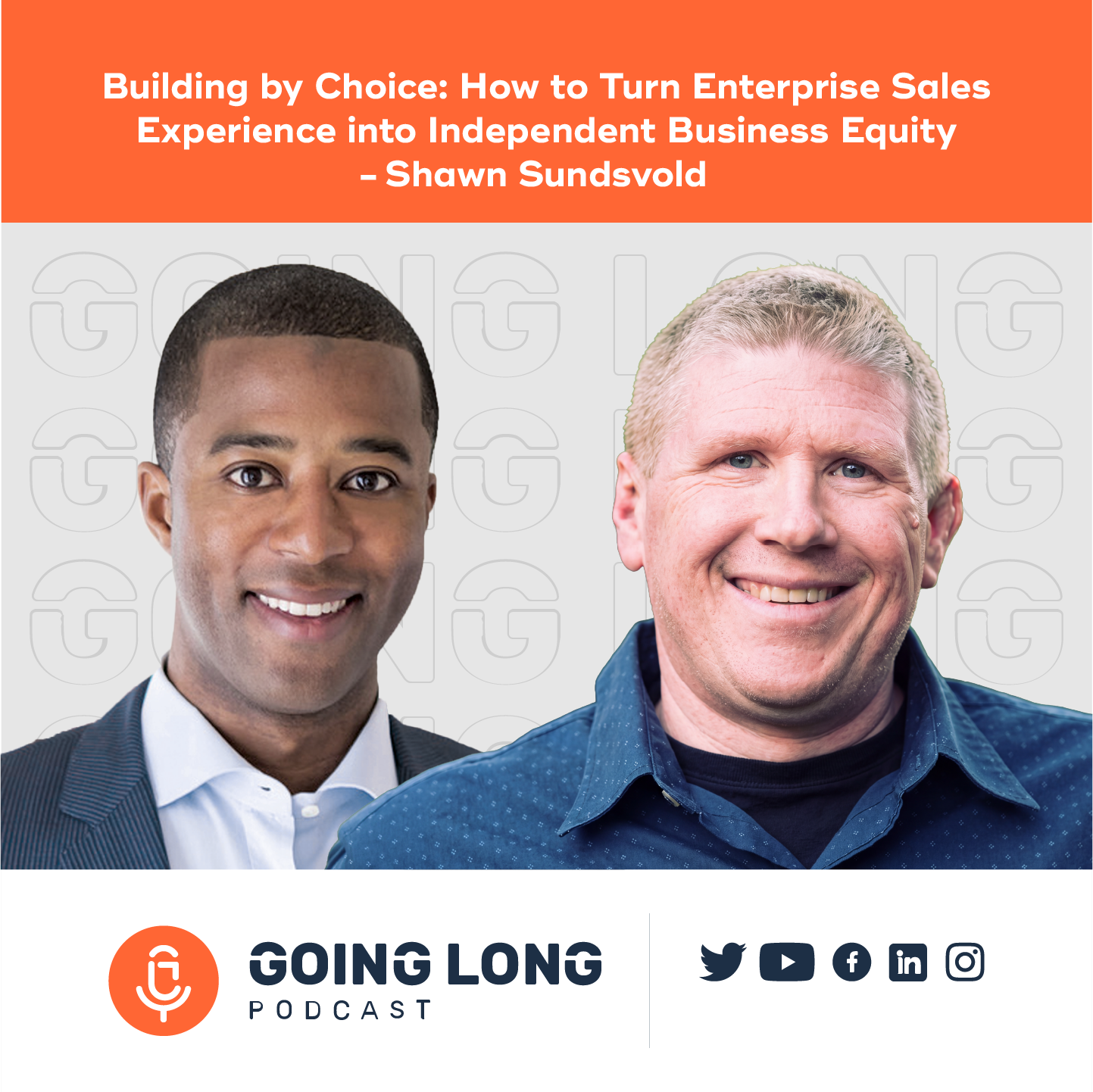
Building by Choice: How to Turn Enterprise Sales Experience into Independent Business Equity - Shawn Sundsvold

Are you an overachieving sales leader, account director, or enterprise strategist sitting on valuable skill capital, wondering how to transition your corporate experience into a business you completely own?
In this transparent guest conversation, host Billy Keels sits down with Shawn Sundsvold, co-founder and COO of GoldBear Media, co-host of the Better Together podcast, and veteran sales leader with 15 years across enterprise giants like Dell and Sprint. Shawn pulls back the curtain on his unique career trajectory, detailing how he navigated moving in and out of the corporate world, faced a life-threatening spinal abscess that required him to relearn how to walk, and ultimately stepped away from corporate employment after a disastrous job interview. Discover how Shawn and his wife Kelly combined their enterprise sales and marketing backgrounds to build GoldBear Media, why treating business partnerships like true marriages requires radical communication, and how keeping perspective through high and low seasons gives you ultimate control over your time and career.
🚀 Want to make your corporate role optional? Grab your FREE copy of Billy's 3-Step Process eBook here: https://www.makeitoptional.com/?utm_source=youtube&utm_medium=social&utm_campaign=p2olm
Contact today's guest, Shawn Sundsvold, at:
Website: https://goldbear.media/
LinkedIn: https://www.linkedin.com/in/shawnnsundsvold
📌 Questions Answered in This Episode:
- How do you successfully transition enterprise sales experience into building an independent marketing agency?
- What does it take to navigate a major health crisis and relearn basic life skills while maintaining career vision?
- Why is going back to corporate life periodically an option, but not the ultimate destination for true builders?
- How can spouses effectively divide operational and business development responsibilities in a shared business?
- What is the concept of business "leverage," and how does hiring help move you from a walk to a sprint?
⏱️ Episode Chapters:
- 00:00 - Broadcast Recording Setup: Tuesday, September 29, 2026, with Shawn Sundsvold
- 03:07 - 15 Years in Corporate Tech: From Cell Store District Manager to Dell Enterprise Sales
- 04:30 - The Spinal Abscess Shock: Relearning to Walk in 2019
- 05:40 - The 45-Minute Interview Turning Point: Walking Away to Build Something Together
- 07:20 - Moving In and Out of Corporate: Why the Stay Got Shorter Every Time
- 09:40 - No Guarantees Anywhere: Realizing Corporate Layoffs Match Entrepreneurial Risk
- 11:20 - Inheriting the Entrepreneurial Bug: Real Estate, Stock Trading, and Crypto
- 13:45 - "By Choice" Defined: Looking at All Options and Choosing Your Path
- 15:00 - Spreadsheet CRMs and System Building: Bringing Structure to Marketing
- 17:15 - Working with Your Spouse: Setting 10 AM to 4 PM Communication Boundaries
- 21:00 - The Better Together Podcast: Reconnecting with Radio Roots to Tell Business Stories
- 23:50 - The Grunts of Delegation: Moving from Walking to Leveraging Your Team
- 28:35 - Trough Principles: "This Too Shall Pass" on the Mountains and in the Valleys
- 32:10 - Connecting with Shawn Sundsvold and GoldBear Media
📘 About Billy Keels & Corporate Optionality
If you're a corporate executive who wants to make your role optional, learn how to achieve true control over your career and turn your corporate skills into personal assets.
With 26 years of experience in corporate sales leadership, Billy Keels achieved true optionality through multiple income streams. Today, he has helped dozens of executives build a predictable path to take control of their time and start living their ideal day.
This free ebook gives you everything you need to identify, plan, and take control of your career while building financial optionality, leveraging your skills, and starting to live your IDEAL day - today!
- Get the Free eBook: https://www.makeitoptional.com/?utm_source=youtube&utm_medium=social&utm_campaign=p2olm
- How to Leave a Review for The Going Long Podcast: https://youtu.be/qfRqLVcf8UI
Be sure to connect with Billy:
- Website: https://www.billykeels.com
- YouTube: https://www.youtube.com/@billykeels
- LinkedIn: https://www.linkedin.com/in/billykeels
- Instagram: https://www.instagram.com/billykeels
- Facebook: https://www.facebook.com/BillyKeelsFanPage
- Twitter/X: https://www.twitter.com/billykeels
Episode Transcript
Billy Keels 0:00
Leaving corporate life isn't about running away from a job. It's about realizing that you have the exact skills to build something that you own. In this episode, former Dell and Sprint sales executive Sean Sons of Old shares how he overcame a life-threatening health battle, traded the 50-plus hour corporate grind for business ownership, and he built a growing media company with his wife. Let's dive in and let's get you to optionality. Today's episode is sponsored by Billy Keels Advisory Services. If you want to learn more about how to make your 99 optional, just go to makeitoptional.com. Once again, that's makeitoptional.com.
Speaker 1 0:44
Helping you build freedom without losing your edge. This is the Going Long podcast with Billy Keels.
Billy Keels 0:57
Tomorrow's not guaranteed, you know what? And at a surface level, I know that you know that that's the case, but today's guest, well, he knows it all too well, because after 15 years of corporate life working for companies like Dell and Sprint, his health was in in jeopardy, and he had and found a spinal abscess as a result of a staph infection that left him with no feeling in his legs, and after successful surgery, years of antibiotics, and actually even learning to walk, he returned. He did something unique. He returned to corporate life, and he did that while his wife was freelancing. But you know what? Things tend to change, and so when her side gig really started to to blow up in a positive way, and he outgrew building someone else's dream for over 50 hours a week, and you know what, they knew that it was time for new things to come, and that gives me great pleasure to welcome to today's conversation the co-founder of Gold Bear Media, as well as the co-host of the Better Together podcast, none other than mr. Sean Sonsvold. Sean, welcome to the show.
Speaker 2 2:09
Hey, Billy, how are you? Thanks for having me.
Billy Keels 2:11
I'm doing a whole heck of a lot better now, man. I can't wait for the Going Long family to learn more about your story. I know you and I have had a chance to speak a couple times. Of course, we've got that Dell thing that that is connecting us as well. And I just kind of really want to get started from the beginning, man. And there's a lot of different questions I have in my mind, but I guess I would love to know Sean your backstory in your own words, and then we'll see where you and I take the conversation from there.
Speaker 2 2:42
Awesome, awesome. Yeah, so I, you know, I graduated from college in 2001, I think it was, and you know, got my first corporate job in 2005 or 2007, actually working for Dell. Before that, I had done some management jobs in, you know, a small mom and pop cell phone store where I started as a sales rep and ended up managing all six stores in the district. You know, within about 18 months, so I kind of learned I could I could manage and do some of those things. But corporate was really where it started for me in 2007 with Dell. I spent five years at Dell, loved it. You know, doing sales for both the consumer side for the business side got into the networking and you know high end storage side of it for small and medium businesses and from there just continued to do it. So I left corporate in 2012 at one point to do my own thing. I traded for 18 months as a full time trader. Started a side gig as a consultant. Went back to corporate for a number of years after that, and then in 2017, my wife and I moved to Maryland. She got a great job opportunity up here in the company I was working for at the time. I had allowed me to be remote. Well, then they got they got bought out three months later, and everybody who was remote, they just said, "Hey, we need you to move back to the office." And I was now in Maryland versus Austin, Texas, and so I was not going to make that 1700 mile commute every day, you know. So got got into real estate up here and did a few things, but you know, in 2019 was when everything got kind of shifty, and I had an abscess in my spine that when I went into the hospital, I I had no feeling in my legs, and by the time they went to surgery, I I had no feeling for 12 hours, and I had a staph infection that went systemic. You know, when I came out of surgery, they're sitting there poking needles at me and my feet, and going, "We're getting some electrical signal, but we just don't know." And so, 2019 was really a year of recovery for me. I had to relearn to walk. I had to do a lot of things that you know you you teach a toddler to do. So if you have kids, most you know most people understand that one. And then 2020, I was able to go back to work in the management world and got some great opportunities with that. But then yeah, in 2022, when I got laid off from a job, it was. And and Kelly's the the business was just taking off and doing great things and I was I was at a job interview and I had driven 45 minutes to get there and this was probably the worst interview run I've ever been in in my life in the first 15 minutes this person who I was interviewing with told me everything that was wrong with the job I was applying for, and I'm like, I no, I don't want to do this. And so, you know, did finish the interview, drove the one hour home, and I literally walked in the door and told my wife, I said, "We're going to figure this thing out." And so that was October of 2022, and you know, here we are. I guess four years later, at this point in time, neither one of us ever looked back. We've, you know, we've grown our business year over year, and I, I, I wouldn't trade it for the world. I, I love the position I get to sit in right now.
Billy Keels 5:53
I love it, man. There's so many different things that I really want to draw from. Right, you've you've worked in a lot of different industries: retail, IT, telco. You talk tele telecommunications. You talked about and even in the real estate space, right? But one of the things that we talk so much about is, you know, there's this whole idea and this concept of getting to optionality. You know, being at a point where your role in your corporate role is it's optional. Like you go in if you want, if you don't, you don't. Like I was in my last four years of my 26 year corporate career, I didn't need the paycheck, right?
Speaker 2 6:27
Yeah.
Billy Keels 6:28
But a lot of times, I hear people say, "Well, you know what? If I needed to go back to my corporate role, or if I needed to go back to corporate, I would." But very few people actually believe that. And so I, I'm, I love the fact that you've actually done it, right? And so I would love to know if you can take us into the to the to the mindset of saying, "Hey, look, I'm in corporate. It's good. Leaving, coming back, leaving, coming back." Just to help to normalize that, because I think it's a really good thing, Sean. So could could you talk to us about just your your thought process there.
Speaker 2 7:02
Yeah, I've I've been in and out of corporate a few times, right? And and every time I go back, the best way to say it is I always felt a little awkward. Okay, you know I always felt like the sort of the the outlier in the sense of I've just always operated from a little bit of a different drumbeat, and I managers hated me because I I just did things my own way, and so you know going every time I've gone back like it it I've spent less and less time there, you know when I when I was at Dell I was there for five years I left I came back I did another gig for Sprint I was there about two years I left that and then went to another corporate gig, and I was at that one about 18 months, and then like it just got shorter and shorter and shorter. And every time, I'm just like, why do I keep going back to this when I know it's not what I want to do? And that was really, you know, when I got to the point of 2022 and everything that was going on. Like I, I think it was a, it was a combination of confidence and frustration. I think of just being tired of building things for other people when I knew I had the skill set to build something for myself. And you know, I had my wife who had already gotten some things off the ground, and I realized that there was a lot of things that she was working on that I could pick up the ball and run with it. You know, her background is marketing for 20 years, and she's really good at at what she does. But the sales side of things, the business building side of things, the business development side of things, just organizing customers and doing some of those things, like those were all things I had done my entire career through sales, and so that was the moment. I'm just like, I know I can do this, and you know, and I had some of the investment stuff already going on on this side too, and so, but you know, when we took that leap, it definitely was not guaranteed. You know, it wasn't like it could make help us survive on its own. You know, we had to put a lot of time into it.
Billy Keels 9:01
Well, and this is the part that I love, right? It's just, and I love that fact that you you recognize you you go back, and then each time it was it was shorter and shorter. But also, too, even though you recognize, like, hey, listen, there's something that maybe it's not the ideal thing for me, but there was also something about corporate that you thought, well, you know what, I am going to go back. I'm going to try it one more time, and and just because you mentioned it, and we're not going to stay here. But it's I just think it's really important for for anyone who's watching and or listening. And there's a lot more of you listening than than watching right now. But the the idea is just to really be able to normalize that. Say it's okay. Like you're you're going to go out and do something on your own. And if it doesn't work, what's the what's the worst that can happen? Well, that's what we usually say, but also, what's the best that can happen? Can you maybe just dial that in a little bit for
Speaker 2 9:49
us? Yeah, I mean, every time going back, it you know, I wasn't I wasn't upset about going back. Like I, you know, I I needed work, and I I would try to find things that I would at least enjoy. Doing right, I knew I was good at sales.
Billy Keels 10:02
Yeah.
Speaker 2 10:03
Um. But I think the the part where it got to the burnout point was I always felt like I was pigeonholed into that.
Billy Keels 10:09
Okay.
Speaker 2 10:10
You know, and I would apply for other roles, and I had, you know, I had the experience, I had the knowledge, and it just never panned out for whatever reason. And so it it kind of felt like at the same time, like I was I was hitting my head on a ceiling that I just didn't quite know how to get through. And you know, when I had the opportunity to come to do my own thing, I really had the the understanding of I could build this whatever way I wanted, and I didn't have to deal with the personalities, and you know, I didn't have to have somebody tell me, "Don't do it that way." Right? That's not the way we do it here, or whatever it is. And and that freedom, you know, I think has really helped us in our business to do that because we've we've gone we've tried three or four different routes to to grow the business. And
Billy Keels 10:58
hang on a second. Hang on a second. Hang on a second. Because we all need certainty, and you know, especially when you're coming from that corporate mindset. Would you please repeat what you literally just said, Sean?
Speaker 2 11:13
That there was no guarantee. There was no certainty.
Billy Keels 11:17
Yeah, and you've and you've tried to do three different iterations. I think, is what you said. Yeah,
Speaker 2 11:23
yeah, three different iterations. You know, of you know, back and forth and back and forth, and I don't know. Like, there's no guarantee anywhere. You know, and I that's there's no guarantee in corporate because you know when I was at Dell, and I think you may have experienced that too. You watched your team members get laid off, you know, and and a career you've been at for four years, five years, 10 years. I I just had a friend of mine at Dell that he just put up something. He's been there 20 years, right, and he's survived all of the different layoffs and things that happen. So, you know, it's you just you just keep going, you know, and you just have to figure out what really works for you and what makes you happy, and you know it just got to a point. Corporate was not a place I was happy anymore.
Billy Keels 12:09
Well, and that has a lot to do with your level of self awareness. I think it's fantastic, and also too one of the things I do want to just build on what you said before. I mean, you you're named Dell, but I mean, we look today. There's, you know, whether it's you know Oracle or Salesforce or you know every every large, especially in the IT space and software. But and and I think it's really important. No, I don't think I know it's really important for us to recognize that these large companies they're they're organisms, so they have to do what they need to do to stay alive. Doesn't make them bad. It just means they have to stay alive, right? And so that that's a part of it. So I do like the way that you frame that. And so you kind of gave us some insight earlier, but it also sounds like you did say you were doing some investing on the side anyway. So how did that play into you know whether it worked or it didn't work? But just that whole thought that you were starting to gain some kind of control beyond, you know, what and outside of just your core job. Do you feel like that played a role into you also wanting to quote unquote go out on your own and try things on your own? And if so, to what extent?
Speaker 2 13:18
For sure. You know, I've all there's always been an entrepreneurial bug in my world. My dad was an entrepreneur; he owned his own business. You know, and he passed away in 2006. And when he passed away, I inherited a a bit of real estate. You know, and so that was sort of I've always been interested in stocks and trading because that's what he did, right? And so, and he put deals together, and you know, one of the deals he put together at one point, I think, was like $7 million, and you know, so it was, you know, it's really cool to watch those things happen. And so that that bug was our was always there. And when I worked at Dell, I had a manager, and he and I got along really well, but we would talk trading strategies, and we would talk stock picks and tips and all those things. So I was, I've always been around this world, and so when we inherited, when my dad passed away, and we inherited some of the real estate, it it kind of got my bug going to where I wanted to do more of it, and that's you know. So I I think I mentioned earlier I traded full time for 18 months, and you know that was a learning lesson because I didn't necessarily make money and I didn't lose money. I just went sideways for 18 months, and it's like okay, something's not working quite right here. So I paused that, you know, went back to corporate and did the work thing, and was still doing some trading on the side. And I've just grown that over the years, and we've had some opportunity to pick up a couple other, you know, real estate options over over time, and you know, and I really started getting into crypto in 2021. So it's it's I've always been around it, and it just kind of depends on where I'm at in life and how much time I can actually spend working on that.
Billy Keels 14:59
Okay. Fantastic. So then, it sounds like it's a little bit in your genes, and even within the corporate, you're kind of like going from the corporate thing to like the genes are calling, and you're and you're really going in and out of those those worlds, which also too I think is a is a lot, and just you being able to adapt and have that flexibility, it's fantastic. So speaking of which, you know, one of the things I also like to talk a lot about, and because you've had this experience, I got this thing is great because you've you've been able to like truly go in and and out. But this whole concept of like I talk about it in optionality, or you say you're in a you're in a corporate role, but you're there by by choice. Like, what does that mean for you, Sean.
Speaker 2 15:43
When something's by choice, it means I've had a chance to look at all my options, and I'm there because I want to be. Versus, you know, being forced to be, and I think that's the main difference. Is you know when it's an option, like that means you you you've looked at all your choices, and you know what's there versus being stuck somewhere. You know, you you don't you're not seeing all the options on the table, or you haven't asked somebody what the options are on the table, and and so that's to me, choice is knowing your options and still picking that
Billy Keels 16:16
one. Yeah. Okay. I I love that that take. Um, and you mentioned you mentioned your your wife kind of had gone from the side gig to you know then things really started you know blowing up and as you mentioned she was more on the marketing side you're really on the biz dev side and and a lot of the sales that you had already done and and and enjoyed maybe not doing it in exactly the way you wanted, but you know this was something that this core skill set that you skill set that you built. But you get to this point where you're like, okay, well, we're gonna go out and now solve other people's problems, and we're gonna do it in the way that we want to do it. What was that like, actually, going from highly structured environment to like, all right, now we're gonna solve this specific problem, and and what is the problem that you decided that you all want to solve, and then what was it like being in this new space where actually you do get to, you know, kind of paint the canvas from scratch?
Speaker 2 17:15
Yeah, and um, at first scary, right? Because I'd had this nice corporate structure. I understood what my days looked like. I knew when I needed to make calls. I had kind of figured out when I take breaks. I had figured out all these different things, and I had built life outside of that, outside of that nine to five. And so, you know, the first couple weeks of figuring this all out was, you know, just kind of looking at it's like, well, what do I need to do now? You know, it's like, well, you know, I would talk to my wife, and she's like, well, I've got all this stuff going on, and so I would just start picking up like tasks for to help her out. And then I sat down and asked her a question one day. I said, hey, how are you? You know, you've been doing all these meetings with people. How are you tracking all of them, and it was just kind of the sweetest, most naive answer. She goes in my head, and I just like you are like what? What are you saying? I just I briefly chuckled, and I yes, and I was like, oh, that's I was like, babe, that's so sweet. I said, but that's not going to work. Yeah, and so like I just and it started with like building spreadsheets, right? And and I I didn't used to love spreadsheets, and now I I adore them because they are able to give me a lot of information. But you know, it's just like starting to build a basic CRM on a spreadsheet. And you know, within about four months, we'd outgrown that because I was out doing networking and she was working with the clients we had, and so I we went had to get a CRM pretty quickly after that. And you know, as a marketing agency, you're you're out talking to people all the time, trying to solve whatever visibility and branding problems they have. And so it really is, you know, that a lot happened very very quickly, and the only way to do it was to really, you know, bulk up the systems and just start moving forward.
Billy Keels 19:08
Well, I love being able to like one you you recognize what it is like, and you talk about the the issues with visibility and branding because that's one of the core skill sets of of your wife who kind of started that, and then you recognize that you can't just stay there in the clouds, sort of speak, in the marketing room. You got to bring that down to to earth, right? I was 21 of my 26 years was in enterprise sales. So when you said no CRM, I'm like, what? No, it's got to be at least something, at least something like at least a spreadsheet, right? So it's great to to be able to to bring that insight, and so you also bringing something that's very unique. Well, not very unique; it happens a lot more frequently. But you have this working relationship with your spouse. Yes, and I know for many people that's like the ideal thing. It's like, oh my gosh, we're going to build this. We're going to build this together. It's going. Be such an amazing thing. Was that completely by design, and has it always been absolutely perfect when you're working with your spouse? As he laughs,
Speaker 2 20:14
no, no, yeah. It it wasn't necessarily by design initially. Like when when she started the side hustle, I just said like I'll you know we'll co own it, but and I'll take care of all the paperwork. You know, like you go do the business, I'll take care of the back end paperwork, and we'll go from there. And you know, by the time we did this, we'd been married 17 years. Okay, you know, we got married in 2003, and so when we started the business, it was 2020. We'd been married 17, and so we knew how to work together on you know life,
Billy Keels 20:48
life.
Speaker 2 20:49
But when you work together in a business, you're adding a whole nother layer because it's like you can't bring personal conversations into work conversations, and trying to separate the work conversations into the personal conversations can also be a little challenging because they overlap a lot, and so the first you know the first month that we worked together it was sort of a trial run for us, and it was like, how did things go this week? Like what worked, what didn't, how did we miscommunicate, and we did that for probably two months. Like met every single Friday and was like, okay, what worked, what didn't, what was helpful, what wasn't, because we had to figure out how each of us was going to divvy up those responsibilities that needed to happen for for the business to grow. And yeah, there were there were a few tough conversations, you know, but I think coming into it with 17 years of of marriage or or so, and having been through what we went through in 2019 for me, and then you know she got breast cancer in 2021 and went through about of that for about nine months, and so you know we've we've been through a lot of ups and downs that I think has taught us to learn how to communicate when things are challenging.
Billy Keels 22:07
Yeah, I I love that. So that the word I was going to ask is, you know, how how important do you feel effective communication is with these types of things? And you've had real life situations that have arrived for you where you've actually needed to work through these things, and and also too. And if I'm asking too many questions, let me know. But is that something that the two of you were able to do and get right just because you already known one another and been married for 17 years, or did you ever feel like you had to have somebody from the outside come in and and also help the two of you guide? Because now it's really easy to fall into all you do is talk about work all day long because now you're a business partner. So was that ever a thing, or just the two of you figured it out and it was perfect communication?
Speaker 2 22:51
I mean, it's it's a roller coaster, you know. No matter what, you know, in the sense of like when we when we went through all the stuff in 2019 with my health, you know, my I needed a lot of help in that time because I could barely walk. You know, and so I had to be, I had to learn how to be really vulnerable in moments and go like, "Hey, I'm I'm struggling," right? And you know, that level of vulnerability when you're a business partnering with somebody, you've got to be able to have that and go. You know what? Like what I'm doing isn't working. I can think of a couple different situations that she and I within the business have had to work through. Like we, you know, we spent $8,000 on a a tool, a software tool to help us do outreach, and we didn't get one lead from it. You know, and then we the second part of that was we held on to it too long, you know, and so we both thought like the tool was a good idea, but then when I was like, okay, this isn't this is holding on too long, and both her and my assistant were like, well, let's or our assistant was like, let's let's give it one more month, you know, we're trying this, we're trying this, let's give it one more month, and I finally got to a point. I'm like, guys, like I'm watching how this is going. This is not working, you know. So the communication challenges are always going to be there, and you know, there's been times like I'll have a great idea at 915 at night, and I'll come in from the shower, and I'm going, "Hey, I got this great idea for work," and she goes, "No, save it for tomorrow." And so it just that has to be there. You have to have that level of you know transparency and honesty to just go like I can't talk about this right now.
Billy Keels 24:29
Yeah,
Speaker 2 24:30
and you know and and we've had to have that on both sides of things. So you know generally during the day, like unless it's kids' logistics, you know we're not really talking about personal things. We're just trying to make sure job stuff for the job gets done, and it doesn't mean we won't if we have to. Right, something comes up, we're gonna stop and have that conversation. But you know, we've really tried to make the hours of about 10 to four, you know, really work focused hours, and you know, anything personal can happen outside of that.
Billy Keels 24:58
Yeah, well, I love this just the structure. Number one, and just the ability to communicate, real life situations have occurred, and so that has also helped to formulate the way that you are communicating with one another. And I love the insight that you're providing with others from you know all around the globe because it's really easy to fall into that. Yeah, we're going to work together; it's going to be all fantastic. And then there's this reality of like this is your life partner, and now you're going to start mixing a lot of different topics. And so, if you go into that in a certain with a certain naivete, it would be really easy to kind of get taken off or get get get knocked back. So, so thank you very much for just letting us into to your world and sharing a little bit.
Speaker 2 25:39
Yeah, of course.
Billy Keels 25:40
So, speaking of which, speaking of which, you and your missus, you and Kelly, are also podcast hosts.
Speaker 3 25:50
We are
Billy Keels 25:50
of the Better Together podcast. What in the world the Genesis, right? Because your your business partners together now that you've got the podcast together, and then you know your life partner. So, talk to me. I'm always interested in people that are podcasting and kind of what was the inspiration for the two of you one to have a podcast and then to be able to have the podcast and co-host the podcast.
Speaker 2 26:13
Yeah. So one of the things I did when I was a kid, I was in radio, and I loved it. You know, and I I was a producer for a morning show in Austin for, you know, a couple years, and then I moved to the sports radio side of it and got to do production and some on-air work. And I just love that aspect of getting to talk to people that I didn't know. And my family jokes that I will talk to a wall if nobody's around. So I just I I love talking to people and hearing stories. And there's my kids will tell you stories of we they're waiting to go for me for 20 minutes and I'm sitting there talking to somebody like the world doesn't exist you know so I I love getting to know people and have conversations and just find out you know what they've been through so that's always been sort of a core thing for me and we were looking at it you know in I guess it was October of last year, and Kelly was like, "I think, I think we should start a podcast, you know, and just use it as a as kind of a tool to get to know people and find opportunities and just get our our brand out there." And so we tried to come up with some ideas, and you know, one of the things that we have held as a tenet for ourselves is that you know when we started the business we figured out we could build a better life together and focusing on the same things than we could working separately and so that's where the the name of better together came from is that you know she and I both believe that we are better people together than we are separately and that's just where it kind of came from and we get to talk to business owners and kind of learn some of that same thing. Like, you know, what has helped them build their businesses better? Like, who in their life has are they better together with? And maybe it's a mentor, maybe it's a coach, maybe it's a spouse, right? Or their business partners, you know. And so it's it really makes for a lot of fun conversations and just getting to know all these different people who run businesses and how they've gotten there and the challenges they've been through, you know, similar to what we've been through. And I think it's inspiring for for business owners to hear, you know, that other people have gotten through some of these challenges, and I think it gives them the hope and inspiration to to get it for that for themselves.
Billy Keels 28:24
I love that man. So it's really a lot of the roots that you had, even coming from you know radio early on, being in Austin, and then the fact that Kelly said, "Hey, look, this why don't we get into podcasting? It reconnects with some roots that you already have anyway. This genuine genuine love for I guess the the new school radio, so to speak, if you will, and then being able to connect with people all around the globe. I mean, look, the the two of us are here because we we both have podcasts and things like that. So I think it's just such a great way to to be able to connect with people. And you know, Sean, you so one of the things you just mentioned, right? And it's about being able to keep it real. And you've been very generous and and gracious with your with your commentary and letting us into your life, but you know you went from corporate, did your own thing, corporate own thing. Now you and the misses building the business together. Is your business perfect? Everything goes perfectly, runs perfectly. Okay,
Speaker 2 29:18
never, never. I mean, all right, okay, okay. Yeah, no. I was gonna say, if not,
Billy Keels 29:21
this conversation is over. You have to scratch this entire conversation. No, just kidding. No, and it's one of these things also too, right? Because as you go from, especially when you're used to working for a really large company and you start owning your own company, and you know, there's moments where you know maybe you think everything's gonna be like the PowerPoint slides that you put together for two decades, but then you get into this reality of of business. Maybe can you share one one like? Don't give us a laundry list, but just one thing like in your business today that you find is, you know, it's just a challenge of the business.
Speaker 2 29:57
I think for I'll speak personally, like. I'm horrible. I'm a horrible delegator, right? Like when I was at Dell, if I had something going on, I or even at Sprint because I was a store manager there, like I could I could delegate off stuff. If I saw something that needed to get done, I could delegate it off, you know, and be like, hey, go do this, you know, and and get this done. And now it's, you know, you don't realize, you know, these big corporations; they've got all these roles in place for a reason, right? You don't realize how many little adminy type things have to happen when you are the only person doing it, and you just start looking at it and going, "Oh, I got to send that email. Oh, I got to do this. Oh, I got to reply to this person. Oh, this person needs a proposal. Oh, I still got to build this person. You know, you just start realizing, like, oh my God, there's so many little tasks that have to get done, and you know, that's I think the part, the fun part of going into a big company is you don't have to worry about all that. But the fun part of building your own company is you get to figure out how to build it yourself.
Billy Keels 31:02
Yeah, man. No, I love that, and it is one of the things, especially I believe when you go from, or what I've seen is when you go from this really highly specialized world of corporate. To your point, these roles exist for a reason, not just because big companies, as we're talking about before, like the organism has to continue to live, and it lives thanks to you know whether it's automated process or you know a person that's overseeing the process or nowadays AI agents or all this other kind of stuff. But it's they're there for a reason, and then you go from being in this highly specialized world to being in the CEO, the chief everything officer, and you recognize, okay, hang on a second. There's only 24 hours in the day. I got to figure this thing out. And and to your point, being able to do it your way is one of the things that is is very very helpful to be able to do
Speaker 2 31:55
that. So it's interesting. I one of the people I follow and I love to listen to is Myron Golden. If you've ever listened to him, and he talks, he kind of goes on this story about leverage, right? He goes and he kind of makes a comparison of well, if if you got to go five miles, well, what if I walk and I give you a bike? Who's going to get there faster, right? But you know, you you make the deal of like, well, we both have to go five miles. One has a bike, one has a who gets there faster, right? The person with the bike, it's because they have leverage. When it's like you do the same thing, but one has a bike and one has a car, right? And then the next same five miles, one has a car and one has a plane, right? And and it's the idea of leverage in that you know when you're early on in business that you're walking everywhere, right? And when you finally get that opportunity to hire somebody or bring in some staff. You start getting that leverage and being able to move things just a little faster and a little faster, a little more efficiently. And I think that's where that's where things, you know, they they stop a little. It's a little bit less of a grind at that point in time, you know. But when you start getting to feel the the leverage start to happen from the work you've put in,
Billy Keels 33:06
yeah, yeah, no, it's it is one of those things, and there's also a lot. Or let me ask, how much of you of that do you think, especially like the getting to the the the higher leveraged opportunities? How much of that has to do with actual currency? Well, a lot of people call money, and how much of that has to do with mindset? In your opinion,
Speaker 2 33:34
it's a little bit of both, but mindset, I think, is the bigger piece of it. You know, because I have friends of mine; they're they're amazing delegators, right? They just know how to delegate things off, and they're much better at it than I ever will be. They just and then they're good at training the person to handle it right in that moment. And so I think there's some mindset efficiency that has to happen. And when you don't necessarily have the mindset efficiency, that's where the dollar side of it comes in. That you you sort of have to pay to figure it out.
Billy Keels 34:06
Yeah, yeah, no, love it, man. I let's see. And then one last thing. So you you talk to us about those that are having challenges with visibility, brand. Anything that you want to just share that maybe we haven't talked about? How Gold Bear Media is actually helping others, or who they're helping specifically.
Speaker 2 34:25
We're you know we're a marketing agency. We're based in Westminster, Maryland, just outside of Baltimore, and we love. We've got really three groups we work with: so coaches and consultants, direct to consumer businesses, and home services companies, and that's really been our bread and butter since we started, and you know, we we love the organic side of things, and helping them really build an organic audience for themselves. And we actually just started something brand new for businesses that are really just getting off the ground. We found kind of a hole in the market here that we can build a website for $129 a month, and it's a full four. Website, you know, for anybody who's just getting started. So rather than having to pay three or $4,000 for you know to stand up a full website, you know, let's save your cash flow and do it for 129 bucks a month, and you know, and get you going. So and it helps. It's helped a lot of businesses that we've already started with on this save that cash flow for other marketing things to help get their name out there and get that early branding and early start.
Billy Keels 35:25
Fantastic. Well, sounds that sounds great. I'm sure you probably have one or two people to find out a little bit more about what what you're doing there. So, actually, Sean, and man, these conversations fly by, man. I say that every single time, but they always super like fly by super fast.
Speaker 2 35:39
Yeah.
Billy Keels 35:40
So there's there's one question that I always love asking guests just as we kind of wrap things up, and it really has to do with, and you've given us some really great insight into it today. That there can be this tendency when you're in corporate life to always think, well, if you're a specialist, everything is always going to go really well. I mean, I'm classic high achiever, recovering perfectionist, and most of my life, things always went up and to the right. If you're looking at that chart, but there was a moment in life, and it just so happened when I was also corporate, leaving corp out of corporate, and life really happened for me. Right, changes in personal life, changes in business life, and all of these things that happened in the moment, I recognized like there were a lot of people that were around me that were wanting to help and saying a bunch of different things, but nothing ever really changed. Like I felt like I was in this valley that things weren't going to like get back and go up into the right, but it wasn't until I literally looked myself in the mirror and I said something to myself, and in that moment, it was almost literally like I just clicked. It was like something clicked in my mind. I was like, "Oh, it's time to get back going up into the right, no matter what everybody else says." So it's a lot of the self talk, and we're talking about the mindset earlier. So I want you to do a visualization exercise with me, and it's really looking at yourself. It's probably better to go this way. Looking at yourself, like three years from now, right? You're going to look back, Sean, and you're gonna go. Hey, you know what, Sean? There were a lot of really high peaks, and then there were these kind of like low moments. It's the low moments that I really want to focus on because I want to help. I want you to help us really recognize when we're in those low moments by you sharing the thing that you say to yourself that you know is going to help you move from that low valley and start moving you towards the peak. What's that one insight? That one thing that you need to share to yourself, Sean, that you want to share with me and the Guanglong family.
Speaker 2 37:32
So I have a mantra I learned from a former manager of mine, and it's really simple, and it, but it's the phrase "this too shall pass," you know, and and it doesn't, and it's really great for the low times, right? Because it's like the the worst things could be happening, and it's like you know, "This too shall pass." Tomorrow is a new day, right? And that has gotten me through, you know, a number of challenges. You know, back I didn't I didn't know that phrase when I had my back surgery, but it's gotten me through a lot of them since then. And so, you know, it's kind of that idea of like, you know, tomorrow's a new day, you get another chance at it. But it's interesting that it can apply to the peak as well, right? Because we hit those peak moments, and you know it could be the greatest thing in the world. The greatest thing could have happened. And tomorrow is a new day, and you're starting that hike down the mountain into whatever next thing is coming, and you know, so you know, knowing it kind of helps me keep in mind that there's going to be the low sides of things. There's going to be the amazing mountaintop moments that I'm never going to forget. But there's a lot of life in the middle, you know. And it it really is about just you know know where you're going and keep putting one foot in front of the other, and bad days come. This will pass, and you keep moving forward.
Billy Keels 39:08
Absolutely love that, and just and I know you're watching, you're listening, and you just heard what Sean said. But it's also the thing that is so critically important about what you just said, Sean. Is it's it's not just the low moments; it's the high moments as well. But like, it's just another moment. Like this too shall pass. So I love that you helped us to to really focus around that. And I I start thinking, and I'm looking over, I'm like, I'm not a time off. These things just like literally they fly by so they go by so so fast. It's like in the beginning, you're talking to us and you're wrapping things up in 2001. Then 2006, you start your corporate career, and you know you're starting the Dell world and being able to to really do that, understand where you were in that first five years stint, and then you're like, you know what, I kind of feel like I want to do something else. You kind of stepped outside of the outside of the playground, and you played over there for a little while, and you're. Like, well, you know what? Let me go back over here to the corporate side of things, and then you bounced over and you bounced back. And what you really helped us to understand is that that is one of the options that you have, and one of the options that you took advantage of in in a positive way. And then also life started happening, and life happened for you at the time, and there were health challenges, and it also gave you that humility to be able to say, "Hey, listen, you know what? When I need help, I need help," and it also helps you and Kelly, your wife, as you talked about later, because you know what she was doing the side gig. The side gig really started taking off, and you're realizing, like, "Hang on a second, she's really great at marketing. We also need some more sales structure, some BD structure, and I'm really tired of doing these 50 plus hour days back and forth, and this interview thing it really sucked. And this is helping me recognize, like, hey, listen, it's time for me and Kelly to get together. You identified the challenge that you want to help others with, which is really helping them increase their visibility, increase their brand, and do it in a way that's organic. You even have really nice solutions that you just talked to us about, and so along the way, you also got to reconnect with your roots in radio. And Kelly said, "Hey, listen, let's go out and start a podcast and Better Together podcast that you talk about." And everybody is already asking me, and so yes, Going Long family, I'm just gonna ask because everybody wants to know, Sean, what is the best way that the Going Long family can find out more about you, what you've gone got going on at Gold Bear Media, as well as anywhere else. We can get in touch with you.
Speaker 2 41:27
Yeah, for sure. So you can find most things at Goldbear Media is our website. And if you're interested in just connecting with me personally, it's I'm it's Sean at Goldbear. Media is the email. And I promise you, I'm the only Sean Sonsbold on LinkedIn. So if you want to connect with me there, we've got you know that's probably the best ways to do it. And happy to help anybody who's looking for a little bit of branding help, even if just a conversation and need some ideas.
Billy Keels 41:53
Fantastic. Well, listen, go along, family. Reach out to Sean, especially. And I always say this: if you win, not if when you reach out to Sean on LinkedIn, leave him a personalized invitation, just because that's going to let the two of you continue the conversation. Because then he will know that you've already invested time listening to more about him and his story, and the two of you will have the conversation that will continue on faster, more effectively, and extremely efficiently. So, with that, Sean, I do want to say on behalf of the entire Going Long family, thank you very very much for deciding to invest your time with me and the Go Along family today. Thanks, man. I really appreciate it.
Speaker 2 42:26
Thanks, Billy. Loved
Billy Keels 42:27
it. All right, fantastic Go Along family. Sean just told you go check them out. Go Bear Media. Check them out on LinkedIn and check out their podcast as well. And you know what? While you're going on to do the next thing, I'll be right here preparing for the next conversation. So until then, go out and make it a great day, and thank you