
From $2.5B Regional COO to Future Ready Agency Founder - Cathy Ward

Subscribe to the podcast


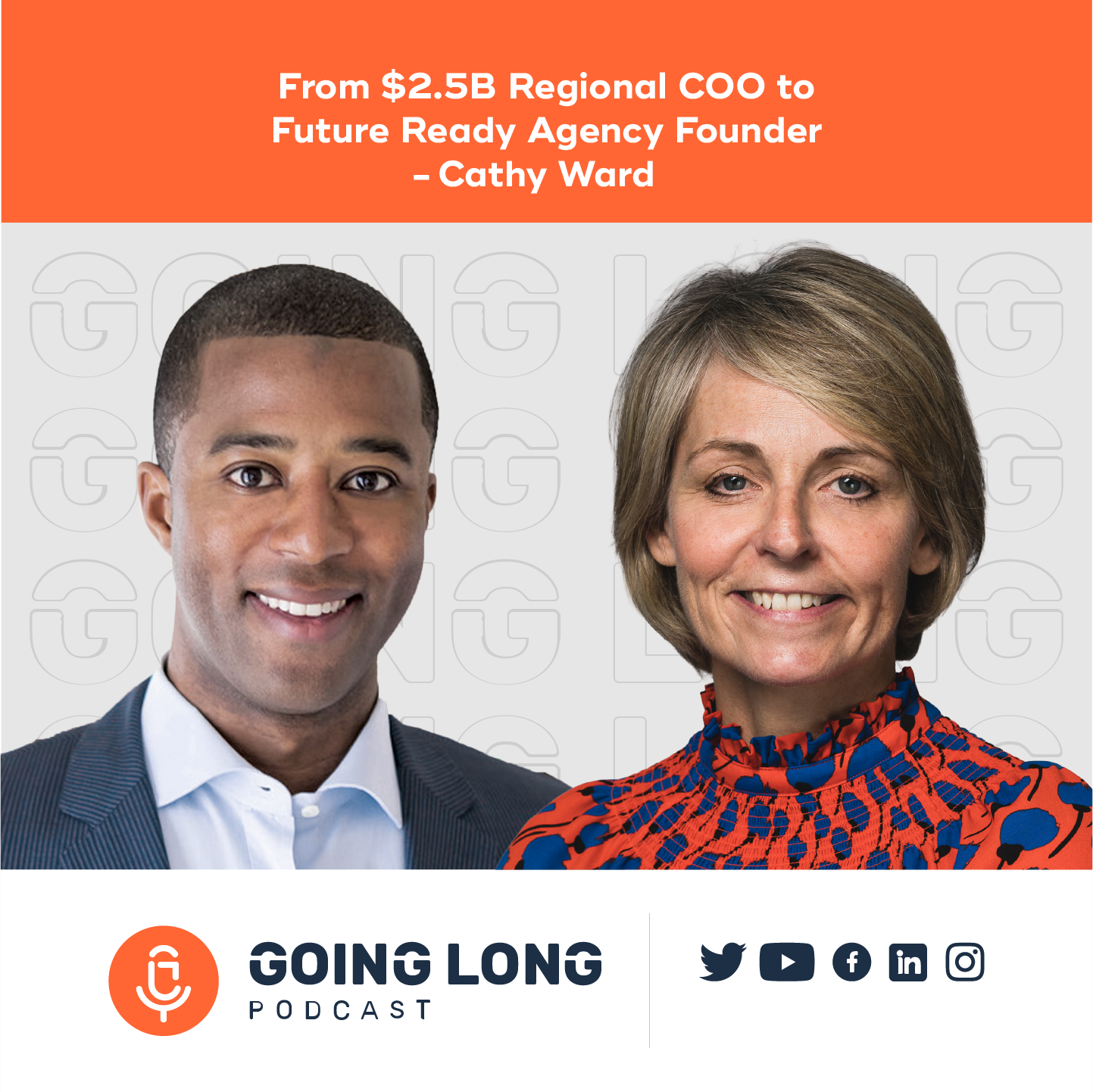
From $2.5B Regional COO to Future Ready Agency Founder - Cathy Ward

Are you a senior corporate executive, COO, or enterprise leader sitting on multi-billion dollar operational experience, wondering how to channel your skill capital into an independent venture that aligns with your energy?
In this transparent guest conversation, host Billy Keels sits down with Cathy Ward—former Regional COO for SAP Asia Pacific & Japan (an 8,000-person region generating $2.5B in revenue), Operating Partner at Keensight Capital, and founder of The Future Ready Agency. Cathy shares her 30-year journey across 18 roles in 7 companies worldwide, detailing how writing a sabbatical policy in her late 30s allowed her to step off the corporate treadmill and pivot from sales leadership to HR and global operations. Discover how to distinguish between what skills to keep and what to let go, how to align organization, people, and AI into a unified growth system, and why "radical retirement" is actually about continuously retiring old selves to step into greater schedule sovereignty entirely by choice.
🚀 Want to make your corporate role optional? Grab your FREE copy of Billy's 3-Step Process eBook here: https://www.makeitoptional.com/?utm_source=youtube&utm_medium=social&utm_campaign=p2olm
Today's guest Cathy Ward would love to hear from you! Reach out to her via the links below -
Website: https://futurereadyagency.com/
Contact Page: https://futurereadyagency.com/contact
LinkedIn: https://www.linkedin.com/in/cathy-ward-5456aa1/
📌 Questions Answered in This Episode:
- How can taking a strategic sabbatical help a senior leader realign their career with their core values?
- What are the most effective ways to transition from multi-billion dollar enterprise operations into founding your own firm?
- How do high-performing executives determine which skills to keep and which habits to let go of when moving out of corporate life?
- Why is aligning organization, people, and AI the ultimate system for future business readiness?
- What does "radical retirement" mean for high achievers who never want to stop contributing?
⏱️ Episode Chapters:
- 00:00 - Broadcast Recording Setup: Tuesday, September 8, 2026, with Cathy Ward
- 03:41 - 30 Years and 18 Roles: The $2.5 Billion Regional COO Journey
- 06:00 - The Sabbatical Pivot: Writing the Policy and Stepping Out of the Relentless Pace
- 08:15 - Energy Over Orbit: Shifting From Sales Leadership to Global HR and Operations
- 10:50 - What to Keep and What to Let Go: Sorting Through 30 Years of Corporate Capital
- 14:00 - The Rule of Three: Simplifying Strategy When Navigating Major Business Shifts
- 16:45 - The Future Ready Agency: Integrating Organization, People, and AI
- 20:20 - Writing for Clarity: How Journaling and Coursework Unlocked Written Voice
- 22:50 - Radical Retirement: Why Re-inventing Yourself Has Nothing to Do with Stopping Work
- 26:10 - Managing the Transition: Sit with Uncertainty and Embrace the Plunge
- 29:30 - Trough Principles: Believing Everything Happens for a Reason and Journaling Patterns
- 33:00 - Connecting with Cathy Ward and Exploring The Future Ready Agency
📘 About Billy Keels & Corporate Optionality
If you're a corporate executive who wants to make your role optional, learn how to achieve true control over your career and turn your corporate skills into personal assets.
With 26 years of experience in corporate sales leadership, Billy Keels achieved true optionality through multiple income streams. Today, he has helped dozens of executives build a predictable path to take control of their time and start living their ideal day.
This free ebook gives you everything you need to identify, plan, and take control of your career while building financial optionality, leveraging your skills, and starting to live your IDEAL day - today!
- Get the Free eBook: https://www.makeitoptional.com/?utm_source=youtube&utm_medium=social&utm_campaign=p2olm
How to Leave a Review for The Going Long Podcast: https://youtu.be/qfRqLVcf8UI
Be sure to connect with Billy:
- Website: https://www.billykeels.com
- YouTube: https://www.youtube.com/@billykeels
- LinkedIn: https://www.linkedin.com/in/billykeels
- Instagram: https://www.instagram.com/billykeels
- Facebook: https://www.facebook.com/BillyKeelsFanPage
- Twitter/X: https://www.twitter.com/billykeels
Episode Transcript
Billy Keels 0:00
Starting your own business doesn't mean starting from scratch or throwing away 30 years of your corporate experience. In this episode, former SAP Regional COO Kathy Ward reveals how taking a sabbatical allowed her to realign her energy, leverage her enterprise skill set, and launch her own future-ready agency by choice. Let's jump in. Let's get you to optionality. Today's episode is sponsored by Billy Keels Advisory Services. If you want to learn more about how to make your 99 optional, just go to makeitoptional.com. Once again, that's makeitoptional.com.
0:38
Helping you build freedom without losing your edge. This is the Going Long podcast with Billy Keels.
Billy Keels 0:50
Imagine the lessons you can learn from an ex senior corporate leader who spent 30 years in various executive roles, including the regional COO for SAP Asia Pacific and Japan, which is an 8,000-person region that generated 2.5 billion dollars in revenue. You know what? Today, she's leveraging her corporate experience to help grow businesses on things like organizational design, go-to-market effectiveness, and customer success, as well as this thing that everybody's talking about called AI gives me great pleasure to welcome to today's conversation the operating partner of Keensight Capital as well as the founder of the Future Ready Agency, Kathy Ward. Kathy, welcome to the show.
Cathy Ward 1:32
Thanks, Billy. Thanks for inviting me. Pleased to see you again. It's been a long time.
Billy Keels 1:37
Yes, it has been a long time, and this is like these. I get these full circle moments, and it's absolutely fantastic. You have such an amazing story. Love the things that you were doing in corporate. Continue to add value in corporate, and also you've done doing this in a way that is going to really inspire a lot of people all around the globe. I'm absolutely, absolutely positive of it. You know what? I kind of want to jump right in. Do you mind if I ask you question number
Cathy Ward 2:03
one? No, go straight in there.
Billy Keels 2:04
All right, here we go. So, there's so many different roles that you have done and lived on different continents. I'm giving away a little bit of your story, but you know you've done everything from chief operating officer in the UK and Ireland, and you've done in Japan as a chief operating officer, and even talked about Asia Pacific and Japan. These are just to name a couple of a few, but also too, I realized that there's something special about sabbaticals that can happen in somebody's life. And I was wondering, I think you've taken a sabbatical once or twice in your life, maybe once.
Cathy Ward 2:40
I haven't. Did you
Billy Keels 2:41
show after that sabbatical. Can you talk to us about how that actually influenced you in the way that you are now leveraging your corporate experience?
Cathy Ward 2:52
Yeah, absolutely. It's it takes me back. My first sabbatical was in my late 30s, and just to put into context for for those people listening in, bit of background in addition to what Billy said, just 30 years in tech, 18 different roles in seven different companies, and lived and worked all over the world. But actually, my sabbatical, my first sabbatical, was when I was working and based out of the UK, and I had been, I'd gone straight from uni. I did a psychology degree at university, and accidentally fell into tech, which was the best accident ever because there was a huge amount of transformation and change. And I went straight in. I didn't take any break. I didn't have a sort of you know a gap year or anything, so I went straight into work mode and stayed with various organizations. And then in my late 30s, I had an opportunity to take a break. Well, actually, what's very interesting is I ended up writing the sabbatical policy because there wasn't one. So I I wrote the sabbatical policy. I then was allowed to take my six months leave, and we went traveling around South America myself and my husband. And I was at the time in the midst of a very successful sales career, so I had been with a top performing team for several years, we were making our numbers, growing the business year over year. And when I left and went traveling, when I came back, I think everybody just assumed I would go back into that sales leadership role. And I think what happened for me on sabbatical is when you step out of the day to day, and you step out of that relentless pace of being in the corporate world. You have more time to reflect on where you want to put your energy, and for me. One of my core values all the way through life has been this lifelong learning and doing something new and embracing something new, and so I thought. Well, in my late 30s, I'd done sales, you know, at the individual level with partners, with alliances in the UK, leading a sales team, and the numbers go up every year, and the territory can change, and the products may change slightly. But I was like, "Well, what am I going to learn?" And so I actually, when I went back, I said, "Look, I'd like to not go back into my sales leadership role. I'd like to do something completely different." And back to my love of psychology and people and human behavior, I asked at the time, which was back then. I mean, we're talking about 2010, to do what was a new role around diversity and inclusion in the EMEA territory, so Europe, Middle East, and Africa, at a regional level, not a country level. And you know, the company I was working for and with SAP at the time were fantastic in supporting me and allowing me to do that, and so I did that, and that took me into a completely different network of people. I then moved into operations, business operations, and in global role. That then took me to Japan. That then took me to my chief operating officer role. So it really sparked this inflection point that by taking that risk and thinking where does my energy go and where do I align my values, then it opened up the rest of what is now history. So, so yeah, a lot probably a long answer to a short question, but that's that's how it played out.
Billy Keels 6:43
Well, and I love that you you know sharing that bit with us. I you know just you know I took a one year sabbatical 25 years ago, and it's been you know three different countries, four different cities, moved continents as well, and so my what was supposed to be a one year sabbatical also radically changed my life, and a lot of things happened for me. I love the language that you use there because you you talked about the things that happened for you as a result of decisions that you made, and quote unquote. And I am putting this in air quotes for anyone who's watching the video: risks that you took, right? And and I think that it's something that we can all learn a lot from, especially when you are changing whatever rhythm that you are used to having. I mean, you talked about success was moving up and to the right, and you decided, hey, hang on a second, let me just take a little bit of a break, six months, and you start to recognize the importance of aligning energy as well as the the time and the in the focus that you have. So, also, Kathy, you talked about you know you've worked at a number of different you know very large organizations. You know, one I talked about. You and I both were at at SAP for a while, and you've you know done other big large corporations, IBM, et cetera, et cetera. I'm a big believer, and there's so much that you can gain positively from corporate, and you can also leverage that after the fact, right? Or during I was doing a lot of it during corporate, and just many people didn't know at the time. Can you talk to us about you know some of the the positive aspects that you were able to gain from corporate and also gave to corporate during that 30 year tenure that we talked about?
Cathy Ward 8:17
Oh yeah, I completely agree, Billy. I think the corporate world I mean is it gives so much opportunity back to this learning learning will probably be a theme that comes out in a lot of our conversation but the opportunity to you know go from very much a beginner in one area because of the breadth of the corporate I think you can actually go into lots of different aspects of a business. So I did a big part of my career in sales. Then, as I mentioned, I then went more into HR and people, aligned back to my interest in psychology and human behavior and change, and then moved into operations, which was about laying the foundations to scale the operating model and have a set of standards that you could take globally. You know, take it from one country, go across a region, and go global. So this whole sort of process and practices and tooling was a framework that then built from that. So it moved from sort of sales into HR, into operations, into from country to region to global. I think you know the other really big opportunity for me from my corporate background was the opportunity to go and live and work in a different place in the world. And my time in Asia, in Asia Pacific and Japan, you know, I spent the half the last decade in Asia, and that has been, you know, a hugely rewarding process. Not only from a work perspective, but also from a personal travel culture. Lifestyle perspective, so and actually, a lot of those relationships. It always, for me, comes down to the people. I mean, look, we're now reconnecting through the network, and there are so many people that I still, you know, and will always keep in contact with from that time with within the corporate world. Like people that I met back right at the beginning when I did my, you know, IBM sales school. I know those people still today, and and people that I'd known in Japan, you know, 10 years ago. We keep in regular contact, so I think the relationships and the network that you build, and the skill set, and the opportunity to build that skill set is significant, and then I think when you decide that you want something different, you then need to work out well what you keep and what you let go. And I think that's probably for you know for you, for me, for a lot of people thinking about what's next or how do I move out of the corporate world, that's that's probably part of the challenge of okay, well, you know, yeah, what do I keep and what do I let go?
Billy Keels 11:08
Yeah, making that choice of you know what stays, what goes.
Cathy Ward 11:13
Yeah,
Billy Keels 11:13
when you navigate that depends on how you navigate it. It can be very very nerve wracking, or it can be like the biggest relief in your life. So it just depends on on how you do that. You know, we're very privileged because you you just talked about the the roles, right? And you have done, as you talked about, you've gone from sales to HR to to IT to a number of different places, and you're uniquely qualified to talk about COO. And I was just thinking about this now, so because as you are looking at businesses and business operations, and it's not really, I always think about the COO role. It's not so much about what's happening today, because there's so much about what's planning for the future, right? In in that type of a role, and and I'm sure that you've had to be in positions where you had to make tough calls, right? And and the way that I put it like this is a lot of times I will hear people say you know some bad things about corporate and and I don't believe that I've never actually ever believed it because I got a chance to work and travel throughout some 58 different countries. Part of the reason that I'm still in Europe is because I was part of corporate relationships and was able to stay and things like that. And there's a lot of it's you know corporate's fault for this, corporate's fault for that. You know, change numbers change, etc., etc. But at the end of the day, every company it's an organization. It's an it's an organism. Like it has to stay alive. And so I'm just curious, like being so close to making very challenging decisions, like line items are here or there, which ultimately are potentially people or new jobs or jobs go away. How would you say that that living today, planning for the future, seeing where things are going, has shaped your view or maybe some of the decisions that you made in terms of your corporate tenure or or lack thereof, or when the right time was for you?
Cathy Ward 13:01
In terms of making decisions about from a personal level or from a role level, or no, so so actually
Billy Keels 13:08
actually both. So it is knowing what you know now because there's so much that's influence. I'm not saying that you directly have to make decisions of change, but at a certain level within an organization, you are you see what's happening for the future. Companies grow, companies shrink. It's just a part of what happens. I feel like there's many times that there's a it's it's a bad corporate thing, but at the end of the day, every company is an organism. It has to stay alive. Yeah, it's constantly changing. So so because you were so close to being able to see that, I'm just curious what you saw from a corporate level, how that has also influenced you in the way that you make decisions about where you are engaging in corporate or outside of corporate or alongside corporate.
Cathy Ward 13:48
Yeah, yeah. Well, I think I mean being in tech has been a huge amount of change. I mean, the business model. I mean, it's changed all of our lives and how how we actually interact and work, and you know the company level at the individual level. And from an organizational sort of my COO hat on, you know the whole go-to-market changed, the customer engagement changed, the operating model changed, the whole business model shifted from it was on-premise to cloud to subscription to the SaaS model, which meant lifecycle management as opposed to you know one sales event. So it was a huge amount of change. So there was constant evolution, and and actually the commonality of that change. It's always being super clear. I think what's the north star? What's the end state? What's the vision? Where are we going? So being very clear on what's the direction we're headed in, and not that that's a list of 25 things. It actually, I have this the rule of three. I think if you have any more than three things, actually you're not. Prioritizing enough to be able to make those trade-offs and be able to make those hard decisions, and and actually there are constants within all of that change, and the constants are there's always an organization, there's always people in the organization, and there's highly likely and there's always a technology component, and the technology today is clearly AI, and that's accelerating the pace of change. But actually, often what organizations do is they treat those three things as separate programs of work. And you know, sort of fast forwarding to now, what I'm taking from my learning from the big corporate world, and what I've taken into why I founded the Future Ready Agency is to take that learning experience and bring it together into a system that aligns organization plus people plus AI. And I think when you do all of those things together, that's where you've got the greatest chance of delivering on the outcome and the transformation you set out to achieve, and I think you can look at that from the company perspective, from big company enterprise. You can look at it from a founder-led business trying to scale and grow, and you can even take it to your own personal level as well. In terms of back to what we were just talking about before: what what do you let go from the past, and what do you rebuild the future? But also, what do you take with you? Because not everything has to change all the time.
Billy Keels 16:32
Well, and and I I love that being able to understand what's constant, recognizing you know which which elements. So, organization, people, technology, and and also being able to apply it, whether it's in a corporate setting, if it's a founder-led business or an individual setting, just like you talked about, it's just a matter of being able to connect the dots. And so I appreciate that perspective. Now you talked about one thing, and I'm always interested when you could continue to be, you know, you could continue to be in corporate. I continue to be in corporate today if we if we really wanted to, right? Yeah. But but at the same time, you have founded your own company. We talked about Future Ready Agency. What was it that led you in the direction one to found your own your own agency, and two really how you decided to leverage your corporate skill set and pour into to the future ready agency.
Cathy Ward 17:31
That's a big question, actually. It's maybe my mind sort of going in different directions when you ask me that because actually, you know, three years ago, if you'd said you founded the Future Ready Agency, I I'd be like, sorry, did I? I did what? And and actually, I founded it really because it was building on a problem that I was trying to solve when I was in the big corporate world, driving the change and transformation at the leadership level. Back to those trade-offs. Back to how would you take you an 8000 person region with a huge diversity on a change and transformation to, and with operating officers who are primarily focused on the here and now and performing today, and actually not with the anticipation. How do you build for future? So it was solving a challenge that I had to drive personally, and then codifying what what worked and wanting to actually go and share that with other businesses, so that you know it's very practical and helpful and can help organizations on their journey, and and actually that's what led me to found the the Future Ready Agency. In the end, it was really you know looking at all the patterns, looking at the experience, and really wanting to go out there and help other organizations not repeat the same mistakes, no, or learn from that, or be able to build you know, the the best system for the future. I mean, you can't predict the future clearly, but what you can do is you can consciously and deliberately build in resilience so that you can adapt when the future arrives. And and it was that practical piece that I wanted to really put out there. So that's that's what led me to the the future ready agency founder piece.
Billy Keels 19:25
Well, and I I love that once again. And as you're driving in your car, maybe you're running on the treadmill. It's it's the simplicity of what you're just talking about right now, Kathy. So many times, you know, someone's thinking about you know what is the next unicorn that's going to be created, and thinking out of of you know trying to create some big issue, and what I found is that the founders that are the most successful are are usually leaning into solving problems that they had at some point in their life anyway, because you're uniquely qualified to understand the challenges, and so it's coming up with that better solution to. Something that you were frustrated with, or you know, maybe it's a it could be a first world problem, right? But it's one that was that you were frustrated with, and you wanted to come up with the solution. Sounds like that pretty much is how your company was founded. Yeah,
Cathy Ward 20:12
it's absolutely, and also back to where do I get my energy from, and where do I feel most alive? And I'm a person that really enjoys change and transformation. You know, I know change is scary, and a lot of people don't like change. But actually, it's not even that people don't like change. We just place high value on what's familiar, on what we know, because we've always done something a certain way because we've invested so much time and energy building a skill set. You know, we don't want to let go of that. So I think you know that's why with the whole change and transformation, having gone through it so many times, you start to see the patterns, and then it's just great to be able to have those conversations either at the individual leader level or at the organizational level, you know, and with technology, and ideally bringing all of those three things together.
Billy Keels 21:08
And so, when you talk about change and transformation, it's something that you know you're talking about repeatedly. We talked about before whether it's in the organization and people and technology, and and you've talked about this desire that you have to continuously learn, and I'm wondering if how your your heightened level of self awareness really plays into you know you enjoy learning and at the same time solving transformation and change challenges. Have you have you thought about how understanding more about yourself gives you that ability to really lean into something that you enjoy doing.
Cathy Ward 21:48
Absolutely, I think learning for me. I mean, there's a great, there's again a sort of quote like Confucius quote that springs to mind is learning without reflection is waste. Reflection without learning is dangerous, and I have journals going back many, many years where I I write down my learning, and I consciously and deliberately go back and look at the themes or the patterns of things that are no longer there, and things that are consistent all the way through, and and I've continued to do that since leaving the big corporate world as well, and and that's actually helped make sense of you know some of the some of the challenges that that you face when you do leave, what is a a very structured environment? You know, there's a certain DNA. There's there's a lot of you know hardwiring that you you develop over 30 years in of a career, and be able to sort of know, okay, what stays the same and what doesn't, and what am I learning through doing that, and where do I get my energy from, and how does that align to my values? So, yeah, I do a lot of that writing. For me, is a big thing, and writing things down helps me make sense and what's in my head, and and then look at the patterns and connect the dots to either build a system to then go help in terms of my work learning, but I also do that from a personal perspective as well.
Speaker 1 23:29
Well,
Billy Keels 23:30
which I think is well, I don't think I know it's fantastic, and you've talked about this a couple times. Writing, being able to write to to jot your thoughts out, but I also know writing in general is something that you're very passionate about. It's something that you've invested time in. It's something that you've invested energy in. Right? You've invested your time, and what I find with people that are writing is that there's this clarity of thought that happens. I've even I've invested in having a a writing coach, and I thought it was going to make me a better writer. But what it's actually helped me to do is be a better thinker. And so I'm just curious, also what for someone who's comes from a psychology background, psychology correct?
Cathy Ward 24:14
Psychology, yeah. Psychology,
Billy Keels 24:15
correct. Talk to us about like just writing and how that has also helped you to explore more of this tapping into the energy aspect that you that you are looking for that positive energy reinforcement.
Cathy Ward 24:30
Yeah, well, I think you're absolutely right. So you've just you've nailed it in terms of writing something down helps you make sense of what you're thinking, so your thinking, or the questions you ask yourself to be able to write something that is coherent for the reader and shares the experience really develops your thinking, and you can go really deep with that. I mean, that that that's um you know something that is quite good. In that sense, and what what I did, I mean, again, sort of again by a bit of an accident, on a bit of a whim, because I do like writing, but actually I wanted to make myself a better writer, and I went on a course called Finding Your Written Voice, and it was 10 week program with a group of a cohort, all online, with a fantastic ostentatious American author, Christine Eastwood, who at Lancaster, and through that process, we we read lots of different literature. We looked at different types of writing. You know the metaphors. You start to think about metaphors in your own life. You actually start to think about metaphors in change and transformation, and how you tell story. I think storytelling and communication is a massive part of taking the team on the journey. So a huge amount of learning, and then that sort of opened up an opportunity for me to write a chapter in a book, which again I, you know, I never anticipated that would be an outcome from a writing or finding your written voice course, a chapter that I called Billy. I will never retire. So there
Billy Keels 26:15
you go.
Cathy Ward 26:15
You know, there you go. I'm now published in a book writing a chapter. I will never retire.
Billy Keels 26:21
What's the name of the book? Can you give us the name of the book, please?
Cathy Ward 26:24
It's Radical Retirement. Radical
Billy Keels 26:27
Retirement.
Cathy Ward 26:28
It's about the reinvention of self after work. Awesome. It's it's a book with many different chapters and a very diverse set of writing that where people are at one end of the career spectrum, right at the beginning, people who've taken breaks, sabbaticals, people who've left corporate, gone out and done their own thing, to people who have retired. So it's a really diverse book, but there are some common themes I think that come out in that, and certainly for me, you know, I don't see retirement as an end state. I I see it as it's not a destination. I think we're all retiring old selves for new selves, consciously or not, throughout our life. You, we we start a new job. We move where we live. You know, ourselves renew every you know every so and so. Are we actually the same person, or are we continually changing? And again, it's like if you do it consciously and deliberately, I think that's the piece that is then saying what stays, what goes, and where do I become a beginner again? How do you keep learning?
Billy Keels 27:39
Yeah, this is one of the things that I would that I would say constantly is really to help people understand this whole concept of retirement. It's just like you said. Like I I speak to clients all the time, and usually the first conversation is, "Well, I'm going to retire at this age." I'm like, I don't think you. Depending on the person, like I don't think you're ever retired. And so I love the fact that you talked about radical retirement. So will you do me a favor? I know just kind of stopping this. I want to give the going along family an opportunity. We need to include that in the show notes as well, so that everyone can read your chapter in the book. So, I think that would be that would be fantastic. So, so while you were just asking about retirement, so I won't go down that track because I think we tend to both have the the same thought as it relates to retirement, but well, no, actually, I do want to ask you retirement since you're talking you're talking about that a little bit because it's because it is one of these things, especially when we are in our corporate roles, we're so much thinking about what is that specific timeline, right? When are we going to get to that timeline, and I have this thought that retirement is about contribution and when you're going to stop contributing. And most high achievers never want to stop contributing. Maybe you can unpack it even a little bit more on the on the retirement piece because it's really important.
Cathy Ward 28:56
Yeah, and again, I think it's really important that people take some time to think about what retirement means for them, because retirement, and again, I don't see it in an end state. It's a continual process. But ultimately, and one of the reasons I left the corporate world to do what I'm now doing is because I wanted more agency and more time to be able to invest in the areas that were energy giving for me, and I wanted to have more control over that time. But I think people have to ask themselves, you know, why do you want to retire? Why do you want to end? Why do you want to leave? It's like, well, what are you going to do with that time? What are you going to do with that freedom, you know. Who are you when you're not working? You know, who do you want to become? So a lot of a lot of that can get wrapped up in identity and ego, and you know, and titles and status. And then when you're then leaving that world, which is a very. Structured environment, you know, which becomes part of your DNA. It can be quite a challenging time for a lot of people. You know, you can feel very lost. You can feel very lonely. So again, I think the the way that I would reflect on that is, you know, be be. be be learning about what you like and what you don't like, and what's what makes you feel alive, and what gives you energy, and what doesn't. What is energy taking, and what is energy giving? And so, I had this concept in my chapter. Actually, again, you it sort of evolved through the writing because I wanted to give something back to people going on that journey of a of a sat nav, like an inner sat nav, and you the GPS tracker is then saying you everyone's going to be different, but for me doing that work, I then realized that for me it's my values and you autonomy and freedom, flexibility and learning that then either make the energy tick up in the meter or the energy goes down. And I almost go back to that when I'm evaluating a new opportunity. Even you know working with new clients on new projects, I really do go back to: Is this something that I'm doing because it feels familiar, and I'm going back to what I did, or is this something that's taking me forward and going towards what I really want? And you know, back back to that whole change conversation. People place high value on what's familiar and what stays the same. And I think you've got to be really conscious when you're you're leaving one thing for another. When you're going through these transitions. When you're retiring an old self for a new self, you know, are you going to go back to what you know, or are you going to push yourself and sit with that uncertainty and sit with that uncomfortableness and go forward? And I think that shouldn't be underestimated in terms of how that can really impact people.
Billy Keels 32:16
Yeah, I love that concept of being able to to to move towards something. Right? It's uh, it's like the Tony Robbins says you're either you're exiting from or or you're leaning into something. So it's a it's definitely expansive type of thinking, which is fantastic. And and I know we've talked a number of times in in in your agency as you are you know you are leaning into the more of the things that give you energy into your past experiences, also being able to continue to help solve problems that are related to organization, people, and and technology. Right as these things come together, but I really want to dive in. I do want to talk just specifically about like who are you helping today as we as we think about the future ready agency because there's a lot of people listening from all over the world, and probably they they want to solve a lot of either individuals, founders, or or large organizations. So help us understand who exactly are you are you helping today as they look for more alignment between organization, people, and and technology.
Cathy Ward 33:19
Um. So it's quite again quite diverse. You would probably expect that answer from me because I like the diversity and the different projects. That's what energizes me. So we've worked with organizations on the services side that are legacy organizations transforming a business model. You know, organizations that have ranged between anything from you know 10 to 20 mil to 150 mil turnover. UK based, EMEA based, primarily European based at the moment, aligned to a lot of the work that I do with Keensight, who are private equity European company, and a lot in the tech space, but I have worked very much in yeah the services space as well. So it's working with the boards, with the C level, with the founders to first of all really understand their readiness today. So it's assessing well. Where are you now? Let's draw a line in the sand from your organizational readiness, from your people readiness, from your AI readiness, and then working out really, okay, what's going to move the needle? Where where are you going? And then how do we help you get there? And we can do that from initial advisory purely with the CEO or the whole board, or we can actually then help operationalize and translate that plan into an executable outcome. So, so yeah, it's sort of a big range, but I would say mid mid market to sort of early enterprise companies within the tech. And a lot of it within the SaaS and software space, where they're going from the legacy model still to the SaaS and subscription, and now using AI.
Billy Keels 35:09
Okay, all right, that that's definitely helpful and gives gives the going along family an idea also too, specifically where you are, where you're helping, where you're playing. There's another thing that I did want to ask you because it's it's something that I believe that most people that are maybe they're starting or they think that they want to do something on the side, and at the same time they have a a really big role, right? It's not necessarily something that everything something that everyone will do. I'm a big believer in optionality. You know, I had big roles, but still was doing things on the side. Now, but there is a moment where you kind of have this. Okay, and it's similar to what you're talking about, but maybe if we could just bring it down to a very like personal level as well. But I know that I went through challenges when it was time to like say, all right. Well, I want to kind of leave that corporate life behind. The version that I knew before. It wasn't something that was really easy for me because I really liked the corporate game. And I think a lot of times there are these stories of it was just it was such a bad experience that they wanted to run towards something else. And just curious for you, what that what that experience was like? Was it something that was really easy to kind of leave that 30 years behind, or was it something that, like, on the day after you were no longer in corporate, you were still waiting for your phone? I know for me, it was like, wait a minute, my phone's not ringing off the hook anymore. Nobody's calling me. My emails, I don't have to keep checking emails every 30 seconds. What was that experience like for you, Kathy.
Cathy Ward 36:42
You know what, Billy? I think until you take the plunge, you don't really know how it's going to feel. And it's it was it was hard. I would say it was really hard because even though I was moving towards what I wanted, you know, you're letting a lot of things go, and it's and back to back. You know what's familiar and what's been familiar for years, and and I think it is a lot about the people as well. You know, and being part of the team, and you know, having that bigger purpose in the corporate world. And then all of a sudden, you go from that to well, I'm on my own. I, you know, it's me. It's me waking up every day and working out what I'm going to do and where am I going to spend my time and how am I going to drive you know my my business now. So it's it is scary, but again, it goes back to that sort of risk we spoke about in the beginning, risk and challenge. It's I'm a big believer in risk equals opportunity, and yes, it's scary. But when something scares me slightly or I get nervous, I know I'm doing the right thing because I'm pushing myself out of my comfort zone, and I'm not sort of hanging on to the past or attached too much to that over familiarity. So you've got to take the plunge and see how it is for you. It's going to be different for everybody, and then if you really have done that work in terms of knowing what you want and knowing what you stand for. Then you lean in. I would lean into that, and that's what keeps kept me going and keeps me going. It's like actually, you know, the Future Ready Agency was initially about organizational readiness, people readiness, and now the whole AI pieces come on board, and it's like, well, whoa, what does that mean? You know, how's that going to change all of these elements? Because it's like a social reengineering program. So then, you know, I went back and did my AI Stanford course, and I've updated all of the materials in line with my experience, and that's scary but fun and learning. So yeah, I I think I would just say go for
Billy Keels 39:07
it. Yeah, and you know even when you do those things, and and a lot of this is about being able to share and just help to to recognize there is no perfect solution. But to you know to Kathy's point, there comes that moment when when you have this idea of hey look you know especially when you're in a you have a corporate career that's been successful you know what if the thing that you want to try doesn't work out I got to a certain point and I was like you know what still got a really good reputation still know a lot of people and things are exactly
Cathy Ward 39:37
what's what's the worst thing that can happen you you know that that was my mantra all along. I mean, we moved to the other side of the world to a country where I couldn't speak the language, didn't like the food, and we'd never ever traveled outside of the you know out of Europe to Asia, let alone Japan. And we both said, me and my husband, well, what's the worst that can happen? It's like if we don't like. We just change, and then we do. We come back. So I think lived experience is worth so much in terms of knowing what, because you can think about it and you can have all of these ideas of what it's going to feel like. But until you do it, you're not really going to know. But I mean, back. That's again. That's not an easy thing to do. You've got to sort of build it up slowly over a long period of time. Like start building that way before you ever need it. Exactly what you did, Billy. You know, and people listening to this probably thinking, "Oh, I should have started 10 years ago." It's like, well, you know, what's what's that old saying? When's the best time to plant a tree? 20 years ago. Okay, no second best time today. So do it now.
Billy Keels 40:46
Yeah, exactly. No, and I appreciate that because it is about you know keeping things real. Talking about you and your and your husband not wanting to necessarily go in the beginning, and in a decade later, then you decided it was time to move. So it's like, hey, just and there's a there's a common theme that I hear you talking about, right? Which is number one, just general curiosity. Someone who went from you know a person who went from psychology into sales, sales into just general organizational leadership across HR, IT, all of these different functions. But so there's that natural curiosity. There's also this this desire to want to continue to learn, and I'm I'm I'm very I'm very much convinced for those people that are listening and watching that recognize this pattern in themselves, very much like you've been able to create, Kathy. This curiosity plus learning really can create so many new opportunities for you, and it's just a matter of leaning into those opportunities, even when they feel unfamiliar. Those are probably the ones you should lean into the most.
Cathy Ward 41:49
Even more so, exactly. If it feels scary, that's definitely the right direction. Yeah,
Billy Keels 41:54
yeah. I don't know, Kathy. Is there anything that I have not asked you that you feel like you you want to share with me or the Going Long family?
Cathy Ward 42:02
No, I think I think we've actually covered. Yeah, I feel yeah, I feel like I feel like we've we've been
Billy Keels 42:07
able to couple to to cover a number of things. You know, there is one thing that I I love to be able to ask because you know so much everything can always be you know perfect, and and I was really fortunate for so many years that things always seem to go up and to the right, up and to the right, up into the right, you know. And and then in a certain moment in life, things didn't go according to plan.
Cathy Ward 42:27
Yeah.
Billy Keels 42:28
And when things don't go according to plan, and for me, like it was a personal side of things, it was professional side of things. All these things just stopped moving up and to the right, and I was like, and a classic high achiever. I didn't want to ask anybody for help. Didn't want to do this. Didn't want to do that. But once I did, I recognized that no matter who I asked for help, nothing ever changes until I made the change. And there was a moment in time when things weren't going according to plan, and all these people were pouring into me. You know, they love me, and I was finally listening and going, but I actually had to say something to myself to say, "Look, Billy, this situation has to change, and it has to change now." And I actually said something to myself to get myself like recognizing, like, "Hey, things have got to change." Just curious for you, when things don't go according to plan, what is that one thing, Kathy, that you know that you have to tell yourself, or you have to remind yourself of, so that you can get things moving up into the right again.
Cathy Ward 43:29
Believe, believe that everything happens for a reason. You may not know what that reason is at the time, but it's life. It has its ups. It has its downs. And often you learn a lot more when things go wrong. In fact, you always learn a lot more when things go wrong than things go right. And I always start with me. So I always want to ask myself, what have I done to create this situation, and is it in my control or is it not in my control? And that's how I would deal with it in terms of how I reflect on it. But yeah, it's it's it's challenging. But when you when you're in the valley and you're you're you're sort of deep down in that void, and you everything's dark, and you're like, oh my goodness, am I going to climb back out again? Actually, that should back to my learning piece. It's your biggest opportunity for learning, and all my journaling and all my writing. A lot of that theme is what have I learnt, and and it goes always goes back to, am I aware of me and my behavior and the impact I have, and I'm also the people that I'm working with because at the end of the day we're all human and we have you know biases we have. Traits we have characteristics we have behaviors that back to my psychology you can sort of look at that and say okay well let's diagnose what what happened I probably do a bit of a post mortem and so work it out you know analyze it so yeah so that when I'm faced with something similar in the future I then really try and recognize the pattern and learn from it and move forward. But I, you've got to have that positive belief. If you're if you're saying inside your head, I can't do something. In my view, you've lost straight away. You you have you have to say I can do it, and I do believe that positive mindset. I'm a big believer in.
Billy Keels 45:43
Yeah, so I love that. As simple as believe. And Kathy, I literally like, did we like start this conversation a second ago? Because it feels like we've covered so much and we've gone by so fast. And I'm and I'm thinking to myself, we start from the very beginning, and you're sharing about you know having the psychology background, and you go from psychology to being able to move into sales and working for some of the largest brands in the world, and then you decided like you wanted to do this sabbatical right in your in your late 30s, and then you do that, but the company that you're working for didn't even have a sabbatical policy. So guess what you did? You actually wrote the policy, which I think is actually phenomenal, and and also you recognizing that these things, as you talked about earlier in the conversation, that there were a number of things that were happening for you, and as these things were happening for you, you also recognize and you ask yourself quite frequently, like, what will I learn? And as you're asking yourself the question, it feeds the curiosity that you constantly have, and it allow you to have 18 different roles. I think is what you said. So, in so many different things, up to the point where you were the the chief operating officer for a region that had 8000 people and 2.5 billion in terms of revenue. And there's always been this constant through line that you are continuing to be aware of the the things that bring you happiness, give you positive energy, so much to the fact that you've even now you've taken it to your own future ready agency, and you're continuing to align people, organization, and technology. You're doing this on a on a today, as you talk about really primarily focused UK, Ireland, EMEA, and I know open for expansion to other markets to be able to to help whether founders or or legacy type of businesses to be able to help move forward. You brought up even this concept that you talked about radical retirement. That it's not a matter of an age; it's a matter of being able to recognize when are you going to continue to contribute, which is for most of us high achievers, going to be quite a long time. And when all the chips are down and everything needs to move up and to the right, you absolutely have to believe. So I know that everybody here that's listening and watching, they're like, "Yeah, Billy, just be quiet. Ask her the question." So the thing that everybody wants to know Kathy is how can we find out more about you? What you're also doing at the the Future Ready Agency, and I know you also talked about Keen Sight Capital. But also let us know Future Ready Agency and how we can find out more about Kathy Ward.
Cathy Ward 48:12
Absolutely. Well, go to the Future Ready agency.com website. It's got all the information on there. You can contact me via the website, and we can set up an initial conversation if you would like to talk about whether you're going to thrive, survive, or you know thrive in the future. So, so yes, absolutely.
Billy Keels 48:34
All right, fantastic. Well, listen, Kathy. Like I said from the very beginning, it's like a really cool full circle moment for me. I really, really, really appreciate you deciding to invest your time with me and the entire Going Long family. So thank you very, very much.
Cathy Ward 48:47
Thank you, Billy. It's been a great conversation. Thank you.
Billy Keels 48:50
All right, appreciate it. And listen, Go Along family, I trust you've enjoyed the conversation with me and Kathy. Make sure you reach out to Kathy. We're gonna give you all the links so you can find out more about her, her story, and also what she's doing at the Future Ready Agency. And while you're doing that, you know what I'll be doing. I'll be right here preparing for the next conversation. So thank you very much, and make it a great day.