
From Chief of Staff to Professional Sports Investing with Fred Sharp

Subscribe to the podcast


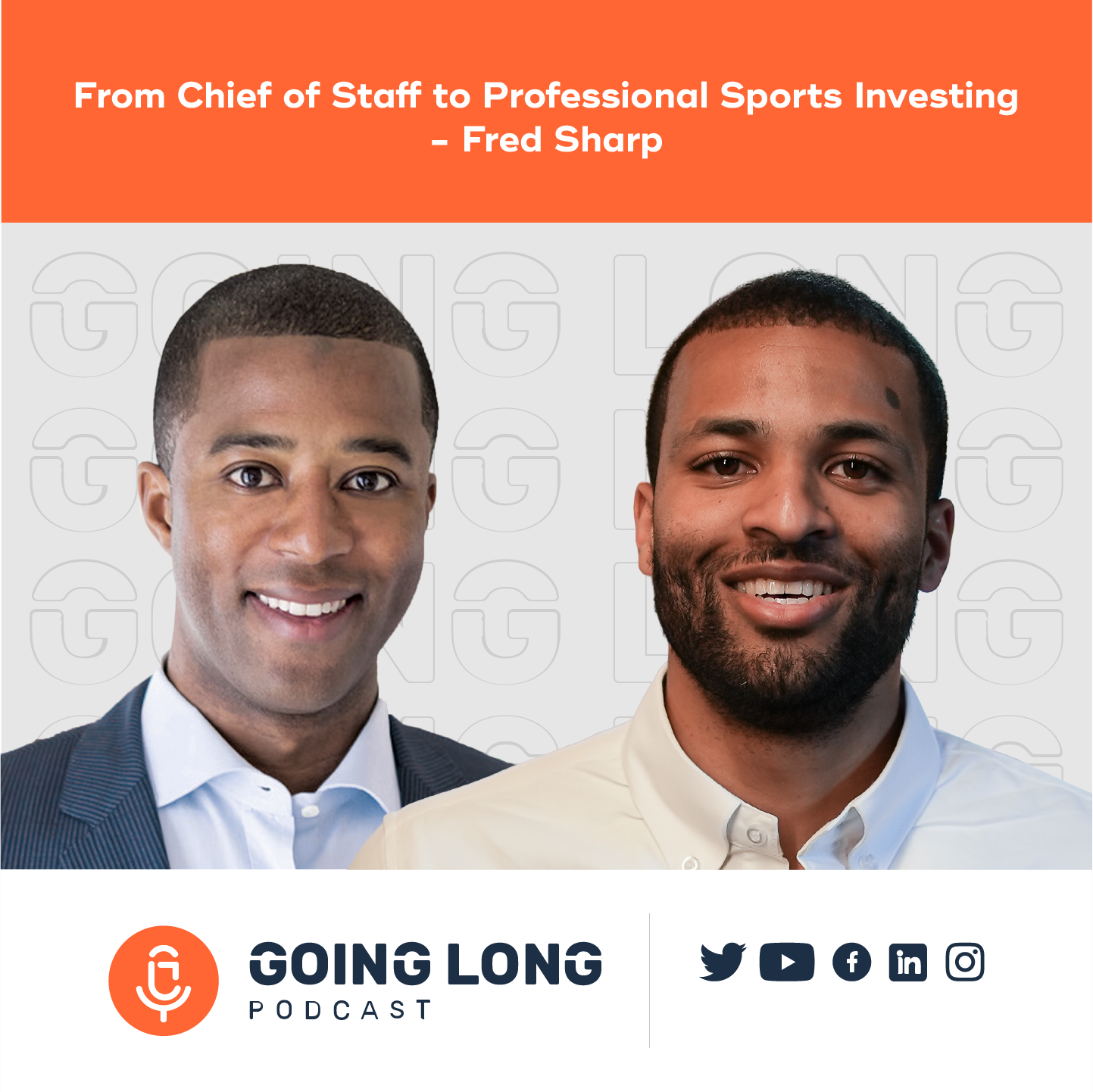
From Chief of Staff to Professional Sports Investing with Fred Sharp

Are you an overachieving director, VP, or high-performing corporate leader crushing your quarterly targets, yet secretly looking for a predictable pathway to expand your professional options outside the enterprise?
In this dynamic guest conversation, host Billy Keels sits down with Fred Sharp, the managing partner of Clubhouse Ventures and former NCAA Division One walk-on athlete. Fred pulls back the curtain on his rapid corporate rise, detailing what it was like to be hand-selected at age 30 to serve as the Chief of Staff for the Chief Revenue Officer of a $4 Billion global tech line of business. Discover how Fred intentionally structured his 168 hours to quietly build a premium sports tech venture fund while managing massive global corporate operations, and learn why understanding the unvarnished reality that corporations move forward with or without you is the ultimate mental key to unlocking professional freedom.
🚀 Want to make your corporate role optional? Grab your FREE copy of Billy's 3-Step Process eBook here: https://www.makeitoptional.com/?utm_source=youtube&utm_medium=social&utm_campaign=p2olm
📌 Questions Answered in This Episode:
- Why is shifting your paradigm from "who you know" to "who knows you" critical for high-end alternative investing?
- What does it look like to step into a global Chief of Staff role for a $4B business unit at just 30 years old?
- How can a top-performing software executive transition enterprise operational skills into sports tech venture capital?
- Why is it essential for corporate professionals to diversify their investments outside of traditional equity and RSU portfolios?
- How do you navigate the corporate visibility stigma while building your own venture quietly on the side?
⏱️ Episode Chapters:
- 00:00 - Cracking the Code: Moving From Who You Know to Who Knows You
- 03:36 - The Walk-On Mindset: Rigor, Athletics, and Structure in Metro Detroit
- 05:00 - Wet Behind the Ears: Running Global Operations for a $4 Billion Tech Business
- 07:04 - Trick Yourself Until You're Ready: Stepping Between the Executive Lines
- 09:54 - Intentional Career Design vs. The Myth of Flying by Night
- 12:01 - Beyond RSUs: Diversifying Assets Into Sports Tech and Women’s Pro Volleyball
- 14:44 - Leaving on Good Terms: Why Your Corporate Relationship Needs a Clean Ending
- 19:11 - Cutting Through Red Tape: Managing Egos and Outcomes in the C-Suite
- 22:34 - Building Career Capital: Shifting Preparation and Respect Outside Corporate Walls
- 25:57 - The Non-Negotiable Rule: Executing Side Passions Without Sacrificing 9-to-5 Performance
- 35:45 - The Harsh Truth: Why Large Corporations Will Always Move Forward Without You
- 37:27 - Legacy Engineering: Surviving the Valley by Remembering Your First 12 Months
- 40:48 - Expanding Your Circle: How to Connect with Fred Sharp on LinkedIn
Connect With Fred Sharp:
LinkedIn: https://www.linkedin.com/in/fred-sharp
Email: fred@clubhousecapital.net
📘 About Billy Keels & Corporate Optionality
If you're a corporate executive who wants to make your role optional, learn how to achieve true control over your career and turn your corporate skills into personal assets.
With 26 years of experience in corporate sales leadership, Billy Keels achieved true optionality through multiple income streams. Today, he has helped dozens of executives build a predictable path to take control of their time and start living their ideal day.
This free ebook gives you everything you need to identify, plan, and take control of your career while building financial optionality, leveraging your skills, and starting to live your IDEAL day - today!
- Get the Free eBook: https://www.makeitoptional.com/?utm_source=youtube&utm_medium=social&utm_campaign=p2olm
- How to Leave a Review for The Going Long Podcast: https://youtu.be/qfRqLVcf8UI
Be sure to connect with Billy:
- Website: https://www.billykeels.com
- YouTube: https://www.youtube.com/@billykeels
- LinkedIn: https://www.linkedin.com/in/billykeels
- Instagram: https://www.instagram.com/billykeels
- Facebook: https://www.facebook.com/BillyKeelsFanPage
- Twitter/X: https://www.twitter.com/billykeels
Episode Transcript
Billy Keels 0:00
Your multi billion dollar corporate employer will continue to run with or without you. It's just the reality, and that is exactly why you need to build your own legacy alongside your corporate role. In today's episode, former NCAA athlete and tech chief of staff, Fred Sharpe, shares how he leveraged his enterprise software experience to launch a sports venture fund while excelling at his day job and creating his pathway to optionality. So, let's dive in, and let's get you to optionality. Today's episode is sponsored by Billy Keels Advisory Services. If you want to learn more about how to make your 99 optional, just go to Make It optional.com Once again, that's Make It optional.com you helping
Speaker 1 0:44
you build freedom without losing your edge. This is the Going Long Podcast with Billy Keels. One
Billy Keels 0:56
of the reasons that I love being the host of this podcast is I consistently get a chance to sit down on the other end of this microphone and hear from some of the most amazing people with amazing stories, as well as experiences, and I get to share that with you. And guess what, today's conversation is absolutely not the exception to the rule, because you're going to get more greatness here, because today's guest, you know what, not only was he an NCAA, a former NCAA Division One college athlete, but then after that, and he went to the corporate world, you know, his last stop, he was hand selected to lead the office of the CRO, which is the chief revenue officer of a 4 billion, that is with a B, a $4 billion line of business at a company, and I think it's probably about 2000 plus employees globally, and he's then taken that experience and he's parlayed that into something which is really, really interesting, which I'm sure you're going to love, because today he's the managing partner of a venture firm that's focused on investing in premier sports teams, yes, I did say sports teams, as well as leagues, real estate, as well as tech, that shape not just fan engagement but also athlete empowerment. Gives me great pleasure to welcome to today's conversation the managing partner of Clubhouse Ventures, mr. Fred Sharp. Fred, welcome to show, man.
Speaker 1 2:15
Thank you for having me, Billy. Thank you, appreciate it.
Billy Keels 2:17
Oh man, you know what, I'm looking forward to this. This is going to be absolutely phenomenal. There's so many different things that you've done. I haven't even talked about the over 60 countries that you've operated businesses in and been able to travel, and I'll let you tell everybody about your global perspective on things, but one of the things that I do want to just really open up with is there's this thing, there's this sentence, and I'm wondering, what your take is on this. Is it about who you know or who knows you? And tell me why that's something that's important for you, and what it is that you're doing today.
Speaker 1 2:55
Yeah, no, I think growing up, you know, you hear a lot about it's it's what you know and who you know, but as I've gone on to this endeavor, which we'll dive into more, I really think it's about who knows you, right? Because when you think about sports investing, I want Clubhouse Ventures to be that go-to name in people's mind, and so I think it just flips the adage a little bit to where you need to be out promoting yourself, telling people what you're doing, and if you're doing business the right way, treating people the right way, your name's gonna ring well in a lot of those circles, and so I'm just a big proponent of, you know, it's who knows you, and I forget who told me that, but that's kind of one of those those idioms that I've tried to live by since I heard
Billy Keels 3:42
it. All right, what I appreciate that. And you know what, by the end of today's conversation, I have a well, a little inkling that a lot more people are going to know who you are. So, and so we just kind of opened up some of that now today, but you know, I didn't really get into a lot of the your backstory, but I would love for you to, you know, help us understand who is Fred Shar. How can we get to know more about you and give us a little bit of your journey?
Speaker 1 4:05
Yeah, so absolutely. I was born and raised in Metro Detroit, Michigan, here in the United States. My mom was an All-American hurdler in college at Oberlin. My dad was a basketball player, and my brother's been playing baseball professionally for the last 10 years. So, just to give you an idea of the household that we grew up in, and then not to mention my mom was a civilian in the army, the US Army, and my dad was a federal agent for 35 years. So between athleticism and structure and rigor that just kind of shaped my mindset, but for me, athlete as well, ended up playing baseball at Bowling Green State University. Was a walk-on, which is another, you know, mindset shift that I went through there in my formative years. Ended up winning a conference championship my senior year, and got to play on ESPN against those blue blood schools, which was was a. An amazing experience, but like a lot of athletes, when we get done playing, you spend so much time focused on that growing up, you don't really know what you're good at, besides your respective sport, when you're done, and so that hit me like a ton of bricks, and I didn't know what I was good at, and so I started off with a job at Enterprise Rent-A-Car, I did that for maybe two years on a whim, decided to move to Arizona because I lost a bet with a buddy, and was was fortunate enough that after being there for about a year, year and a half, ended up getting a job at a global software company, and so I did that, sold software for about two and a half, three years to Fortune 500 companies on the West Coast, and then, as you mentioned there in the intro, was I was asked to be the chief of staff to one of the executives, specifically the chief revenue officer, helping lead the operations for his office, as well as the global operations for that division, and so I was 30 years old at the time, went behind the ears, didn't really know what I was getting myself into, but credit to him for seeing something in me that I maybe didn't see in myself, and then that global experience was invaluable in shaping just how I see the world, how I see sports today, and then that experience being able to travel the world and lead teams across multiple different countries and have a perspective on how different cultures and ethnicities do business, and it really helped shape what we're doing now, and I think that's a beautiful linens and a leeway into this next phase of my career.
Billy Keels 6:41
Yeah, well, I appreciate you giving us that, that background. You know, there's one thing that's really interesting. So, you said 30 years old went behind the ears, and you're, you know, having having this opportunity to run an office of, you know, of a 4 billion with a BL, and I insist on saying that again, just to help people understand the magnitude of that, but there's this question that, and it's one of the things that I hear a lot when you can be incorporated in your, in your work in your role, and you're there's this thing about readiness. I think I was even posting about it today or yesterday, I can't even remember on LinkedIn when you accepted that role, even though you were hand picked, did you feel that you were 100% ready for that role, and if you did not, what made you go ahead and continue to lean in anyway, even though you weren't 100% ready?
Speaker 1 7:32
Yeah, I think I may have tried to trick myself and tell myself I was ready. It is funny because I was thinking about this this last night. Actually, I think in the moment you're just so focused on doing what you need to do to survive and keep your head above water, you don't really realize the magnitude of what you're doing at such a young age. And I remember the first, the first week in the job, you know, I got noticed, like, hey, we need to go to Dubai, we're having a senior leadership meeting, and so you're in this room of executives that have been with the company for 1015 years, and there's this, this feeling of being a small fish in a big pond, right? But very quickly, I think the best leaders help you realize that you're meant to be here, and so I think that was what happened to me, to where very quickly, you know, I maybe had to trick myself at the beginning, but very quickly realized that, hey, I could do this, I know I could do this, and I think it goes back to the sporting days as well, where you start to play up against older kids, and you get this, like, hey, they're bigger than me, but then when you realize and you step between the lines, it's the same game that you've been playing, and so that was the thing that's the way that I look at it now. Where I was watching baseball on TV, and there's college kids now throwing 100 miles an hour, and like, man, like, how do you hit that? But 20 years ago, that was me, right? And it's just now that I've had time to sit back and reflect, and it's like, you can really do amazing things when you, you set your mind to it, and I think that applies both to sport as well as business, specifically when I stepped into that role, probably six years ago now,
Billy Keels 9:12
at time flies, doesn't
Speaker 2 9:14
it?
Billy Keels 9:15
You know, it makes me think about the that Roger Banister effect, right? You, you maybe think you're not ready, but you know that person who famously broke the four minute mile, and then after he broke the four, no one had ever done it until like I think 1954 and then once he did it, all of a sudden it was like 11 people did it in less than, I don't know, I think it was three or four years after that, and it was like, okay, well, maybe you're not 100% ready, but once you actually are in the room and you have exposure and you have someone that actually can see the potential that you have and help mold that into talent, and it's one of those things that, well, over time, then you can, that allows you to then pay it forward, which I think is great. So you mentioned this, you know, this hand selection, and also, too, there's intentionality. I happen to know there's some of. Intentionality behind that, but you know, when you think about the the career that you wanted to craft while you were in corporate, talk talk to us about how much. Yes, there was the hand selection, but how much was it also too about you being able to say you wanted to mold your career in a certain way, or was everything just by by luck, or kind of, how did that work for you?
Speaker 1 10:23
Yeah, I was very intentional about wanting this role because, in my mind, you know, as I mentioned, you didn't really know what you were were good at coming out of playing baseball your entire life, and so stepping into that sales role and realizing that hey, I can I can I can sell this right, and then you stepping into the chief of staff job and realizing that hey I can lead or I can I'm I'm good at the operational aspect I'm good at managing these teams in different cultures and so there was it was very intentional around winning that job because it was a stepping stone for ultimately what I wanted to get to of being you know a CEO right and and so that was it. Was very intentional around talking to the right folks, making sure that I aligned with a leader who also believed in me and was able to help me get to that path. And so everything that I do is with intention. And so that was definitely one where it wasn't this fly by night thing where the job was posted, and I said, "Hey, I'm going to apply. It was, you know, was a lot of conversation with folks that I knew that had been with the company long enough to tell me, "Hey, this is a good position. This is not. There was a lot of no's for other roles that had opened up previously, and then ultimately, you know, I landed in the the right spot.
Billy Keels 11:38
Okay, fantastic. And so, as as we think about this, there's a there's another element that everyone, I would say, everyone that's watching and or listening here to the Going Long podcast is there's this concept of you know being able to build a profitable side business. We haven't really touched on that yet. So everybody here knows, like when during my corporate career, of course, I enjoyed my corporate role. I was, you know, doing the top talent thing. I was at a global level, a regional level, a local level for the last seven years of my corporate career, working here in the Spanish market and building a business on the side. Now, I didn't start it that way. It was just I wanted to make some investments. But do you happen to have any side business ventures or anything that you want to talk to us about, and kind of when that started for you would be would be great insight.
Speaker 1 12:30
Yeah, I think so. 70-nine to roll was very fortunate that you know when you got to that level, there were were different perks that came along with it than your traditional quarter carrier. So between RSU stock options things like that, it opened my eyes to things that I had not previously known, and so it started with real estate. Like everybody thinks that hey, I can buy an apartment complex and collect rent, and it's easy. Learn the hard way that that is that is not the case, and I always just found myself being drawn back towards the the sports ecosystem, and so I was fortunate enough to invest within a a small venture fund with my own money. One of those first investments was into a sports tech company that was backed by the NFL and a couple of other notable names, and so that is what helped me learn how to invest, what to invest in, and what makes a good investment. And then from there, just kind of off and running. And so from that point forward, had been building what is now Clubhouse Ventures for the last three and a half, four years to get to the point now where you know we did four deals last year within the the sports tech space, as well as one team investment, and then this year we just publicly announced our investment within a new professional women's volleyball league that's entering its third season, and so we are investors in the San Francisco franchise alongside Steve Kerr, Ronnie Lott, Jeremy Lin, and a couple of other notable Olympians and powerful women in and around the Bay Area. So, it's as you can attest, it's not something that I've been actively doing, you know, full time for for a long time. But it's something that's been slowly and steadily building. And then when hey, opportunity to go full in, I jumped at it, and they're excited to continue to see this thing built.
Billy Keels 14:23
Well, I love that. So that's it's the so the origin actually started while you were still in your corporate role, and while you were building, it's since something that has continued to now take on a life of its own in the form of Clubhouse Ventures. A lot of times when we are like, well, let me ask the the question: Did you have the this sense while you were working in your corporate role and you were exposed to the RSUs and different you know EDSPs, employee discount stock programs, and things like that? Was there a moment when there was this voice inside of your head that said, "Hey" Listen, Fred. Yes, you're good in your role, and at the same time, there's this desire for you to do something else outside of the scope of your role. Did that ever happen to you? It's like an internal voice.
Speaker 1 15:13
Yeah, I don't know if there was ever a a voice that said, "Hey, this is the time now. I think it was a culmination of different things, you know, I've I've always, as I mentioned before, like very intentional about certain things, and so as I notice, was able to make more and more investments, and as you go out and raise money, and people are saying yes, it lets me know like, okay, there's something here, right? And so I don't know if it was more so of a of an internal voice, but more so a validation from outside investors that believe in what we're doing to the point where hey, if there's you know three or four investors willing to give you six figures to go invest in this thing that you diligence that you put a memo together for and you can articulate why this is going to be a solid investment 510 years from now, maybe there's something here to where this is something that I should give more more time and attention to, and so I think that was a that was the voice that I needed to say okay like you you've you're doing the right thing here, and then obviously with some of the other things falling into place, it just made sense.
Billy Keels 16:18
Yeah. Okay. Perfect. And so then we go back to the to the this idea of being able to you know you're getting your base hit you're getting a double and you triple and then eventually you're going to be able to go. But there is a there's this also the notion of your your corporate life. This is one of the things I've been talking about a lot lately because people tend to like as you know, I've I really had a very positive corporate experience, and my guests, generally speaking, that come here also did. But you there's there is a reality. It's like every relationship, even life taught me this, right? Every corporate relationship ends. There is no right. There's no wrong. But it's just you know, I would love for you. You know, I've shared my story multiple times here. Why, why my corporate relationship ended? Can you maybe give us some insight into that? Because one of the things that this helps for everybody is to realize like there is there's so many different stories and there are reasons why a a corporate relationship will end, and there's also life beyond that. So, could you give us a give us a sneak peek behind the behind the scenes, if you will.
Speaker 1 17:22
Yeah, I think for me it was you know combination of the investing and wanting that to start to take off and how much work that goes into it and raising money. You know, you need to give it the attention that it deserves, right? I think that's number one. Combine that with the perfect storm of my boss at the time, who who believed in me, who I really respected, and to this day stay in contact with, leaving, and then you combine that with the opportunity for for me to to leave on on really good terms that set the foundation for me to truly go in and and dive two feet in to the the investing space. So, like you said, every corporate relationship ends. Mine was a was a positive ending. I have nothing but good things to say about my time in corporate. Do I wish things sometimes would have went another way? Absolutely, but I have no no ill will towards corporate. I really enjoyed my time working with people in corporate, but I think now it's it's just time for me to to be able to you know guide my own path and and do things the way that I want to do them, which is is going to turn out to be a great thing for both me and in my family.
Billy Keels 18:33
Yeah, no, that's a that that's a a great focus and being able to have the the experience the corporate the you know, I don't want to put a lot of words in your mouth, but to have that experience and then also be able to leverage that experience and be able to to bring your own dream, your own goal to to fruition as well. One of the things that you talked about because you were in some rooms that were you know very influential and some would say powerful, influential, however you want to call it, or a combination of the two, and from your perspective, when you are in the in the corporate role, I really want to. I'd love for you to to get your unique perspective on this. Between, could you talk about your boss left the company, right? And how much of what you were exposed to is about the actual knowledge that you have in terms of being able to create new opportunities within corporate. That, and I'm going to be a bit polarizing here. That versus like alliances and networks within corporate in terms of being able to get things achieved. Yeah,
Speaker 1 19:40
yeah, I think. think it's corporate is a very there. There's the political side of it. There's the red tape, but then there's also the the get stuff done side, right? And I think for me as chief of staff, like the job was just to get things done, and I think if you can. On one side, when you're in those influential rooms, it's hey, can this person get things done? And I think the best executives and best leaders are very much of that mindset of hey, can they get things done? And you know, their job is not to circumvent the red tape. That's that's your job as the operator, right? And so for me, I I viewed that as okay. If they're looking at me to get things done, how can I, on the alliance and partnership sides, figure out how to cut through that to get things done? And I think a lot of it is is there's there's egos, there's you know there's there's goals, there's whatever may be. And so for me, it's very much trying to put myself in everybody else's shoes to figure out what do you want out of this? How do you benefit? And then how can we shape an outcome that makes sure that everybody gets what they want? And like any negotiation, you're not going to get everything, but if both sides can get a little bit of of what they both want to come to do, you know, you know, acceptable outcome, then that's the goal. So I view it as that, like, hey, I want to get stuff done, and I want to get things done in a way that's going to be able to benefit both sides. And at the end of the day, you know, make everybody look good. And so that's how I view the the corporate world. And I, you know, I think I try and view that from that lens now. But as you know, it's it's tough, right? Because everybody wants something that the other person may not want, and so, but at the end of the day, the best leaders they want to get things done. And I think if you can come prepared, if you can come with a point of view, and you're willing to stick by that point of view, whether or not you know that group may think that you're you're right or wrong, I just think it builds a sense of credibility that is going to help you stand apart from from some of the others.
Billy Keels 21:46
Yeah, that and that sense of credibility is something that serves you well while you're inside of the corporate walls, and then later it will serve you well beyond that. Another question, because you are talking about this experience and where you were, you talked about the credibility. Now that you're, you know, you've had a couple of years outside of corporate now, and I believe in the more and more clients that I work with, it's just it becomes super obvious to me that while you are in corporate, and I, I don't think that everybody is, you know, needs to build a side business, but when you're building a business on the side, that could eventually become something else. Like, hey, listen, how can we learn from other people who have been there? People like yourself, Fred. When you look back on it now, the skills that I like to think they're your career capital that you were building up over this period of time. Can you talk about some of those skills that, and you've mentioned some of them already, but I really want to just kind of a block of the skills that you were developing, that you were mastering during your corporate career, that are now also skills that you can highly leverage to be able to help you help your clients today. What can you maybe give us a couple of those skills, or maybe highlight some of the ones that you talked about before.
Speaker 1 23:03
Yeah, I think the first one that comes to mind is preparation. Right, going into a meeting in the corporate world, there's usually a brief with you know all the information that you need to know going into it, and so being able to go into a meeting knowing who you're meeting with, what are their goals, what are their objectives to help shape the conversation. I think now, looking at at sports teams, leagues, what have you, it's still the same thing, right? Because these investors, whether or not they're endowment funds or individuals, they're relying on you to bring good deals, right? And so you know they're they're going to go through their diligence process, but if you're prepared with the memo and why you think this is a good deal versus a bad deal, and kind of the different outcomes that can come from this, I think that just builds again that sense of credibility that you talked about. That is your, you know, your your you know just your what people think of you, right? And so if you come back with another deal, you've got that credibility built in. They're more than likely going to take you serious. So number one, I think is is is preparation. Two, I think it's it's just how you how you treat people. Number one, or and it's it's it sounds so simple, right? But the the best leaders that I've been around on the business side and the best athletes that I've been around are very similar in terms of number one, how they prepare, whether it's for a game or meeting, but also how they treat people. And again, not everybody is going to agree on certain topics, but there's an element of respect that should be had in every conversation. And so, I always want to come into this these conversations with a level of respect, knowing that you have your perspective, your point of view, I may not agree with it, but at the end of the day, there's a reason we're on this call, right? There's there's a mutual understanding or mutual agreement that we're trying to get to to whether you know decide on an investment for a specific business unit or project within the corporate environment, or there's a deal here on the the the sports side that we. Both life, but we may not agree on some terms, but we both want to get it done, and so I think those are the two that immediately stand out to me, and that's kind of been my, my operating north star, as both on the corporate side and now with the new venture.
Billy Keels 25:14
All right, perfect. So, from preparedness, as well as the way that you, that you are treating others, so want to take a step back as well, but roll right into Clubhouse Ventures, because I really want to help. I want you to help us get to know you more once again, and so what started as a, as a, I'll call it side business, where you had some early successes, and that eventually has now become what you are leaning into full time, full full time, but there's also this, there's this moment of really understanding, like how did you get there, and how do you figure out like your sweet spot in you, and as you're listening to Fred explain this, like he's going to share his version, and I want you to think about how you can adapt it to your life, but, but, Fred, it's really about how do you get to a point where you know that it's you want to lean into something that will add to fan engagement as well as athlete empowerment around and what most would call a an alternative asset, and so because sometimes we don't really know where to go, where to start. How do we, how do we figure out what our side business is going to be, or could be?
Speaker 1 26:26
Yeah, no, it's a good question. I think it didn't start that way, right? It was, it started as sports investing, right, and then you realize that there's a lot of people that want to do that, and so what is that unique differentiator? And I think, for for me, like, I've, I'm a fan, and so I think there's a perspective from how fans watch the game that is archaic in nature. And then working in tech, you realize how advanced tech has come and how that can help not only benefit the fan but the teams. And then on the athlete empowerment side, like I've been an athlete as well, right? And granted, you know, I played in a mid-major, so I wasn't at an Alabama or USC, but there's plenty of people out there that are willing to take advantage of you because you're in a vulnerable position. Do you have visibility on campus or from a from a national media perspective? And so, how can I, as an athlete that's been in those shoes, help them understand what to look for, how to make solid, sound investments, but even broader than that, the experience of being able to help run a large business. The athletes are going to be done playing in their prime of their life, right, more times than not. And the ones that don't play professionally, they're done at 21 So, how can I, as a former athlete that's gone through that process, help them navigate that next step in their life, while at the same time, you know, exposing them to some really cool things that, if all goes well, should make some outside returns in the out years, and so I think being able to have it, you know, operate from both of those lenses is a, is a unique proposition that not a lot of other capital allocators in the space have
Billy Keels 28:04
perfect, well, like you said, and so I guess the thing that I really want the Goal Long family to listen to is basically, Fred, you haven't tried to reinvent the wheel, you were you a, as a former Division One NCAA Division One athlete, you, you've been there, you enjoyed that. Also, you had a track in technology, and you could see how technology can actually increase the aim, the experience of a fan, and you're simply recognizing things that you enjoyed, and you're bringing them together to help others solve their problems. Is there anything that I missed there or made it too simple?
Speaker 1 28:45
Yeah, I mean, that's.. I'm going to start using that as I explain to people, because that was.. that was really simple and easy to understand.
Billy Keels 28:52
Run with it, man. You know, this is.. and this just comes through, you know, as you, as you continue to work with, with, with, with clients in a similar way. It's many times the things that you want to be able to help others solve, it's a result of things that you didn't like or experiences that you already have that you can make the experience even better, and so Fred is giving you a fantastic opportunity to learn from his own experience, so that you can do something similar, maybe yours is not sports, maybe it's that you've enjoyed coding in a particular way, or doing something else, and, and helping, you know, I don't know, single dad, single mom, something like that. So, but, but usually the answers are much closer to you than you than you would think. Fred, want to come back to Clubhouse Ventures? So, we've talked about at a really high level, we've talked about some of the things, but tell us, really, who is the person that you are serving today through Clubhouse Ventures? How you know, basically, give us a, give us a sense of who is that person and what is that, that issue that you're helping them to solve, quote unquote.
Speaker 1 29:56
Yeah, so Cole House Ventures was designed as an investing firm that. Allows whether it be high net worth individuals, family offices, endowments, what have you, invest across the sports and entertainment sector. So today, a lot of our investors include corporate individuals that, like us, had RSUs and these stock options that are looking for different ways to allocate their investments outside of your traditional stock market equities, etc. There's family offices that have generations of wealth that are now starting to see more money flow into sports, and realize that sports returns are aren't correlated to the stock market, and you've got real estate and other tax depreciable assets that you can then play off of, and then you know, as we look to grow, you know, we'll look to start in university endowments and things like that, but, but really, you know, we've designed this as a platform for for all folks that are interested across sports. Think at the end of the day, whether you live in Barcelona or you live in Los Angeles, we're a worse sports fan, and so in some way, shape or form, and now the access to own your favorite team is, is, as you know, is a lot lower than it has in the past, and so you know we want to be that, that platform or that that company that allows investors to invest, you know, treat them right, and you know we're we're not looking to take advantage of anybody, we're just looking to get people access to things that you otherwise wouldn't have access to with a really, really cool group of investors that you know can do interesting things to
Billy Keels 31:29
go fantastic. So sounds like if you like sports and you like being able to be around other people that are wanting to generate not just interest but also profit, then this would sound like a good thing, where you should probably reach out to Fred. Right, it's about more people who get to know you. One other thing, man, before I want to give you a chance, but like, there's just this thing in the back of my mind that just keeps coming up, because you know, there's this saying that proximity is power, right, and so there's a number of different aspects of what you've talked about, whether it's corporate, whether it is in your current managing partner of Clubhouse Ventures. I'm just curious about what you think about that saying, and also if you have actually seen that in real life, or that's something that just sounds like complete garbage, and it's not in your experience, it's not true.
Speaker 1 32:28
I think it's 100% true. You know, I was in New York not too long ago, and think the proximity of folks that are doing very similar things, and being able to share ideas, from my experience, everyone that I've come across has been extremely helpful, and they want to see other people win, and so when you're able to surround yourself with with folks like that, rising tides lift all boats, right? I know it's a cliche saying, but even here in Detroit, there's there's a small group of folks doing the same thing, but even the folks that just grew up in Detroit want to see other people win, and so being able to be around them, being able to be in New York, and feel the energy that I try and get there as much as I can, just because I walk away feeling enthused and excited, and so by all means, like we talked about before, being intentional about where you put yourself in the rooms you put yourself in is very much something that is that is front of mind and and something that you know I don't, I don't take lightly.
Billy Keels 33:29
Okay. Fantastic. I appreciate you sharing that. One last thing, and then I've got to last question for you, but there is this, there's this thing about businesses on the side and having a senior leadership, I'll call it a senior leadership role, and that can be, you know, you can be a chief of staff, or maybe you are a senior AE, or a director, and there's this, there's this concept, and I know in the beginning I struggled with it a lot, this concept of being able to perform well in your role and be okay with also building your own dream on the side. A lot of people struggle with that. I struggled with that in the beginning. I'm just curious, because you had a very internally in your corporate role, very high-profile role. You were constantly traveling planes, trains, automobiles. You were preparing, you were performing, you were, you know, you were, you were performing at a high level. I'm just curious, if you ever had that kind of like, I can't be doing something on the side because everybody sees me, everybody knows me, they'll feel like I'm not committed, or was that just me, and like three or four of my friends that have kind of gone through that struggle.
Speaker 1 34:46
No, it was definitely me as well. Like, to your point, you've got this this visibility that not a lot of people have, right? And there's this notion that you've got to be on 24/7 and if you're. Seen doing something outside the realm of your role, the thought is: Are you really giving that role your full undivided attention? And so, you know, for me, I was very quiet about what I was doing. There was a few folks that that knew, but it wasn't something that I that I told a lot of folks about. And so, you know, I think there's there's definitely that stigma, and you know, depending on who you're working for, what company, you know, you have to be cautious about that. But you know, fortunately, like I mentioned before, I had a really good boss who, when we knew our our time was coming to an end, you know, I started to fill him in, and you know, he's very supportive of that, but I know I was blessed in that sense to where you know I had that support. I know other people, other people don't, but I would say at the end of the day, whether there's you know that that stigma or not, don't be afraid to do it. Right? I think there's there's ways to to make it work. There's you know there's things that you can do to to still be, you know, successful in your your side business. So I wouldn't I wouldn't let that notion deter you, right? Because I think at the end of the day, these corporations are going to run with or without you. And like you said,
Billy Keels 36:14
oh oh oh oh oh, that probably just hurt, or either that, or maybe someone wasn't listening. But Fred, you're going to have to say that again, please. Can you please repeat that? What you just said.
Speaker 1 36:24
These corporations are gonna run with or without you. And like you said, I had a highly visible role. Was able to see it when executive steps out. Yeah, it may take a couple weeks to to get the next one started. But at the end of the day, the company's still gonna keep going, and somebody's gonna be required to do that work, so don't be afraid to to have a life outside of the the corporate environment and do what you enjoy, right?
Billy Keels 36:48
Yeah, yeah. No, it's uh, it's it's wise and very similar, right? I mean, the important thing is you you have to continue to perform in your role. That is a non negotiable. Perform in your role for many years. I kept it quiet too, Fred. I didn't say anything to anybody. I was very, very fortunate to have an amazing boss as well. As things started to get bigger, and you know, in terms of my side business, I was able to share. But I also found that a lot of the things that I was doing and learning on my side business actually made me a much more proficient executive while I was in the company as well because it just gave me a different perspective, a different confidence, a different way to look at things. And but but the the environment has to be the right environment. You know, don't don't not be performing in your role, and then all of a sudden, you are telling everybody you got a business on the side. That's probably not a very good thing for your career. Probably, probably detrimental to your career. So, one one last thing, Fred. Unless there is anything else that you wanted to add or feel like we haven't talked about that you want
Speaker 1 37:56
to. No, no,
Billy Keels 37:57
no, no. Okay. So, one of the things that I used to think is that for a long time everything that I I felt like everything I'd touched turned to gold and things were just working every single time and you know portfolio was bigger I was going to Hawaii more frequently the you know the the attainment figures everything was going really really well and then recently or in the not too recent past life helped me to remind me of a couple things. Not everything goes according to plan, and so what I realized in that moment, Fred, was that when things are going according to plan, when things are going according to plan, we don't tend to think about it because they're just going according to plan. But when things are not going according to plan, and you're at the bottom of that valley, right? And if you're watching this on the video, you can see me kind of like curving the the bottom of the valley. That seems to go on forever because you're thinking, "Oh my gosh, I'm never going to get out of this. But whether you're really, really high or really, really low, those are both moments. And now that you are on the outside of the corporate world, I'm sure you've experienced these these things. But but one thing that helped me was no matter like I had friends and I finally learned how to you know really lean in and let other people know that hey listen I'm going through a challenging time I've never done this before I haven't been here before, and I had lots of friends who poured into me who loved me who cared for me, but it wasn't until I actually literally looked myself in the mirror and said hey look man like this is a bad moment, but this also too is just a moment. I I literally said something to myself, and that like changed things for me. And it was like, okay, now it's time to get off out of this valley and start moving to the top. And so I want you to imagine, like between now and the next three years moving forward, there's moments we're going to be at the high, and then there's moments where you're going to be at the low. I really want you to think about the moments where you're at the low, and let us be inside of your mind for a moment. What is the one thing that you're going to look back three years from now and go, you know what, Fred? I'm glad that you said that because I needed to hear that to get out of this low moment. What's that one? Thing that you know you need to to say to yourself, and you're going to look back and go, "Thanks for saying that, Fred. Really appreciate
Speaker 1 40:06
it. Yeah, it's funny. I thought about this the other day because I'm building this for for a legacy, right? I got two kids, so I want you know them to be able to have that optionality. And I think for me, 10 years from now, five years from now, when I look back and going through those rough moments, it's going to be think of the first 12 months, right? And and just think of how hard it was to get that first deal done, or or how hard it was to get you know everybody in line for for a decision on that first deal, or you know when that second deal hit and you had a guy back out at the last minute and you had to to go backfill it, and you know, at the end of the day, you were able to get through those things and get those done. And so, you know, in those hardest moments when you're trying to make a name for yourself and it doesn't go your way, but now you're you're 10 years in, so something had to go right, right? And so, I think for me, it's being able to sit back and just think about those early struggles in the grand scheme of of where we are 510 years from now, and and how this is so much bigger than we probably imagined when we first started, and know that hey, another five years from now we're going to look back at this moment and laugh as well because we're we're that much bigger. So you know, for me, I think playing baseball helped a lot too, right? Because for the listeners who don't know, you know, to be a good hitter, you're going to fail seven out of 10 times, right? And so, going through that, growing up, and you know, realizing that it's not about it's it's about the next at bat, right? And so, how quickly can you flush that current loss to get to the next one? And so, I think that for me is is what I'm going to lean on when, you know, you're going through those those those dips in the valley there five years from now. It's okay. Just remember the baseball days. It's not about this last at bat. It's about the next one. But also realizing that hey, those first 12 months, you know, there was four or five deals that you you couldn't you couldn't get the the capital together, or you had somebody back out, and at the end of the day, that did stop you from going back to that same investor for the next deal and winning them over. And so, you know, for me, that's that's what I'm gonna kind of lean on here when you know I'm having those those doubts.
Billy Keels 42:13
Man, well, I appreciate you saying that, and it's just so visual to think about. Okay, yeah, you know, at seven of the 10, if you get three out of 10, that's that's a good thing. So it's not thinking about what just happened; it's thinking about what's getting ready to happen. So, really appreciate that, man. And I just look, and I'm like, man, the time flies. We're literally out of time. And so I'm thinking that the beginning of the conversation, you know, you're talking about your your family and growing up in a in a household full of athletes, and whether it was your mom or your dad or also the military. So you've got the rigor, you've got the the focus. Your brother that you talked about as well, and even yourself being able to to perform at an extremely high level at the NCAA, the Division One, and one of the greatest conferences ever, by the way, because I'm also a graduate of the exact same conference. It's conference, not school, but conference. But being able to have the fortitude to walk on, and then be able to to to be able to make your dream become a reality, and then once that portion of your your dream was done, then you decided, hey, you know what? I actually want to tackle this sales thing. So you you head out to the to the to the to the southwest, and you head out there, and you really get involved in in sales, and you you get in on the rental car side of things, and then eventually you get into tech, and you're into tech, and you're performing at an extremely high level, and then you're realizing like you're very intentional about the way that you're that you are forging your path in corporate, recognizing where are the areas that you want to continue to leverage your sales, moving into more of leadership of people influencing, being able to also manage an entire office of 4 billion with a B once again, and 1000s of employees around the globe, and being able to influence and being able to really get the rigor around what you talked about, being prepared, recognizing how other people are treating one another, and having those as a cornerstone of the way that you are also now building your business and serving others through Clubhouse Ventures, and so I know that my entire Going Long family-I say my Going Long family-because they're here with me every single couple times a week. They want to know, Fred, how can we find out more about you, more about what you're doing with Clubhouse Ventures, so that so we can be in touch? Please, just just yeah, yeah. So I'm going to be quiet, everybody. So Fred, help us out, man. How can we find out more about
Speaker 1 44:22
you? Yeah, absolutely. So, website is is under construction. We've been secretive, but ClubhouseVentures.net that will be up and running here soon. LinkedIn, you can find me at Fred Sharp, and then email, which I'm very quick to respond. Fred at ClubhouseCapital.net. That is our investing side, and so again, you know those those three options there. But again, we've got a number of deals in the pipeline across the sports, the tech, the real estate ecosystem, and would love to continue to to build and grow with with like-minded investors that are you know are interested in the same things we are, but can also. Provide value outside of just capital, because that, that's big, right? Money, a lot of people have money, right, but if you can combine money with, you know, a skill set that not everybody else has, that's the unique value driver that we tend to find ourselves leading with.
Billy Keels 45:14
All right, fantastic. Well, listen, everybody, you've heard it, you've got his email, you can find him at Clubhouse ventures.net and also, when you win, not if, but when you reach out to Fred on LinkedIn, do me a favor, because I ask it all the time, when you reach out to him, just let him know, make up, send him a personalized invitation, just so that he knows that you've already invested time, it's going to make the two of your, like, your conversation, it's just going to be much, that much more effective, and your guys are already getting to know one another, you can tell about the things that Fred was telling about already, and all that kind of good stuff. So, listen, Fred, on behalf of the entire Goinglong family, I want to say, thank you very, very much for deciding to invest your time with me, with us, and really appreciate it, man. Thanks so much.
Speaker 1 45:53
Absolutely, thank you for having me. All
Billy Keels 45:56
right, going along family, once again, I will be back with another episode. We'll be back soon, so go out, make it a great day. Thank you very, very much.