
From Corporate Execution to Hospitality Empire: The Kevin Devanney Blueprint

Subscribe to the podcast


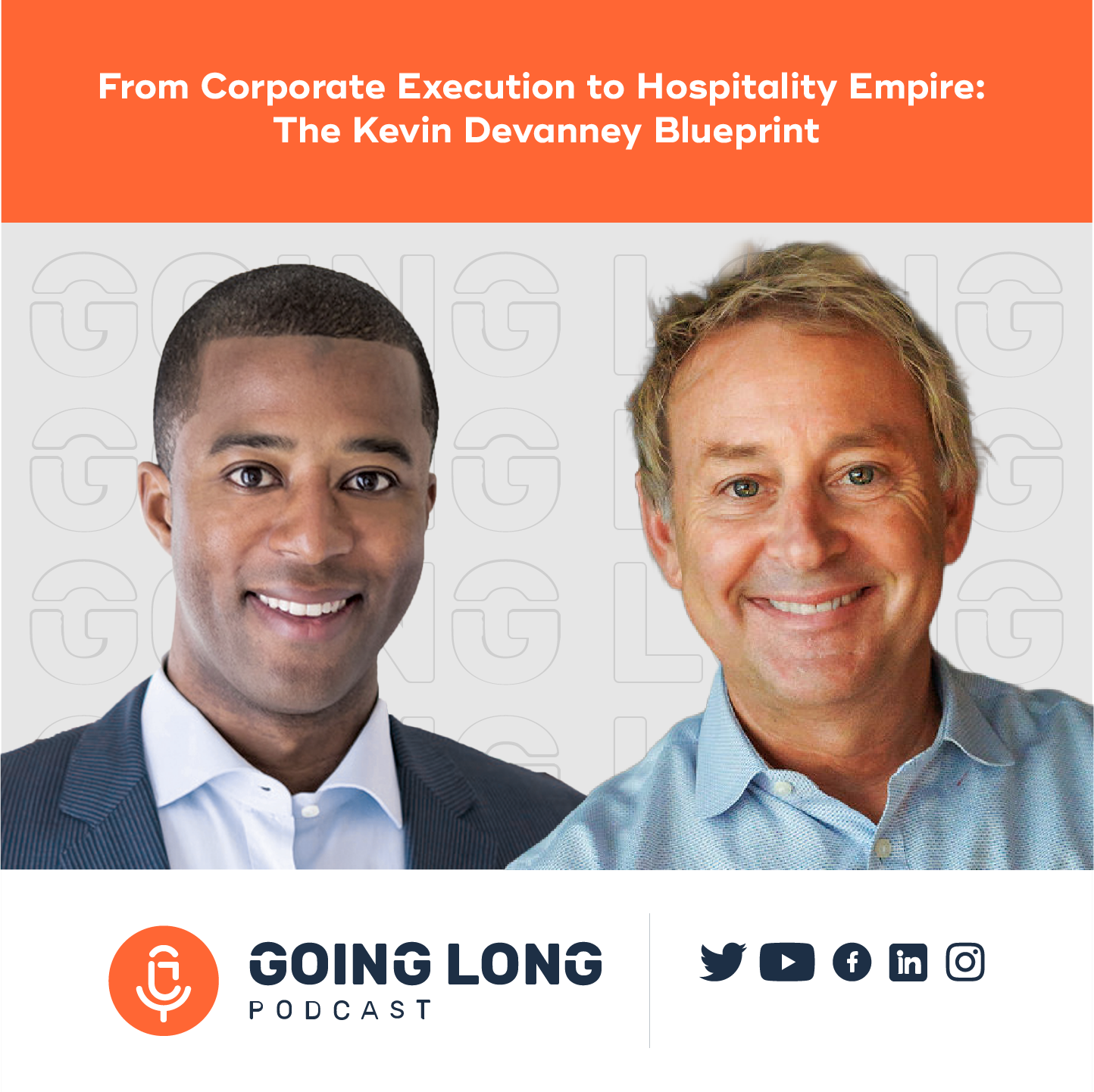
From Corporate Execution to Hospitality Empire: The Kevin Devanney Blueprint

Are you an overachieving sales director, VP, or enterprise leader wondering how to channel your day-to-day client execution and operational discipline into high-impact independent assets?
In this transparent guest conversation, host Billy Keels sits down with Kevin Devanney—founder and president of Incentive Travel Solutions and the Devanney Hospitality Group. Kevin shares his 27-year trajectory, detailing how the high-stakes lessons taught by his early corporate mentors laid the foundation for managing luxury group trips to Moscow's Kremlin and the Louvre in Paris. Discover how Kevin navigated the sudden, full-stop impact of COVID-19 by pivoting his team into local real estate and restaurant revitalization, why true entrepreneurs wait for real problems to solve rather than chasing trends, and how managing your "fitness, finances, and family" triangle creates absolute resilience when facing high-stakes business shifts.
🚀 Want to make your corporate role optional? Grab your FREE copy of Billy's 3-Step Process eBook here: https://www.makeitoptional.com/?utm_source=youtube&utm_medium=social&utm_campaign=p2olm
Connect with Kevin Devanney via these links:
Website: https://www.incentivetravelsolutions.com/
LinkedIn: https://www.linkedin.com/in/kevin-devanney-5916762
Instagram: https://www.instagram.com/kevindevanney/
Email: kevind@incentivetravelsolutions.com
📌 Questions Answered in This Episode:
- How do you translate meticulous corporate customer service habits into an independent asset?
- What does it look like to pivot an entire company when an unexpected event completely stops your industry?
- Why is chasing cash bonuses inferior to creating unforgettable, experience-based incentive rewards?
- How do you build a local real estate footprint that revitalizes a town and creates family legacy options?
- What is the "Fitness, Finance, and Family" triangle, and how does it help executives navigate low moments?
⏱️ Episode Chapters:
- 00:00 - Broadcast Recording Setup: Tuesday, September 15, 2026, with Kevin Devanney
- 02:04 - The Train at 365 MPH: How Incentive Travel Solutions Navigated the COVID-19 Full Stop
- 04:35 - Old-School Mentorship: Smacks in the Head, Kremlin Dinners, and Meticulous Details
- 07:15 - Pivoting Forward: Embracing Mistakes as the Most Critical Part of Growth
- 11:00 - The Path Chose Me: Why True Opportunities Present Themselves When You Master Your Craft
- 14:50 - Cash is a Satisfier, Travel is Unforgettable: Redefining High-Performer Rewards
- 18:25 - Staying in Your Lane: Refusing to Dilute Your Core Niche Expertise
- 21:28 - Local Revitalization: Turning One Dust-Filled Building into Pineville's Main Street Revival
- 25:40 - Ethical Entrepreneurship: Never Stealing Clients from Your Previous Employer
- 28:05 - Legacy Engineering: Deciding Between Selling Out or Passing the Torch to Your Kids
- 33:10 - The Triangle Framework: Balancing Fitness, Finances, and Family in the Trough
- 36:30 - Connecting with Kevin Devanney and Exploring Incentive Travel Solutions
📘 About Billy Keels & Corporate Optionality
If you're a corporate executive who wants to make your role optional, learn how to achieve true control over your career and turn your corporate skills into personal assets.
With 26 years of experience in corporate sales leadership, Billy Keels achieved true optionality through multiple income streams. Today, he has helped dozens of executives build a predictable path to take control of their time and start living their ideal day.
This free ebook gives you everything you need to identify, plan, and take control of your career while building financial optionality, leveraging your skills, and starting to live your IDEAL Day - today!
- Get the Free eBook: https://www.makeitoptional.com/?utm_source=youtube&utm_medium=social&utm_campaign=p2olm
- How to Leave a Review for The Going Long Podcast: https://youtu.be/qfRqLVcf8UI
Be sure to connect with Billy:
- Website: https://www.billykeels.com
- YouTube: https://www.youtube.com/@billykeels
- LinkedIn: https://www.linkedin.com/in/billykeels
- Instagram: https://www.instagram.com/billykeels
- Facebook: https://www.facebook.com/BillyKeelsFanPage
- Twitter/X: https://www.twitter.com/billykeels
Episode Transcript
Billy Keels 0:00
Building a business you don't own doesn't mean starting from scratch or throwing away your corporate experience. In this episode, former travel industry executive Kevin Devaney reveals how he turned decades of high-stakes corporate execution into a multi-venture hospitality empire. So let's dive in and let's get you to optionality. Today's episode is sponsored by Billy Keels Advisory Services. If you want to learn more about how to make your 99 optional, just go to makeitoptional.com. Once again, that's makeitoptional.com.
Speaker 1 0:36
Helping you build freedom without losing your edge. This is the Going Long podcast with Billy Keels. One
Billy Keels 0:48
of the biggest advantages of corporate life is the ability to learn from the pioneers in your industry. You know, today's guest he did exactly that because you know, in just short of a decade, and I'm sure he's going to tell us a little bit more about that. In various leadership roles, he was able to master the skill of creating an unforgettable client experience, attention to detail, excruciating detail, amazing customer service, as well as a can deliver attitude, and he's taken all of that to an like amazing foundation, and he's taken it to a whole new level. His companies, well, like I said, companies, and he's going to tell us more about that. Basically, what they're doing today is helping corporate clients, on one hand, raise the bar to inspire their highest performers with unique and unforgettable travel destinations and experiences, and he's also done a couple of other things that I'm sure he's going to tell us about today. It gives me great pleasure to welcome to today's conversation the founder and president of Incentive Travel Solutions, as well as the Vanny Hospitality Group, none other than Kevin Devaney. Kevin, welcome to the show.
Speaker 1 2:00
Billy, thanks for having me. Good to see you.
Billy Keels 2:03
Hey, man. You know what? It's feels great to see you here. It is such a pleasure. I've watched so much of what you've done for actually. It sounds like and is decades at this point, and I know that there's so much that you're going to be able to add to the Go Along family today. And I know they're going to be inspired by your story, man. So, if it's all right with you, I just wanted to kind of jump in.
Speaker 1 2:22
Yeah, go ahead. We've known each other for, like you said, decades. Late '90s maybe is when we first met and traveled the world a little bit together, and it's been a good run for both of us. I think.
Billy Keels 2:32
Yeah, it's been definitely since it's been a phenomenal run, and here we are, still standing, still moving forward. You know, and just kind of taking it right there, right from the very beginning, because you know we both started in corporate career, and you've continued to go on and do amazing things, lots of impact. But it's not usually the most positive moments in life that are the ones that allow us to really expand. And I know that back during the day that I don't know when people are going to be listening to this, but I talked about how you helped to raise the bar, but there was also a moment in life like COVID. For many people, were locked up, locked in. How did that experience really treat you, and also how it was impacting you and the businesses that you were managing and leading, and and the people that you were serving?
Speaker 1 3:20
Yeah, you know, life was pretty simple before COVID. You know, and I look back, and I at the time I probably thought it was pretty crazy and chaotic and traveling the world with incentive travel solutions, putting together Presidents Club trips and top performer trips for companies all over the world, and that's what we were doing. And we were many years into it at the time. We're now 27 years into incentive travel solutions, and so take it back a little bit. And we were cruising around and doing some great things, and we had great contracts with great companies. And COVID hit and stopped travel in its tracks. And I always say, Incentive Travel Solutions was train going 365 miles an hour, and there was nothing that could stop it. I mean, we could make mistakes. We could companies might jump off because they were got sold, or employees might come or go, but the train never stopped, and there was nothing that could stop the train until COVID hit. And when COVID hit, it just stopped in a like a like a train wreck, and we had to pick up the pieces. And so that was a pivotal point for us, and we could talk more about that as we go forward. Yeah, yeah,
Billy Keels 4:20
man. Well, and definitely want to get into that. You know, at the at the time, you know, you and I met in in the travel industry, and and then I went into the enterprise. Well, did a one year sabbatical. That's now been 25 years in a number of different things. But one of the things that I realized is also too during that time I was in the enterprise software space in the hospitality industry and was also faced with the train wreck that you talk about, but you know I'm also interested in in if we take a step back, there were a lot of the foundational steps and elements that you were able to learn as well from pioneers in the industry, and we talked about that in the very beginning. But you've also taken this real unique perspective on having. Rewards and allowing them to be redefined, and so I would love for you to share with us, especially if we think about the the incentive travel solution side of things. How did that early corporate experience for you really help for you to inspire others to be able to, you know, really go beyond the experience in travel?
Speaker 1 5:21
Yeah, well, both of us were very fortunate to where we met back at a pretty large travel company based in St. Louis, Missouri, and we were very fortunate to work for those guys. And I look back at that experience and I think of the people that were mentors for me and you at that time, and I think about that almost every day of my life. The things that they taught me, and I try to now that I'm at the point where I have people that I'm mentoring to try to take what they did and teach them a little bit about what I was taught, but in a way that is inspiring, but also old school in a way. You know, these guys had were pioneers in the travel business in the '60s and the '70s and the '80s, and then when I joined in the '90s, they were a little bit older. But gosh, they just really-it was really awesome of them to open up their mind and their voice to tell me little things along the way. And I tell people like, if I showed up without a tie, they'd smack me in the back of the head and say, "Put on an effing tie. Go up and get a tie. You know, here's I was in the cellar of a restaurant in Paris one time, and it was blazing hot, heat wave in Paris. And we were with clients, and I took my jacket off and put it on the back of the chair. Client went to the bathroom and smacked back of the head, you know. Put your coat back on. We don't take our coats off until the client takes his coat off. So these mentors not only taught me a little bit about the world, about wine, about cigars, but how to act, how to dress, how to behave in front of in certain situations all the time. We found ourselves in meetings with the Colosseum in Rome, in the in the with the Louver in Paris, dealing with the police department in downtown Paris, and trying to manipulate move 1000 people from a hotel to the Louver with a police escort, and that's you know that's daunting. You know, in in Moscow, two private dinners we've hosted in the Kremlin in Moscow. How do you handle that situation? And these guys, I always go back to the way these guys brought it back to the basics. So, corporate world back then, what do I take out of that? It's just what those guys always taught me. It's what the mentors taught, and I don't mean to take over here, but it's what my biggest fear is right now with people working remote that they didn't get, they don't get that mentorship of people from the corporate world and that daily interaction with guys that they think don't know anything, but God, there's just a mound of wisdom in those guys. That if we just sat and listened to them for hours and hours, we could learn so much. You know,
Billy Keels 7:55
no, there's so much to be learned. And and by the way, you're you're talking about a a burgundy blazer that was actually, you know, it was super beyond hot. But the goes back to the point and the thing that I was talking to that I mentioned to the Go Along family in the very beginning, it is, you know, it is about the meticulous attention to detail and being able to have that high level of of client service. And you know, sometimes it's it's easy to do the easy thing, right? And you've talked about it, and having those mentors that were able to show you the path, and being able to take that early on from the from the corporate days. And can you talk to us about you know you took those lessons? Now you're in a position where you're ready to pay it forward, and and at the same time, how does that really help you in the 27 plus years? I think you're going on 28. I don't want to timestamp this too much, but you know, almost three decades in incentive travel solutions, and how those early lessons really help you to now add your Devaney stamp on it, if you will,
Speaker 1 9:00
yeah. Well, the train is still going at 365 miles an hour, but learning from those guys, nothing ever goes right. Right, traveling around the world, people's flights get delayed, luggage gets lost. We're talking about taking 350 people to Lisbon or to Porto and down to Lisbon or over to Norway or Sweden and Stockholm and Copenhagen and taking a train in between, you know, and just about everything that can go wrong. The air conditioning goes out on the train. So the early days, what taught me is how to pivot quickly and to move forward. Never stop moving forward. Keep taking steps forward in every aspect of life. Keep taking steps forward and just make the decisions. There's going to be blocks that come up every day, but just keep moving forward. You know.
Billy Keels 9:49
Yeah. So, and I love that, right? And as we speak to so many people around the globe now that are you know in corporate roles and they're thinking about you know moving forward and and a lot. Times you know we we come from a background where there's so much specialization because the bigger the company the more specialized you are, and there are number of people especially when I if I start working with someone as a as a client and you know I see that there's this recurring pattern of when you are in a in a big corporate there's this idea that you always have to get it right. Now you're talking to us about being able to be adaptable because there are moments, especially when you begin to do things for yourself or you begin to then build your own company, that all the specialization doesn't necessarily work right in the beginning. So, so what do you say to that person who's really they're coming from this role? They're a you know a senior director, maybe a VP and they're used to everything going according to to plan. It's that that perfectionist. I'm a recovering perfectionist, so I can speak to it. How do you actually help that person to to recognize that sometimes that, and I don't even want to say failed step. It's like a part of the process.
Speaker 1 11:00
Yeah, it's a real bummer in corporate America that you can't make mistakes, that you can't give a chance to recover, or or it's look it's frowned upon because making mistakes are the most important part of growing and going forward. If you don't stumble and scrape your knee 15 times, you are not going to make that mistake over and over again. Okay, but if you're afraid to make mistakes, you're never you're not going to get anywhere in life. You have to take chances, and sometimes it's going to work out, and sometimes it's not. You have to be smart for sure. But it really is crazy for me to think that in corporate America that you're not allowed to make a mistake. I mean, my gosh, you know that's the most important part. I'd say make mistakes. Make as many mistakes as you can possibly make, really, because that's how you're going to learn. What's what what happens? I mean, because it's going to happen at some point in life, and otherwise, it's just not risky. And I guess everybody does want to take that easy way, like you mentioned. You know, talking about it being easy and taking the easy way out. But I'm not saying risk like an entrepreneur, like I am. You know, of course, people say that you know they think I'm crazy for some of the things that I've done, but I'm just kind of confident in what I do. You know, and and I want. I think people should be confident in what they do. Jerry Seinfeld most recently said, "The guy that wins is the guy that has the most interesting job. The guy that everybody looks at and says, "Wow, that's awesome! Because you know why? Don't worry about the money if it's interesting and you love it. The money's going to come if you're good at it and you love it. If it's interesting and you think it's fun, then you win. The money will come. Don't chase money.
Billy Keels 12:38
Yeah, and I I love that idea, and it leads me really to the next question: Is you know, Kevin? Early on in your career, you know, I talked about those first, you know, 10 years, and you learning from a lot of the different mentors, and because of the successful track record that you had, I mean, really, the world was and continues to be your oyster. So you could have selected to do anything. Like you could still be working in a big corporate role, and probably you know, you know, you don't chase money, but you'd be doing something you like, and you'd be probably making bazooka dollars and all this kind of stuff. But what was it that really led you down the path to saying, you know what? There's something that I really want to do. These paychecks are great, and at the same time, I really want to go out and chart my own path. Number one, and then number two, how did you select what it was that you wanted to do? And even now, it was such the path that almost 30 years later, you're still on that path.
Speaker 1 13:40
Yeah, you know, I don't know that I've ever tried to explain this verbally, but I didn't choose the path. The path chose me, and I don't think that any time I hear somebody say, "I'm an I want to be an entrepreneur, I don't think you choose to be an entrepreneur. I think the entrepreneur, there's opportunities that come up in life, and you either take it or you don't, okay? And so I was fine in corporate America. And when this company, this large travel company, came to me and said, "Hey, these clients are too small. Get rid of them, I was like, "Okay, I'll get rid of them. Well, I wasn't the entrepreneurial guy to say, "Oh, I could take all these little clients and start my own business. Eventually, that's what happened because my clients came to me and said, "Hey, Kevin, we miss you. Come back and can you help us out? Can you help us out? So the opportunity presented itself to me, and so I I try to tell everybody, don't be an entrepreneur, don't try to go start a cell phone shop. Oh, that didn't work out, so I'm going to start a hair salon. Okay, that didn't work out, so now I'm going to start a a baseball bat company. Find out what you're good at, and wait for the opportunities to come to you, and take those opportunities. It's what it's those missed opportunities that's scary for me than trying to go out and find something to be entrepreneurial at. Whatever's hot right now, if it's real estate or if it. You know, hospitality right now, or if it's technology or AI. Oh, AI is hot right now, so I'm going to start a business in AI. If you love it, great. If you don't love it, you're not going to be great at it. You know, do something that you love because hospitality and the businesses that they say are going away, well, they haven't gone away yet. You know, hospitality hasn't gone away yet, and that's what I'm in. I'm buried in hospitality, and they said, "Oh, one day there's going to be robots for servers, and you're not going to need any people anymore. Okay, maybe, but right now they need us. Okay, so do what you love, stay in hospitality. You want to open a restaurant? I say, open a restaurant. Do it. Go for it. You know, do what you know and do well, but wait for the opportunity is going to present itself for you. You know, but don't miss that opportunity. And that's what happened to me. I didn't seek it out; it came to me.
Billy Keels 15:48
So I love that the the opportunity really came to you. And it sounds like you were helping others to solve problems. And at the end of the day, as business owners, as entrepreneurs, that's what we do all day long: is we help others solve problems. You know, they they're many of them can be first world problems, but however, they are your clients' problems. So, one of the things that I I do want to just talk about this because we've incentive travel has made a massive impact on my life early on, just on the on the on the service provider side of things, which I didn't know from 21 to 26 that I was going to see all these different countries around the world and meet amazing people like you and and things like that. But one thing is to be on the service side. The other thing is to be on the what we will call the the packs side of things. So and and now I've been able to experience both. And you know, being a top achiever, the company I was working for, SAP, I was many times in Hawaii in a in a winter circle type of environment, and I I don't think enough people really truly understand Kevin the importance of helping high achievers continue to achieve and continue to raise the bar. So can you talk to us about the importance of incentive in in rewards and how that also helps large organizations inspire their top and highest performers.
Speaker 1 17:07
Yeah, for sure, the incentives are there. I mean, if somebody it's dangling the carrot. If nobody if nobody's been part of this industry, it's dangling that carrot out there for somebody to do a little bit better. This can be done in a lot of different ways. Some people in the 1970s and 80s they used to give blenders and golf clubs and gifts for incentives. Hey, if you sell more, we're going to give you a new blender. Okay, great. Well, we've or or there's cash bonuses, but I always believe that cash is not an incentive; it's a satisfier. Okay, nobody ever remembers what they did with that $1,000 bonus three years ago, nobody can tell you what they did with it. But if they won that trip to the Riviera Maya in outside of Cancun in Mexico, and they were sitting with the CEO having a margarita on with their feet in the sand, they remember that for the rest of their lives. And if we put that out there, and I say with all my incentive trips, everybody has to walk away from every event, every interaction, saying, "Holy shit, that was awesome! That was awesome! And if they can walk away from that, that's the incentive. That's what next year we put out. Next year we're going to Paris. Next year we're going to Peru. Next year we're going to Chile, and they want to go. I want to be on that trip, and their spouse says, "I want you to win that trip. Okay, we want to win that trip because we met Susie and and David, and we want to see them down there and that personal interaction. And so, I got to provide that service level. I got to provide that wow factor for people to say, "Oh, that was awesome! That was fantastic! And from a corporate level, what we want people to say is, our employees' retention is amazing to keep people within the organization because we are offering this opportunity, an achievable, achievable opportunity. Number one, achievable opportunity to go to a country or a destination like Aruba or Grand Cayman, and to be able to take you, them, and their spouse there, that incentive, that reward, that recognition on site, that five minutes with the CEO with your feet in the sand is unforgettable, and that's what people want. I mean, they could say, "I'd rather have the $5,000 cash, but let me tell you, from a corporate perspective, taking your top performers, bringing them together in the sand at the Ritz-Carlton Grand Cayman. There's a shout out. I just came from there, and it's awesome, and it is fantastic. And to be able to go there with your top performers, it's unforgettable, and it's a reward. And it's great for the corporate. It's great for the individuals. It's great for the spouses that are there every day cheering on the the award winners. And so we market to the spouses. You know, we send letters to them. We send little gifts and things like that to reward to get them pumped up for the trip. And so for a year, while this guy's trying to win the trip, this incentive of if they win it, they want to come back. The next year, so it's an important part of corporate sales recognition.
Billy Keels 20:04
Yeah, no, and I love how you paint the picture. And it is one of those things. It's one of the intangibles, really, because how often you know I remember when we were working together, and you know, I don't talk about a lot, but I remember you know we have so much interaction with the C levels, the the CEOs of these very large companies, and I thought that that was just the normal thing to do because that's what you were doing every day. Until I actually moved to Europe, and I realized on the org chart how far away the heads of these organizations were. But then there's nothing. I love the example you just said. Like when you're sitting or you're there with the CEO of the company, and your feet are in the sand, and you're you know sharing in my tie or whatever the case may be, and introducing spouses-it's just one of those things that money. It's really difficult. Money cannot buy those experiences, and so it's great to hear that. As you know, through the inspiration that you saw early on, Kevin, that now through your own incentive travel solutions, that you're creating these experience through destinations and and beyond. So one of the other things that we talk about, and I don't think it's talked about enough, is when you are moving from your corporate and you found this passion or you're solving this next problem. Well, you realize that you solved the problem and you've solved it really, really well. And usually, Kevin and you and I have both seen this. The people that solve problems and they do it at a really high level, they have the right level of detail and the in the yeah the attention to detail. The customer service levels are off the chart. Well, usually people want to help have them help solve other problems, and maybe those problems are not from the same industry. Maybe they are in an a tangent, an adjacent industry or an adjacent type of business. One, I just would like to know: is that something that had that's happened for you early on? Just yes or no, if it has. If you've been, you know, look to solve other problems outside of incentive travel. Okay, excellent. Yeah, sure. This is what we call a setup question, everybody. Because keep going, yeah, because you're talking about it, but um, but but also, so you you found these other opportunities to to solve help other people solve things. But many times, if you don't have a process to actually say yes, you're going to do this or no, you're not going to do that, it can be really, really frustrating. So, before we continue down that path, have you been able to come up with a way to say this is the type of business solution that I want to create a solution for? This is the type that I do not want to create a solution for. Just so you can really keep your focus and your energy.
Speaker 1 22:38
Yeah, you know the travel industry. They think it's travel. Everything is travel, from individual travel, Joe and Susie Chapstick going to on vacation somewhere, all the way to somebody like Michael Jordan who lives here in Charlotte, North Carolina, who's going on vacation with his family. That's a little different experience. Okay, that's a whole industry in itself called luxury travel, and then you've got our travel, which is group incentive travel. Okay, we've tried to stay very focused on incentive travel. If a company called me right now and said we have a 23,000 person conference that we needed in Las Vegas and we need somebody to help us coordinate it, I'm gonna say, look, I'm gonna give you a phone number of a couple people that I know that can do that really well for you, but I I can't do that very very well for you. I just don't have the bandwidth to do that. Okay, so there's companies out there for that. If Michael Jordan called me right now, I could probably help Michael Jordan with some trips, but it's not something that we do individual travel very well. We've stayed very focused on group incentive travel, and I wish more companies would do that. I've run into companies that said, "Boy, we just had a really bad experience with our travel company. Oh, really? Who was it? And it turned out to be an AV company that they got along with at a hotel in San Diego. So they hired them to go put their trip together in London. And I thought they tried to get outside of the world, and then they messed it up for this company. Okay, so do what you do very, very well. Stay, stay in your lane, you know, and and stay sharp with that. I don't try to get outside of our world. Every once in a while, a company will call us to say, "Hey, we are having certain troubles with our incentive trip internally, with the motivational part of it, or with the design of the trip, and I'll get involved in that. But we really don't try to stay outside of group incentive rewards and recognition. Wonder,
Billy Keels 24:30
wonderful group incentive rewards and recognition is the area that you continue to serve, where you are helping corporations and enterprises to be able to solve those issues, and you're doing that on a global scale. At the same time, you have a real love for being able to add value at a local scale. Can you talk to us about how you? Because you know the the the the well, we just talked. At the at the beginning of the at the beginning of the show,
Speaker 2 25:03
yeah,
Billy Keels 25:04
and I would love for you to talk to us a little bit more about how you are making an impact locally as well.
Speaker 1 25:12
Yeah, yeah. Very fortunate. 15 years ago, I came into this little town of Pineville, North Carolina, and it was all boarded up, and I was looking for a place for incentive travel solutions to hang out. So I found this building. I pulled off a couple boards, opened a door, looked at some dust inside there, and bought this little building on this little strip in a Pineville, and took it over and moved my travel company in there. The mayor of that town came to me, saw what I did with this building, kind of saw some dust coming up, and we made the building looked real pretty. Put some chandeliers in there, and had my 25 employees working in this little small office, and it was really cool. And the the mayor came to me and said, "Kevin, I want to put feet on the street in this little town. It's become desolate. Nobody stops. There's not a car coming through here. It's just quiet. And I said, "That's not really what I do. He goes, we own the building down at the end. If I sell you that real inexpensive, can you help me renovate it? And I said, it's not what I do. But again, this was an opportunity that came to me, and I didn't push it aside. Again, for the second time in my life, an opportunity came to me, and I said, sure, I'll help you with it. Well, what did I know about renovating a building from 1895? So I hired a couple high school kids. We cleaned it up, got these high school kids over a summer. Helped me clean up this building. It turned out to be pretty cool. And now I own that building, and now I own the building next to it, the building next to it, and the building next to it. And very fortunate, I came in and helped this town start to revitalize. It caught some wind in the Charlotte newspaper and the Charlotte news. The town of Pineville is coming alive, and I was like, that was just me doing a little bit of renovation on a couple of buildings, and all of a sudden there were some newspapers down there and some newspapers down there, and people looking to live in Pineville, and and then you know, so if you cut the grass in your yard and you trim your yard, your neighbor's going to trim their yard, and then people started cleaning up their buildings, and all of a sudden, we put some flowers in town. I donated Christmas lights on the tops of all the buildings. We made the town look pretty, and then COVID hit. And in the when COVID hit, that was a devastating blow to incentive travel solutions and stopped travel in its tracks. But I flipped and turned one of our buildings into a restaurant and Margot's Wine Pizza Market. I don't want to take your story, your your podcast over, but um, we opened up a we yeah we opened up a restaurant. We were going to open up a wine shop during COVID. We stopped travel. I had 25 employees. I said, "What are we going to do? They said they what we all had masks on. We looked at each other. I said, "Let's open a wine shop. And so this old general store had bookshelves. We started cleaning it up. Flash forward a year, we opened up Margot's Wine Pizza and Market in this little town of Pineville, and we opened up the doors, and boom! It was amazing. People came, and they never stopped coming. And we opened up. We brought in a wood-burning pizza oven, and was just something hospitality, like putting on an event in in Budapest. I was putting on an event in Pineville, North Carolina, and we opened up this fantastic place, and it's never stopped. And that was the beginning of the next series of rest restaurants in my next world that I I got into and now we're into the restaurant world and now we're into the and staying in the travel business came back so yeah kind of a crazy story
Billy Keels 28:28
and so what I what I really want the the going long family to understand through the story that you're telling is I mean for me it seems very clear Kevin because if we go back to even the beginning of the conversation it is really the what is the the customer service? What is the attention to detail? The can do attitude, even during COVID, when you had what could potentially have been the collapse, temporary collapse of one business. It's you being able to adapt and say, okay, well, really, what are the opportunities? How can you continue to make an impact? And rather than doing it on a global scale, as you are continuing to adapt, adjust to that global situation of your incentive travel solutions, you're able to pivot your energy, your time, your focus to the local activity, and really see how you can actually make that grow. And then the through line through all of this is it Remains hospitality. It remains service. It remains giving clients what it is that they want, and sometimes even what they don't want. I don't know if you want to expand on that a little bit.
Speaker 1 29:32
Um. Well, giving clients what they want are is fantastic, and we thought people wanted wine and pizza, and they do. Okay, but if people wanted other, we thought people at the time wanted toilet paper. We were selling toilet paper because it was coming right out of COVID, and it was kind of funny. But it's not what they wanted, so we had to pivot and kind of adjust a little bit. And but no, I mean it's always what the customer is driving. But if you have a good product, I mean, I'm I'm going to step back one second. Say something about. I kind of thought about something as we were going through this. Never one time in my career, in my entrepreneurial career of opening businesses or a new business, did I ever take a piece of business away from a company that I was working for. Okay, I would say to anybody that's going to listen to me and say, "Oh, I could take a client and move on. Don't take a client. Don't steal a client from your company that you're working for. Don't build a relationship with a client and say, "Hey, I'm going to start my own thing. Do you want to come with me? I don't like that at all. I don't encourage it. I don't think it lasts very long. It's like cheating on a spouse, I think if you do it once, you're gonna do it again. Don't steal or cheat. If you got an, if you have a skill, if you have a passion for something, go out and get that client and and start your business. But don't try to steal anything. Don't try to steal a business from anybody. And when I started my travel company, these were clients that this big company didn't want anymore. They were tossing them to the side. So I was. I found it. There was a need for me with smaller clients. When I started my restaurants group, I wasn't trying to take other people's business. I just had an opportunity in a town that didn't have a restaurant, and we opened a restaurant and we filled a need that was there. Okay, so that was what was great about each thing that I did. There was a need, and I filled the need, and I saw the opportunity. I didn't jump on it. I didn't. I'm not looking around for opportunities. They present themselves, and they present themselves to Billy Keels. They present themselves to everyone out there. The opportunities are there if you just open your eyes and look for them, and you don't have to go stealing business, or you don't have to go taking somebody else's business, or trying to knock somebody out of else out of business. If you're good at what you do and you're confident in what you do, you can start your own thing, and you can be entrepreneurial. If you want to get out of the corporate world, if you want to get out of the corporate world, do your own thing. Don't take business with you. Find new business. There's a lot of business out there, a lot of business, and you can start your own thing and be passionate about it.
Billy Keels 32:09
Yeah, that's definitely the abundant mindset and realizing that there is so much available for for everyone. So, you know, Keels, before before we wrap up, man, I do have a question because you know, I I have you know I've got kids. It's a you know it's a really big thing, a big focus for me and in life, and and a lot of the reasons and motivation. I'm just curious what role legacy plays for you. And when I mean legacy, I'm talking specifically impact on your children and being able to, you know, set the example or show them a potential path or open up new paths that they didn't ever even imagine.
Speaker 1 32:50
Yeah, well, that's the big question right now, and it's probably the question for a lot of entrepreneurs. What do I do now? I've been offered quite a bit of money for my Devaney Hospitality Group Incentive Travel Solutions, Margot's Restaurant. I've opened the Garrison Restaurant and the Garrison TUK, and we have a lot of buildings here that we own. And I've been offered opportunities. My son's at Western Carolina University. My daughter just got out of Ole Miss, and I have a daughter just starting Charlotte Catholic High School. Her name is Margot. Name of the restaurant, but also Billy Keels biggest fan. Every time we go to Europe, she says, "Are we going to see Billy Keels? Shout out to Margot
Speaker 3 33:24
Keels.
Speaker 1 33:25
Yeah, Margot is your biggest fan. She she always wants to see Billy Keels. So, so what do I do with the three kids? Are they going to love? Do they as a legacy? Do I decide now to sell out, and or is this the perfect opportunity for me to have my kids take over the businesses if they want to, only if they want to, and have the passion for it, and all three of them are starting to show the passion for it, and so I'm probably in a little bit of a transition for about four or five years. Of I'm 15 years younger than Billy. If anybody hasn't noticed that, no, I'm actually a little bit older than Billy. I just I just turned an age that makes you question life a little bit and decide what my next step in life is, and I am going to try take the next four or five years and decide where whether I turn this legacy over to my children. They always say the third generation ruins a business, like Anheuser Busch, my hometown of St. Louis, Missouri. Third generation sold out. Hurt all of us in St. Louis. Can kind of stab stabbed us all in the heart when Anheuser Busch sold out. But third generation. So maybe my kids can take over incentive travel solutions as a legacy in the restaurants and take them to a whole nother level. They really do think about that. They do ask those questions. I've taken them around the world. We were just over to see in your town, Barcelona. We were in Seville, and every time we turn around a corner, Margot will say, "Hey, could we build a Margos right here? You know, we kind of laugh about that. You know, can we could we put a Margo's restaurant in this corner? And so we look at it, and we all we all kind of talk about it. So they all. Do have that passion for what we're doing. It's fun. It's and it's fun. It's travel, hospitality, restaurants, wine, food. It's it's a great thing, and we have a passion for it. We believe in what we do, and I have to make that decision as to whether the children want it for a legacy to give to them, or do I sell out? Yeah,
Billy Keels 35:21
and these are things that you know. What I really want to take away and help the the going along family is, you know, when you are from your corporate now, you are in different types of decisions, and you have a large motivator, which for you is to be able to show that that options can be created for your children, and you know you have invested your time, your energy, your your resources to create something that that can live beyond you. So I think it's just important to also be able to to recognize that you've put yourself in such a positive position, and also showing your children pathways that you know maybe you growing up didn't didn't see. So Kevin, I do have one last question for you, man, and it's just, and it's really like one of the things that happened, you know, for me. I now say is I used to always think everything was going to go perfect. I mean, even back in the day when we were young and running around San Diego and and playing hoops and all these other kind of fun things that you know we can talk about off camera, most of the time, things were what I always say is they went up and to the right. You know, whether it was personal life, you know, living in Europe, doing a bunch of things, and professional life, a bunch of stuff was going in the right direction. But there was a moment in my life where things were not moving exactly as I planned. Quite the opposite, right? Things were going personal life changed. Things on professional life changed, and not to go into the the detail, but the the thing that I realized is that as a high achiever, I never really wanted to give people the opportunity to help me because I was investing a lot of time helping other people. People came to me to help solve their their issues, their challenges, their reality. But at that point in my life, I recognized that you know there were a lot of people that loved me. There were a lot of people that were there for me. I just had to give them the the opportunity. But most importantly, what I realized is during that moment, no matter what is going on in your life, everybody can be there for you. But everything starts with you. Everything started with me. And there was a moment where I had to say something to myself, and it helped me to go from what I felt like was a valley that I was never going to get out of, to actually turning it around and like in the moment I said something to myself, and I want to imagine that you're three years out, Kevin, and you're looking back, and you know a lot of things are going to go really well, but there's going to be moments when things don't go according to plan. I want you to focus on that when things are not going according to plan. What is that one sentence that you need to say to yourself to get you to kind of go. All right, it's time to get up and going up and to the right. What's that one thing you need to say to yourself and share with me in the Go Along family?
Speaker 1 37:51
Yeah, I come back to my triangle. Always come back to the triangle: fitness, family, and finances. Okay, two of the three things always have to be going well for you. If you're if you're having struggling in your family, or you're struggling in your finance, then get fit. Go out for a run, do some push-ups, do some sit-ups. Fitness, finance, and family. If your fitness comes back into shape, and then all of a sudden you can focus on your finance or your family. All of a sudden, if you're having a great, if your family's fantastic, and you're fit, but your finances aren't great, okay, then you can shift that around. It's three basic things. I always come back to my pyramid of fitness, finance, and family, and two of the three have to be in order for me to feel like I'm going forward. And if things start to fall back a little bit. I look at myself and I say, "Which one is out of place right now? Is it my fitness? Is it my family? Do I need to pay more attention to my kids, or is it my finances? Do I need to pay more attention to my businesses? So those three things. It's really simple for most men if you kind of focus on those three things and see if you're not feeling if you're feeling low, you're feeling down, you feel like you're in a little bit of a valley. Look at those three things. And Billy Keels and I went for a lot of runs, a lot of five mile runs through the town of San Diego, through Vancouver, a lot of different cities. Going out and going for a little four mile run or a four mile walk or going down to the gym that can pull a lot of people out of valleys and right back, you know, where they're supposed to be, and getting in a good routine of fitness. I always think that's really important. So that's what I come back to all the time,
Billy Keels 39:33
Kevin. Man, I I cannot thank you enough. So the the the triangle, the fitness family, and finance, really recognizing that two of the three need to be in alignment, and I knew this was going to happen with you, man. These conversations normally they go by like really fast, but like this was like hyperspeed. I'm looking up. I'm like, what? Are we already out of time? I can't even believe it. We're at the you know we're at the beginning of the conversation, and we're talking about you know not only had you found and and really I. Identified from pioneers the first 10 years of your career, but then realizing now it's been 27 years and counting, and where you have been able to really at a continued high level help very large organizations use and leverage both destinations and travel to be able to inspire the the highest achievers to continue to do more. You've done that at a global level. You recognize when things are going well that you continue to lean into them. And when things happen even on a global level like COVID, it's not a matter of saying, "Okay, we're just going to stop what we're doing. It's saying, "Where are the other opportunities that you can actually be open to? And when those opportunities come your way, be open to to exploring them and helping to solve those problems, and you if you've showed that over and over, whether it was through incentive travel solutions or what you've even now grown even larger, as you talked about, not just on the real estate side of things, but your your restaurants locally, like Margo's and like Garrison, you know, you continue to do that through the Devaney Hospitality Group, and I know so many people are like, "Yeah, yeah, Billy, but just tell him, just ask the question. So I'm going to ask on behalf of the entire Going Long family, Kevin. What is the best way to find out more about what it is that you're doing? Whether it's on the travel side of things, whether it's someone's traveling into Charlotte and they want to come and check you out, how can we find out more about you and how you are helping others?
Speaker 1 41:21
Yeah, no, instead of.com. That's our website for that. I mean, I would pick up answer the phone for anybody and anybody that's listening that wants to know a little bit more. And so, reaching out to me through our website or through Instagram or Facebook, and I always need more friends. I mean, come on. And so, reach reach out to me. And no, I'm happy to talk with anybody. Incentive Incentive Travel Solutions. Stop in the restaurant in Pineville. Stop in Margot's. Tell them you know me. Tell them you want to say hi. I'm right down the street. I I live in this little town. Except when I'm traveling around the world, I'm in this little town of Pineville, and I care about this community and the 102 employees we have here, and call me anytime, or look us up at incentivetravelsolutions.com and devannyhospitalitygroup.com too as well. It's we're easy to find and and open to anybody that needs some opportunities.
Billy Keels 42:15
All right, fantastic. Well, listen, go along, family. What we're going to do is also we're going to make it super easy for you. All you're gonna need to do, if you want to find out more about incentive travel solutions, if you want to find out about Margos, if you want to find out about the Garrison, if you want to find out more about Davani Hospitality Group, all you have to do is click the link. So if you're running already, like Kevin and I used to do back in the day, or you're swimming, or whatever it is you're doing, just click the link, and that way you can enter into Kevin's world, and so Kevin, listen, man. As you already know, and I talked to you about this before, I do want to say thank you very, very much, man, from the bottom of my heart for us being able to coordinate schedules and for you to be here and invest your time with me and the entire Go Along family all around the globe, man. Thank you very much. Really appreciate
Speaker 1 43:00
it. Thanks for having me, Billy. Thank you, man. All right,
Billy Keels 43:02
thanks so much. And listen, go along, family. Thanks for joining Kevin and I. Make sure you reach out to him if you're in the Charlotte area. Check him out in Pineville. There's so many amazing restaurants and impact that he's making on the community. And also, if you're in the corporate travel arena, well, you know where to find him. So, with that, I want you to go out and make it a great day, and thank you, Barry, very much.