
Leadership and LearnIt - Damon Lembi

Subscribe to the podcast


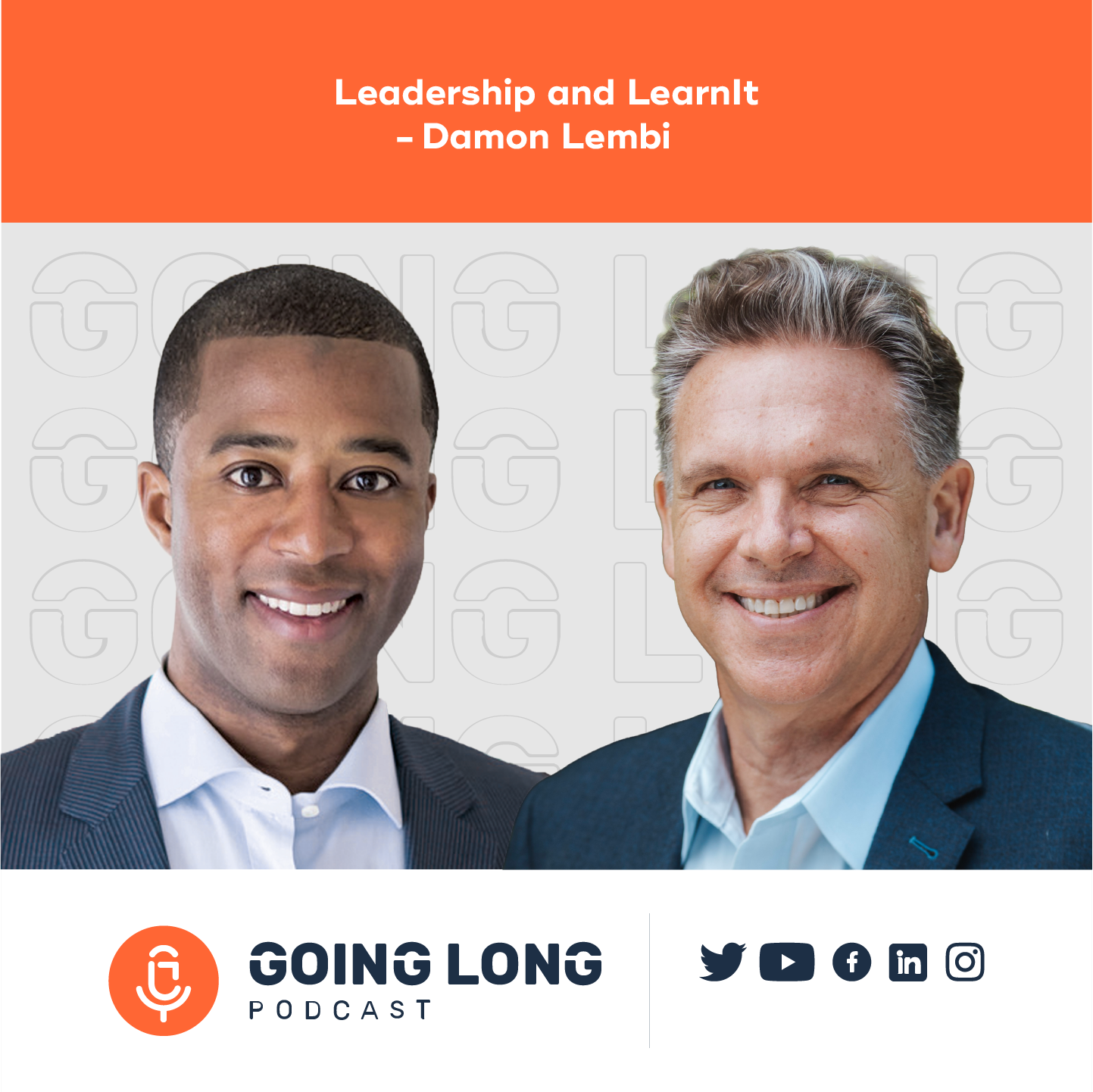
Leadership and LearnIt - Damon Lembi

Going Long Podcast Episode 614: Leadership and LearnIt - Damon Lembi
( To see the Video Version of today’s conversation just CLICK HERE. )
In today’s episode of The Going Long Podcast, you’ll learn the following:
- [00:24 - 01:54] Billy welcomes and introduces today’s special guest, Damon Lembi.
- [01:54 - 08:58] Billy asks Damon to share more about himself and his backstory in his own words.
- [08:58 - 11:27] Damon shares insights into how people can pivot confidently by leveraging the skills they have already built.
- [11:27 - 15:40] Billy asks Damon to describe how he gets and keeps his focus and drive.
- [15:40 - 21:54] Damon explains how to start the process of identifying the niche you want to occupy in your new business and what first moves should be made to start the ball rolling while still in your corporate role.
- [21:54 - 26:33] Damon describes what you should do if you realise that your new endeavour isn’t going the way you want or need.
- [26:33 - 33:44] Billy asks Damon to explain and describe all about his business, LearnIt, and what services they provide.
- [33:44 - 39:37] Damon shares his thoughts on the work/life balance and how he invests his time presently.
- [39:37 - 43:58] Damon tells us the backstory behind his podcast and shares some advice for others who may be thinking about starting their own.
- [43:58 - 46:50] Billy asks Damon to share the message that he would like to hear from himself three years from now.
- [46:50 - 49:27] Billy sums up all we’ve learned from Damon today and asks him to share the best ways we can get in contact and find him online.
- [49:27 - 50:25] Billy wraps up the show
How best to get in touch with and find out more about Damon Lembi:
Website: https://www.learnit.com/author/damon-lembi
LinkedIn: https://www.linkedin.com/in/damonlembi
Podcast: https://podcasts.apple.com/us/podcast/the-learn-it-all-podcast/id1714645917
If you're a corporate executive who wants to make your role optional, then grab your FREE ebook with Billy's proven 3 step process at: www.makeitoptional.com
What you can expect to get out of this ebook:
- Learn how to achieve corporate optionality
- Gain true control over your career
- Turn corporate skills into personal assets
With 26 years of experience in corporate sales leadership, achieved optionality through multiple income streams, Billy has helped dozens of executives build their paths to take control of their time.
This free ebook gives you everything you need to identify, plan, and take control of your career while building financial optionality, leveraging your skills, and start living your IDEAL day - today!
Go to: www.makeitoptional.com
Click the above link or just copy and paste the following directly into your browser to sign up and get your free ebook: https://www.makeitoptional.com/?utm_source=podcast&utm_medium=social&utm_campaign=p2olm
To see the Video Version of today’s conversation just CLICK HERE.
How to leave a review for The Going Long Podcast: https://youtu.be/qfRqLVcf8UI
Be sure to connect with Billy! He’s made it easy for you to do…Just go to any of these sites:
- Website: www.billykeels.com
- Youtube: billykeels
- Facebook: Billy Keels Fan Page
- Instagram: @billykeels
- Twitter: @billykeels
- LinkedIn: Billy Keels
Episode Transcript
Billy Keels 0:00
Today's episode is sponsored by Billy Keels advisory services. If you want to learn more about how to make your 99 optional, just go to make it optional.com. Once again, that's make it optional.com.
Speaker 1 0:14
Helping you build freedom without losing your edge. This is the going long podcast with Billy Keels.
Billy Keels 0:27
I absolutely love being able to host this podcast, because I get to meet the coolest, most influential, impactful people across the globe. And today is absolutely not going to disappoint because listen to this. Today's guest is not only a three time best selling author who brings this is lovely. He brings an athlete's perspective to leadership, and this is something that is absolutely amazing. He's the CEO of learn it, which is a Live platform that has helped Up skill over if my numbers aren't wrong, here 2 million people as well as the host of the learn it all podcast. It gives me great pleasure to welcome to today's conversation. Mr. Damon. Limby Damon, welcome to the show,
Speaker 2 1:11
Billy. It's an honor to be here, and I'm gonna have to play this opening for my wife, because you said the coolest people around, right? And so I don't know if I fall into that category all the time, but thanks for having me and looking forward to our conversation.
Billy Keels 1:23
Yeah, man, I'm looking forward to it, just the opportunity to speak to you before you got so much that you have through lived experience, and whether it is through leadership, through personal growth and also just making impact, I know that so much of what you have experienced in life is going to be very, very valuable to the going long podcast today, the going on podcast family, and at the same time, like, I kind of didn't want to really share everything about you, but I got to kind of let the family know that here's the thing. Normally, everyone that's here, they've already, they've had this certain type of experience, and they follow this track, and then they've gotten into the opportunity to really be able to leverage their previous experience and use that in the form of building a business that helps to impact people. And there's this real reality of knowing that all relationships end all of them, and many times they're corporate relationships, but sometimes they can even be professional or athletic relationships or a combination of the two. And so because most of our corporate warriors have been here, I know that you've had a separation of a previous love in your life that actually led you to being able to build your own business. That's a real leading kind of a question, just a nice way to ask you, would you mind opening up by sharing your backstory with me in the going long podcast? And if it's okay with you, Damon, we'll see where the conversation goes after that.
Speaker 2 2:50
Yeah, absolutely. So yeah. Damon lemby, I was born and raised in the San Francisco Bay Area, oldest of four kids, and growing up, it was all about sports. Baseball season was the Giants, basketball was warriors, and then the 40 Niners. By the time I was a sophomore in high school, I realized that if I was going to play college or pro sports, my ticket was really baseball, and so I went all in on baseball, and I did pretty well. I was a high school American, and I had my first really big decision as a senior in high school, I got drafted by the Atlanta Braves in 1990 and dating myself a little bit and but my parents were cool. They said, hey, look, this is your this is your life. Do you want to go and play in the minor leagues, or do you want to go to college? And it's up to you. And I remember sitting there with this old time scout from the Atlanta Braves, Bill Serena and my parents took me in the other room, and they offered me a couple $100,000 which was a lot back then, but I chose the college route for two reasons. One, like a lot of your audience, I was dealing with imposter syndrome. I didn't know if I was ready to make this leap into something completely different. But two my coach had Andy Lopez at Pepperdine, where I had a full scholarship. You know, he had this moon shot goal that Pepperdine, a small school of only 2500 people, was going to win the College World Series, which is unheard of when you go up against schools like LSU or Arizona State, where they have, you know, 50,000 students or whatever, and Andy Lopez made me really feel like I would be a huge part of that. So I went to Pepperdine, and, you know, I got there as a 17 year old freshman, and immediately hit again imposter syndrome, like, Am I good enough to even be here? You know, all these guys? I was always used to being the best of the best, and here I am. Everybody is at the same level, and I struggled. I got hurt, but I ended up leaving, not because I got hurt, but just because I just wasn't ready. And so I left, and guess what? The year that I left, they won the College World Series, which was huge. It goes to show you, Billy, that you could set these moonshot goals. And. You get everybody to buy in, they could absolutely happen. And the funny thing is, Annie Lopez, who I've kept in touch with, is going to be the guest, the 300th guest on my podcast, which is which is amazing, because I learned so much from him about that. But anyways, I ended up at Arizona State. I got a full ride to Arizona State, and a lot of people said, Don't go to Arizona State. You know, this was a year later after a junior college, go to a small school, go to a place where you can play, get your degree and move on. But at that point, I said, You know what, baseball's always been my dream. I'm going to go all in. I'm going to stop worrying about being fearful if things don't make it, if I don't make the team or anything. And I did it. I had a great career at Arizona State all league, hit a home run in the College World Series, and I was waiting to get drafted for a third time. I got drafted a second time by the Yankees. Low ready for the draft. I'm in the hotel in Nebraska for game two of the College World Series. My My roommate, Jacob Cruz, is a first round pick for the Giants. And guess what, my call never happens, and 1015, guys on my team get drafted, essentially at the end of the tournament. I could have walked on, but my dream ended like you said, that relationship with baseball ended, and here I am, 22 years old, and I'm thinking to myself, I went all in all my eggs in one basket are my skills even transferable? I mean, what am I going to do now? And so I was fortunate that I came from a family who had a big real estate company, hotel chain, but my dad was starting this small computer training company called learn it, and I knew the guy who was the CEO, my dad's partner. So I started as a receptionist back in 95 and I just kind of rolled up my sleeves. I didn't know anything about computers. Mean, this was back in the DOS days, and, you know, at some point I said to myself, look, baseball didn't work out. But I really think I've got to be great at something, you know. And so there's, I'm going to just kind of dive into that, and that's where my whole career moved. Moved on from there, a couple years later, that guy wasn't really working out, and I they're looking for a new CEO, and says right@the.com days, and I said, Look, I've taught classes, I've closed our biggest deals. Give me an opportunity, and they gave me that, that chance, and I kind of went all in from there as a CEO of learn it, then we over expanded, like a lot of people did, and fortunately, we had the support of my family. Otherwise we would have fell apart during the.com bust. Tremendous learning lessons there. And just it's kind of grown and scaled over the years, and I'm happy to go into any industry we want. But you know, we've seen at learn it. Yes, we've trained 2 million people, which is incredible to think that I've been part of that. But we've also seen behind the curtain of what great leadership looks like, and how leadership's changed over the years. And it started for me with playing for three or four Hall of Fame baseball coaches, and then seeing what it looks like in the corporate world, and also a lot of founders who've gone out on their own and started their own business.
Billy Keels 8:03
Yeah, there's, you know, there's so many different areas to be able to pull from, but you talk about the the founders who who are in corporate, and they go out and they they start their own business. But there's something that you that you said, that really, really, really resonates and that it is you invested so many years of your life, you know, 22 years, and you waited for that call and that call didn't actually come. And so it was like, All right, I have all this skill set, and the skill set that I've built, like, is it actually valuable somewhere else? And it's one of the things that you know, I know today, speaking with with clients, there's this concern constantly of, okay, well, I'm, maybe I'm, I've outlived my time in this enterprise software space sector, for one for instance, and saying, Okay, well, or they've seen client or seen colleagues who've lost their jobs, and now they're trying to figure out, okay, well, what do I do with this skill set that I've actually built, and there's not a place to really pivot. So I know that you mentioned that there was this opportunity within the family business, but you also talked about going to starting at reception, and maybe if you could talk to us a little bit about that thought process, because I see a lot of parallels between what you went through and what is happening even even today. With the skill sets that maybe you get the call from your employer, there's the famous synergies that are happening, duplicity of employees and things like that, and just how you how you were able to navigate that, because emotionally, that's a really challenging thing.
Speaker 2 9:28
It is a really challenging thing. And those examples you gave up, Billy, I hear that all the time, right? So either I'm attired or I'm stagnant in the work I'm at, whether it's in sales or accounting or whatever it is, or you just get let go for whatever reason. You know there's mergers and you know there's layoffs or companies are going through downturns. Here's what I like to tell everybody, what you learned, your experience, your wisdom, your skills, it is transferable. Expect, even if you're like in accounting and you want to get into sales, you know there's things that you. Learned that you can make that pivot. I've seen it hundreds of times. I mean, I've done a lot of it myself with the skills you learn from sports around, you know, collaboration and discipline, but all these skills are transferable, and you can build on them. And you know, back when I started as a receptionist, I didn't know that, but what I did know is I saw people coming into the office late. I saw us losing deals, and it just wasn't something I was used to. I was used to showing up on time. I was used to competing. I was used to getting feedback. I mean, I think as athletes, you, you get a lot of feedback and and learning agility. And so what I want your listeners to understand that if you're thinking about making that move. I mean, don't just quit your job and start something, you know, give us, give us some thought, or whatever it is you're going to do, but that you can have the confidence if you truly believe in what you want to do and go for it, because those skills are transferable.
Billy Keels 10:55
Yeah, well, and I appreciate that perspective, right? And there's the, there's the, there's the skill element, there's the emotional element that comes with that. And a lot of times, as you're saying, it's, how do you take that step back? Or how do you, how do you kind of stop? I'm a big believer, as you know, because I know we've talked about this before. Like, you know, I for eight years, I was building something on the side, while I was continuing to over perform in my job, you know, I was traveling to Hawaii. I was part of the top talent program. They call it catalyst, but same kind of thing. So, like, you actually can, as long as you have the focus and understand what it is that you're doing and why you're doing it, you talked about, well, you didn't use the word, but it's really about holding a standard, a certain standard, because you people were coming in late, and you you were used to something else as it related to the leadership that you saw when you were in your athletics environment. What specific like, how have you seen focus and focusing on something that you want in or want away, and how that's been able to help you build your business and impact others?
Speaker 2 11:58
So you call it a high standard. I kind of refer to it almost as character. You know, it's your character. Obviously got to have integrity. But I think great leaders, great founders, especially when they have a team, they show up, even when they don't feel like they want to show up, right? Because they have to have that focus, they have to have that drive. And when you have people working for you, or you have customers, I mean, you got to lead and model by example. And what I've always it's just kind of been the way I've been is, when I find something, I just kind of go all in, you know, I get committed to it. And, I mean, I've been at learn it 30 years. I still love it. I still love coming to work every day. Now, I'm not saying I need to. I'm not married to it. I'd be open to doing something different, because I'm pretty curious. But if I'm going to commit to something and get behind it, I'm going to give it everything I have, and along the way, things don't go perfectly. I mean, I made so many mistakes.
Billy Keels 12:53
Sorry, I have to ask you to repeat that thing because, like, there's such a thought that you got a plan, it all works perfectly. Can you just repeat that again, please?
Speaker 2 13:03
Damon, yeah, things don't go perfectly. I mean, and, and, just like you have on your show here on mine, the listeners, I don't think, really want to hear your highlight reel about how great you are. They want to hear, you know, the challenges and the humility and things you've gone through. I mean, like for me, I learned early on, I touched on it a little bit. But think about it, I'm 2526 years old in the heart of downtown San Francisco. All my friends Billy are paper millionaires, right? They're all working for these.com companies with their fancy cars and their big apartments or houses even. And here I am working at little learn, at block and tackle, even as a receptionist, or by this time as a CEO, five years into it, and I really wanted to expand, and my dad's like, hey, you know what, bigger isn't always better. You know, you have a great business. But he went along with it, and the bottom fell out of it, and we had this huge debt and expenses. And fortunately for me, Billy, my dad would look at it and say, you got one of the most expensive NBA kids I've ever seen. You know, but he knew that I cared, and he and he supported me, and so that when, when the downturn happened again in 2009 and then with covid, I took those learning lessons from the mistakes that we made and avoided it, learn to make other mistakes. But as a founder, as somebody that's looking to go from the corporate world into doing their own thing, it's not all about what you see on Instagram or LinkedIn with all these awards, you got to be able to persevere, because you might start something and realize, well, this isn't exactly what my customer or my ICP needs, so you got to pivot a little bit, and you're going to have to be open to feedback and asking and taking chances. But you're never going to really know until you get out there and get out of your comfort zone and try and do something.
Billy Keels 14:56
Yeah, that getting outside the comfort zone, I know is one for me as some. Who is a recovering perfectionist, and I talk about this, there's, you know, there's so many years that I wanted to just stay in a safe space because it felt, it felt like the right thing to do. And this is even as an American guy who's been living overseas now for the last 26 years and four different countries and all this other kind of stuff. But there was a certain safe space that I knew within the corporate environment, and at a certain point I didn't really want to leave that environment until I realized, like, Hey, listen, there's a lot of the skill set that I'm building and a lot that I can continue to do here, and at the same time, I can also leverage it around something that I can own longer term and have control over that particular asset. Right as my mindset started to shift, and you mentioned before, also too, like you, you do work with a lot of leaders, and it is about a lot of what you've taken from previous experience and how that moves into leadership. And I'm sure that you have come across executives or senior leaders and other companies that you know over time, they confide in you and they talk, talk to you and not asking you to share anything that you feel uncomfortable sharing, but just curious. From your perspective, those that are in leadership positions, that are in corporate, they're excelling in their role, and they have this curiosity of like, hey, you know what? Maybe this skill set could also do something else. Because there's some trepidation there. I don't know if you've had the experience of speaking with mentoring or talking to those leaders who are doing well in their job. They want to continue to do well in their job, and they're trying to figure out, how can I actually explore this, this feeling in this voice that keeps getting louder and louder, to tell me I want to do something, and what is the, let's say the best way for me to to explore that feeling of building something that I actually, truly own,
Speaker 2 16:48
absolutely, I've experienced that. And one of the things, if you have somebody who's gone from the corporate world in become a founder, and let's say Billy that they're even three or four years into it, and they're feeling safe right now, you have to get out of your comfort zone too, because with AI, I'm gonna answer your question in a minute, but I look at my situation, at learn it, where we're kind of safe, where we're at, but we, I know that we have to make a big pivot, and that gets kind of scary too. I mean, and changing so that fear never really goes away. I mean, I think you need to you need to understand that you have to step into the unknown sometimes. But to answer the question that you just asked me about, you know, how do they go about it is, I think first you got to find something. Well, first of all, if you have that fear, or you have that, that thought that's constantly in your mind, you know, then you should go after it, because it to you. It the more fearful you are about something, and the more you think about something, the more important it is, and the more that you really believe in it, you know. So you should go in that direction, but start small, you know, start think about what your minimal viable product is. Like you said earlier, don't quit your corporate job and just blindly go into it. But maybe start small. Maybe reach out to friends, or maybe put start a little side business and see if people would are even interested. I interviewed the guy from Bark Box, and before he went to Bark Boxes, he just got a, you know, a payment thing on his phone, and he baked some of the cookies at dog cookies at home, and he went to dog parks and see if people just buy him, you know. And so he got an idea, if that some people were interested in it. And once you have and you don't need to sell everything to everybody all the time, right, just find what your core niche is, if you have some success with it, then, then go ahead and make that move, right? That's what you should do. I don't think you should just go, you know, black and white, but you should, you should make that transition forward. But if you have that in your mind, that this is something that you want to do, then you should go for it, but don't go out of the loan. Invest in a coach, right? I think Billy, I think that's, you know, you work with a lot of founders on that. Invest in some kind of training or a mastermind, because there's a lot of us who have, I call it the dummy tax. We've made these mistakes, right? So let's
Billy Keels 19:08
say that
Speaker 3 19:08
again.
Speaker 2 19:09
I want to give back and you know, just like you do, and help people expedite what they're doing, and maybe learn from some of the lessons that some of us have gone through to make that transition. But if it's something that's really important to you, and you see that there's a business outcome you can help with or solving a business problem, and there's a gap, you got to find a way to
Billy Keels 19:33
do it. Yeah, to your point that the voice will only get louder if you don't, and the louder. Yeah, exactly. It's, it is a in at the same time you've seen it, I've seen it. It's one of those things. It's like, well, I, I'm all of these things, and so much of my identity is tied into what I'm doing in my day to day, that if I ignore that part of me, then, then I could, I could put everything into jeopardy. And it's not. Ignoring that part. It's also listening to another part of you that is getting louder and louder because it doesn't, it doesn't stop one
Speaker 2 20:07
point I want to bring up that I think is important. I call it purposeful, awfulizing. So say, for instance, I want to, I want to leave my corporate job and start this new business. So a lot of times, people jump right to the conclusion of how great it's going to be. It's going to be it's going to be easy. I'm going to make millions. I'm going to be blah, blah, blah. Well, think about it this way. Fast forward a year or 18 months, worst case scenario. If the worst case scenario happens, can you survive it? You know, if, if you set aside $400,000 and to start your business, and you lose that, can you still pay your bills? Can you still put your kids through school? Can you whatever it is, right? Can you can you overcome the worst case scenario? Because if you can't, then maybe you should go back to the drawing board and figure out another way to achieve your dreams. So don't go at it by blindly. I'm not saying being a negative person. I'm just saying don't always look through everything as rosy glasses. Think about what the worst case scenario is, and if that happens, can you survive it? And if you can't survive it, that's another reason to start making the move and being focused, like you said, and committing to do it.
Billy Keels 21:19
Yeah, no, I love that, and appreciate you building on that. You actually bring me to another place because it's something that, because we're going to keep it real here, like that people don't want to talk about is, you know, you it is okay to try something, and then I say try, not me, but meaning you're actually doing. You have the idea, and you've gone from thought to implementing that idea. And this is probably talking to my past self, which is like, I've got this idea in my mind, so I'm going to make sure that everything I do, every single thing, to make sure that this thing happens at the same time. There comes a moment when you have to know if what you're working on is a good fit or not, you've sprinkled a little bit of that around. Would love to get your your experience and what you've shared with others in when you're able to realize, to know when it's a good fit and when it's okay to say, You know what? I've been at this for a while, and it doesn't seem to be advancing, and it's actually beginning to put either me and everything that I've worked for, for my family, loved ones, in jeopardy. Maybe you could talk around that a little bit. I would appreciate
Speaker 2 22:29
that. Yeah, I mean, a simple example is reading books. I used to be somebody who figured I had to finish every book that I started. Well, that's a waste of time, you know, if you're not enjoying it and it's and you're not paying attention, just quit. There's there's sometimes it's okay, okay to quit, and don't fall into the whole sunken cost fallacy on things like I invested this time I invested this money, it's okay to walk away. And a lot of times I used to think, Billy, well, what are people going to think about me? You know, I'm a failure at this. Hey, news flash. Listener, you're not everybody's center of attention. Everybody has their own lives. Don't care about what other people think. I mean, become like Jim Murphy, who wrote the book inner excellence, says, become come unembarrassable, who cares, right? And on the other hand, you don't need to tighten everything up to be perfect, you know? Just get it out there and see what happens. I was telling you off air that we kind of stumbled into starting a press company, the learn it all press and I wrote a book back in the day, learn it all leader, back in 2023 long story short, I started talking to people about they should write their own books, which I think everybody should really and it started small. We got a couple people who are interested in it. I use my ghost writer. And after we just did it on the side at learn it a couple times, and once we saw that, we got it right, we're like, Okay, now we can actually make the leap. Turn it into its own business, put it in its own LLC, set aside the funds to do it. So we just started small. We saw that it worked, had a couple of success, and once, once we did, we went full fledged into doing it. I just hired a couple of part time people who are fantastic 1010, hours a week to help or whatever it is, and started small, and it's grown into a legitimate business. Now, the other thing I have to say about that is, like, 10 hours a week, starting small. If that doesn't work, it's easy to dial it back. You know, I didn't take on a big lease. I didn't commit to a three year lease, I didn't hire a bunch of people full time. It can evolve into that, right? But especially if you need to get help out of the bat. You can hire somebody as a fractional accountant, you know? I mean, you can, you can start small without over committing, because then you could dial it back. And there's nothing wrong with dialing it back. Don't wait too long if you know things aren't going to work out. Don't push a rock up a hill that doesn't need to be pushed. Just start over, recalibrate, do something else. There's nothing wrong with failures. I think I've talked to individuals who said that the best success they had wasn't the big corporate job that they had is when they went out on their own and their first two or three startups were failures, and what they learned from that and finally hit it on the third or fourth one. So failure is part of the game. I don't even look at it as failure. I look at it as learning moments, learning opportunities.
Billy Keels 25:29
Yeah, no, it's definitely part of the process. And I appreciate that you just pull the curtain back in, because it is such an important part of whenever you have an idea to say, Okay, well, this is an idea that I want to put into the into the marketplace, and you're as an experienced business owner, you are sharing exactly what you will even do with your own business. You know, as you want to go out and bring a new idea to market, and it's okay to just have people on the team that are the right qualified people. But like you said, 10 hours a week. Why? You don't need to get into a full employment situation. You can contract your you're out with the idea. As that idea continues to take form, you have the right people on board, and you see that it continues to grow, and it is profitable growth. And then then you want to start to come to a different idea. Okay, do you then begin to bring full time employees on? But you don't have to go all the way there from the very beginning. This is a way of actually getting the idea out of your mind, you know, the right thought process, and kind of getting it, or getting it, getting it out into the ethos, if you will. One of the things that you were talked about in the very beginning, three time best selling author, and you've talked about working at reception, and we've talked about, like, the number of lives that you've impacted, but I really would love for you to just help us also understand because I talked about learn it and in the very beginning, and I know it's here to help solve a particular challenge, but I would love for you to talk to us more about the company that you have invested your life into, to be able to help others over three decades at this point in time. So I would appreciate it just to talk to us a little bit about learn it, who you're helping, how you're helping, and then we'll see what other questions I'm sure I'll come up with,
Speaker 2 27:11
yeah, well, thanks for asking. I mean, learn it. We're a live learning platform, and all B to B, and when I say B to B, I mean that also is nonprofits and healthcare and everything, and customers turn to us right now a lot of times when you're promoting somebody from an individual contributor to a new manager, so somebody's moving into a leadership role. For the first time, we've talked a lot about skills. It's a different skill set. You know what I mean, right? Billy, like when you're when you're at Sapa, whatever, and you're closing deals. That's you going out and closing the deals. Once you're a leader, you got to win through your team, and so you got to learn skills like empathy and, you know, having difficult conversations and listening and coaching. So we do a lot of programs around that, where we develop leadership programs around that. Customers also turn to us where when they're losing great employees, and a lot of times, people lose great employees because these employees, especially younger generations, they don't feel like they're part of something. They don't feel connected. And learning and development is a relatively inexpensive way to make people feel more connected. So we design programs that helps show people like what their career growth is and what their career path is, and we help them learn those skills. And these days, a lot of the work we do is also around AI adoption. And that kind of goes back to what I was saying around this, this fear and making a pivot, because AI is disrupting everything. It's disrupting the learning world. I think live learning will always be here, but we need to help, not necessarily. We're helping with AI literacy, how to use some of these tools and prompting. But what are the skills right now? I call it the human advantage. What are the skills right now that us humans are going to need to be able to to be super successful in the future? And those are skills like critical thinking, judgment, empathy, and how do you take those skills and amplify them, by leveraging tools like AI? But that's, that's kind of like a, you know, we do a lot of the human skills, but now that we're layering on the AI stuff on top of it, that's, that's like a new leap for us, and that's that's almost getting out of our comfort zone a little bit. But I'm really looking at I truly believe that that is and I'm not doing this on my own. I got a team that helps me with this, and chat GB and Claude helps me with it too, by the way, helping develop a program that can help solve that those challenges and needs that people have. So that's learned it in a nutshell.
Billy Keels 29:40
Well, love that, and also it's, it's one of these things. It's, as you talked about before, it's, there are so many different tools available, and it's about understanding where we are right now, and also leaning into those tools to be able to help upskill and bring the right skill and. To the right person at the right time, as they are, as any individual is, is learning and growing so and
Speaker 2 30:07
one thing I want to say about those tools, Billy, I don't think that there's any time better than being an entrepreneur or a founder. Right now, because of AI, it almost democratizes everything. Right back in the day, you know, you want to start a business, you want to get a you need to hire a marketing person, you need to hire this and that you could do so much of this with these tools, if you just become proficient with them, right? I mean, you can your legal fees can go way down. I'm not saying just do the entire contract legal, but it can take it from 20 hours of work down to two. So I think that now is a better time than ever to be a founder. And I think a lot of corporations are going to get disrupted, because you're going to have people maybe who are watching this show are like, Okay, I'm going to go start my own thing, and I'm going to disrupt this industry that's always been doing this the same way and do it differently, because to leverage, learn how to use some of these tools and leverage that and for your own entrepreneurial journey,
Billy Keels 31:09
yeah, and I love how you you talk about that, because it is, I think in the beginning, people just wanted to pretend like you you weren't using some of these tools that are now becoming generally accessible, right? I mean, in the enterprise software space, was working with machine learning and AI for, you know, a decade, but it was in very specific kind of niche scenarios or processes or what have you. And nowadays, because the these large language models specifically are available to all of us, it's it's really about, how do you invest your time to understand how to best use these skills. I mean, I've talked to clients recently who are using this as part of their diligence when they're working with legal professionals or accounting professionals or, you know, sales and marketing, because there are just so many different ways when you understand what the process is or what how you can use the model to reduce usually, or increase efficiency, is probably a better way to say it, yeah, there's just don't, don't, don't, keep your head in the sand. That would not be nothing,
Speaker 2 32:08
and use it for productivity. But if you're sitting there and you're and you're somebody saying, Okay, I got this idea. I want to start this business. Don't look at AI as a thought leader, but as a thought partner. Ask it to be you know, one of your favorite entrepreneurs, and say, I want to run this idea by you, and then start playing around with it, and start pressure testing your idea, and it will give you feedback and thoughts around and it helped. It's really helped me, in a lot of ways, formulate or shape my thinking around a lot of decisions I make, whether it's hiring, whether it's new product offering, and sometimes it's sun setting products as well. So there's a lot more you can do with it than just, you know, write better emails. I mean, learn to use it as a thought partner.
Billy Keels 32:53
I appreciate you sharing that. You know, one of the things that you and I also talked about is, you know, changing a bit, but it's one of the things that it's one of the topics that's really relevant and prevalent in a lot of the different conversations that I have with either clients or other business owners, especially people that are in corporate roles, right? And it's the connection and the quality time that we are able to have and invest with the ones that we love the most, and many times, the relationship either that we have with our parents or the relationship that we have with our children who are young or growing. It's one of those things that at a certain part of life, you begin to recognize how important relationships are, family relationships are. Now you and I have talked about this before. We you know, this is something that's also very close to our hearts, and I would love for you to share just how you think about the dynamics of family and the way that you now think about how you're investing your time with loved ones, maybe compared to when you were getting started and things like that, because, because It's such an important topic, and I, and I believe that there are not enough men that talk about these types of topics, and since the two of us are here, and I'd love for you to just to share your your thoughts on the way that we're investing time, and also how that can be influenced over time,
Speaker 2 34:17
well, I'd love that you asked that question, and you know, We were talking off here, we're almost the same age. You got your kid, you got two boys. I got a boy and a girl, much younger than yours, right? Mine are eight and four and, well, one, I look at my parents, you know, I was really fortunate. My dad was a, you know, huge business guy, but he was always home for his kids, you know, and coaching the sports teams. And I looked at my grandfather, my grandfather was never around for my dad, and I know that that was hard. That was hard for him, even though he was super successful and working hard at the end of the day. The way I look at it is, what is this all for? You know what I mean, what is this all for? You die, you get. Have all the money in the world. It's nothing, right? So it's hard as an entrepreneur, as a founder, because you're kind of always on 24/7 that's something you got to know. I mean, even as a leader, as a senior leader, people are going to be calling you and this and that. But what I try really hard, Billy with, and I struggle at it, but is to be present for my kids and my wife, of course, right? But be present when, like, when I'm with my little boy, Wally, who's named after my dad, and he's talking to me about transformers, and I see my mind wandering off about payroll, or whatever it is. I'm like, I have to bring this back, because Wally is eight years four years old. Lucy's eight this time is gonna fly, you know, just, I mean, your kids are 1517, so you got to, you got to just remember what, what's most important, and at the end of the day, look, I work hard. I love what I do, right? And I also love talking to other entrepreneurs and founders and helping them, but I don't find it impressive when I go to a Kids event and the dad's over in the corner working on his laptop, right? You know, I still care, right? It doesn't. That doesn't impress me. What impresses me is that when you're with your kids and your wife, you know you're intentional and that you're present, because that's what they're going to see and that's what they're going to do. I learned from my dad, I do everything possible to be there for Lucy and Wally. You know, I travel for work sometimes, but when I'm when I'm when I'm home, like I'm coaching their little league team. And sometimes it's hard, sometimes it's hard to get up at 230 in the afternoon and leave with everything going on, but I'm going to focus really hard on being present there, because at the end of the day, what's it all for? Otherwise?
Billy Keels 36:38
Yeah, and this, one of the things that's really important is, and I'm the same, like that. No one gets it perfect. No one does it perfectly. The the part that, and we're really it's, I believe it's important is to be able to talk about it and share in a way that is what you're you're aware of what's happening, and so the moments that your mind begins to drift. It's like you said, you come back and because when you are a high achiever, when you are a corporate leader, when you are a founder, when you are a business owner that has been around for decades, like you have lots of responsibility. Lot of people are counting on the business to continue to run for their livelihood, for being able to provide lifestyle, etc, etc. And so it doesn't mean that you're going to get it perfectly, but there is a massive difference between being aware of what is happening and just going with with the flow. So it's, I don't think anyone here is looking for perfection. We're just looking to continue to progress in terms of being better parents, being better, fathers being better mothers, and having the ability to be present and presence, as you said, and I agree with is not just being physically present, it's being mentally present and being aware of that. So no, I appreciate you. I do appreciate you sharing that, but I feel like I don't know. I feel like there's so many different things that we could talk about. Is there anything that I haven't asked you? That I haven't asked you, but like, it's really on your heart, and you're like, Billy, like, I got the platform. Let me just share this please.
Speaker 2 38:09
Well, I like what you said about being present and being aware. I think that you know, especially if you're a corporate leader right now or whatever, self awareness is so important, and to be able to check yourself and being able to reflect, you know, we've talked about a lot. What I want to say too is that confidence comes from getting the reps in, you know, so you have to, it starts with courage. I mean, you have to, you have to get the reps in. I'm sure when you started your podcast over 600 episodes ago, or when you started out as an entrepreneur, an entrepreneur. And I know for myself, I mean, I was awful. I mean, just absolutely awful. But if you care about something, and you put in the reps, and you have the courage to do it and ask for feedback from people, and you don't get, you know, defensive when they when they give you feedback, and you really care, and you want to get good at something, then, then, then, go for it. And just like with parenting, look, we're all human, right? We're going to make mistakes. I can sit up here and talk about self awareness and difficult conversations and completely blow it, but you know, you just have a little grace for yourself too, right? It's a journey. It's not a straight line. It's a journey. And and have fun with it. Don't beat yourself up too much. I think that that's that's an important thing to keep in mind and find something you love, and if you can go for it, then, then, then do it. Yeah, all right.
Billy Keels 39:30
Well, I appreciate you sharing that. And there's actually one more thing that I do want to ask you about, because before we kind of wrap things up, because you're also a fellow podcaster, we chatted about it a little bit earlier on, learn it all as your podcast. And I know I never imagined having 600 some odd episodes, if you would have asked me back in June 2020, but there was a reason that I that I got started. I am very I feel very blessed fortunate that I did start this podcast. For me has become something that. It's great to be able to connect with people like yourself, and also knowing that lots and lots of people around the globe will be listening, watching us, also too, on different platforms, but talk to us a little bit about the genesis for you, for learn it all podcast and and also how that's going for you today.
Speaker 2 40:17
So I always wanted to write a book. You know, actually, I don't even know if I really wanted to write a book, but people always said, to write a book, but people always said, Hey, you're a great storyteller. Damon, you know, tell your story, whether it's about your family in San Francisco or about learning about baseball. And I got to give my wife a lot of credit, she turned she pushed me into writing, learn it all. Leader and again, kind of like with the imposter syndrome, I'm like, I don't even know if anybody cares about my story, if they're gonna whatever. But when it first came out, some people said, hey, you know, especially some of these old baseball players I was with, like they really, it really resonated with me your story and your transferable skills and overcoming imposter syndrome. So in typical Daymond fashion, Billy, I hired not one, but two people to get me on podcast, two podcast brokers, and I got on, I don't know, 100 shows. You know, again, I was terrible, but I got 100 shows. And halfway through it, or three quarters of the way through it, this woman, Meredith Bell, from a show called Grow strong leaders, said, Damon, with your community, you should be a podcast host. And I was like, I don't want to do that. I mean, I it seems like a lot of work. I've never interviewed anybody. I'm just, you know, when being interviewed, but I started and I fell in love with it. And I fell in love with it because I'm, you know, somebody who loves to learn. But it's expedited my 10x my network, you know, it's amazing the people you get to have these conversations with. And it really sharpens your thinking, too around things, you know, and I like to say it's maybe a better listener, which I believe my wife says it hasn't, but I think it has and but I would say, for any of your listeners out there, get into the podcasting world in one way or the other. You know, if you're thinking, well, nobody wants to hear what I have to say, join something like pod match and just get on shows, because your experience, that is your own experience. Nobody else has had that exact same experience. There's things that people can learn from you, and you have to have a personal brand these days. Anyways, I don't care. You know, you have to be on LinkedIn or whatever and start sharing your experience, give back. And so it's a long way of answering your question, but it's been a game changer. I mean, I'm at, I'll be at episode 300 relatively soon, but I wouldn't change it for anything. It's like getting an MBA on on steroids. I mean, it's just like learning through a fire hose. You get access to great people. You know, if you're somebody who's curious like you and I, are, you learn a great deal that I could turn around and use my learner world, but I also really like it, Billy, I have these conversations with the hosts or other guests, and they mentor me. I mentor them. And it's a, it's a, it's a feedback loop, and it's been, been great. It's one of the favorite things I've done over the last couple of years.
Billy Keels 42:59
Awesome. Well, I appreciate that, and here's kudos to you in upcoming episode 300 and I'm sure it's going to be absolutely amazing before we go, there's one thing that I want to ask, and it's, it's one of the things, and think you're not kind of chatted about this as a recovering perfection, some recovering perfectionist, and someone who, you know, always, things were always going in the right direction. And, you know, living overseas and in corporate life, and then started business on the side, and all these things happened. And it was constantly going, going well, well, in 2023 I realized, like, I can't solve every single problem by myself. It takes, you know, strong relationships, deep relationships, intentional relationships, and and there are going to be moments in the in the road, where there bumps in the road, right? Everything, when things are going really, really well, we tend to not really think about it, because things are going really well. But when things are like, at the bottom, and things are difficult and challenging, it seems like it takes forever, because you're like, going through it, and you're in it, and all these things can be really, really challenging. And I remember in in 2023 when I was going through some personal and professional challenges. There was when I allowed people in. They were there for me. But then there were moments when things were really, really challenging, and no matter what anyone said, what I realized that there was a there was one moment when I really had to look myself in the mirror, in the proverbial mirror, and I had to really connect with myself, and there were words that I had to say to myself, and those words actually helped me move and receive more of the support from others. But it took me from that trough that I was in, and it took me to the top, and so kind of with the context there, what I'd love to know from you, Damon, is if you can project three years from now, like, you know, you're going to have these great moments. They're going to be like, super awesome. And along the way, you're also going to have some moments that are at the bottom right. And no matter what anybody says, it's going to be what you tell yourself that gets you from the bottom to move forward. And so I'd love to know if you can think about yourself three years from now, and you're kind. Looking back and you're saying, Hey, listen, Damon, I'm really glad that you said this, because I needed to hear it. That's what got me through. What is that one thing that you know that you need to tell yourself, that when you look back, you're going to go? I really needed that. What's that? That one sentence, that one phrase that you need to hear
Speaker 3 45:15
well off
Speaker 2 45:15
air. I want to know what your words are that you're telling yourself, because that sounds really amazing, but I'd say for me, is that I've been able to make it through before, you know what I mean, and whether and so it's like things will be very tough, and I want to look back at the experiences that I've had and say to myself, Hey, I've persevered and I've pushed through, and I've made it through constraints, and, you know, I mean, there's something that we didn't even talk about, but I've got, like, an eye condition, right? And so my what I'm able to see in three years from now is not what I'm able to see today, right? But Billy, answering that question that you just asked, I know I'll be fine, because I've always been fine, and I've always found a way to make things work or get through and not on my own, but I can tap into my community. So in three years from now, things might be a little different from that perspective, and when they are, I have the confidence to know that, hey, I figured it out in the past, and I'll figure it out again and again. I'll bring it back to your audience. Don't beat yourself up. None of us are perfect. Everybody's got something, right? You know, we've all got something, and you're going to have those dark, deep moments, but don't sit on it alone. Be kind to yourself in your inner thoughts that you have. But if something's really bothering you, find somebody to reach out to and talk to about it.
Billy Keels 46:40
Yeah, super important. Super, super important. So you made it through before you make it through again. So I appreciate that. And I mean, it's just a testament to to you, Damon, like these conversations literally fly by. I feel like we started three minutes ago, and I'm looking over I'm like, No, we haven't, actually so, but what it's actually amazing, like I'm thinking about the very beginning of the conversation, and as we go at the beginning of the conversation you're talking about, you have this decision to make right, right from the very beginning. And you're very fortunate to have parents that supported you. And what it is that you wanted to do, and was it, did you? Did you go with the Braves and they were drafting you, or were you actually going to go into college? And you made the choice to to go to college, and you heard someone that had a big vision, and being able to do something that had never been done at a university like university like Pepperdine, we only had 2500 students, and you went there, and then you made that decision, and then realized afterwards, well, maybe it wasn't really the place that you were supposed to be. And so you made another life choice and went somewhere else, and only to find out that what you heard before actually came to reality. But that didn't stop you. That actually just helped you continue to move forward, and you were drafted again by the Yankees, and then you waited for the third time, and it didn't actually really happen. But that didn't stop you, either, because you realized that there was another opportunity. It means that you were supposed to you were taking all these different skill sets that you'd built up and all the lessons that you learned through leadership and sport, and
Speaker 3 47:59
it
Billy Keels 47:59
took you to reception, and you went from reception and a family owned business to then being able to do in a span of five years, be able to get to the point where you can use all those lessons, all of the things that you learn, and actually be the head of the company and continue to run to continue to help others, to upskill, to learn more about their own skill set. So now you're helping not just individuals within your organization, you're helping other large organizations and leaders to realize that there's a skill sets they have now, but there are even more that they can continue to do, and go beyond what they're learning in the in the in the nine to five, and start to learn about how they can have the empathetic leadership and be able to use all of these different skill sets. And you continue to do it through, through, learn it as a platform. You've written many books, you've got your own podcast, and yes, everybody's just saying, Billy, well, why don't you just ask Damon, because I'm going on and on. So please, Damon, help me help the going long family, understand how we can find out more about you, more about what you have going on at learn it, and all the different ways we can enter your world.
Speaker 2 48:59
Connect with me on LinkedIn. I'm pretty active on LinkedIn. Check out my podcast, the learn it all podcast. Can't wait to have Billy on soon. I've got big shoes to fill after such a great host. And yeah, and check out learn it and for anybody who listens or watches the show, send me a message on LinkedIn. I'll give you some free classes and definitely help you on your your journey to becoming a entrepreneur and a founder.
Billy Keels 49:23
All right, fantastic. Well, listen everybody go along podcast family, as Damon's already mentioned when you link, when you reach out to him on LinkedIn. So one place I do ask, just send him a personalized invitation, just so that way he his team that they know that you've already invested time learning more about Damon his story, and that's just going to help the connection between the two of you go even faster and more intentional. So with that, Damon, I do want to say thank you so very, very much for deciding to invest your time with me and the entire going long family man. I really, really appreciate
Speaker 3 49:54
it. Thank you.
Speaker 2 49:55
I had a great time. Thanks for having
Billy Keels 49:56
me. All right. Awesome. And go along family. Listen, go. Out make it a great day. And thank you very, very much.