
Leveraging Corporate Communication Habits to Build Global Career Options - Derek Smith

Subscribe to the podcast


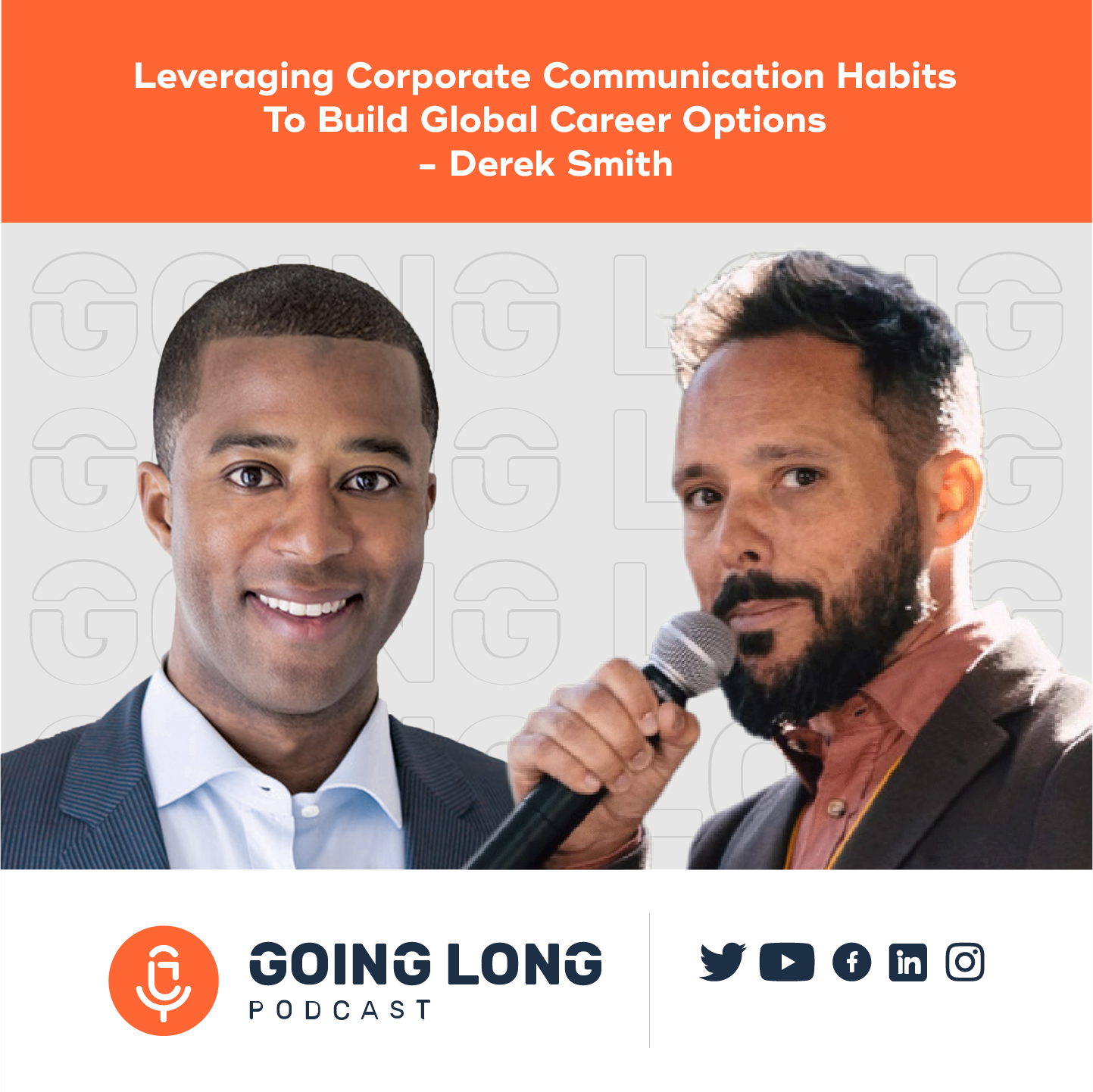
Leveraging Corporate Communication Habits to Build Global Career Options - Derek Smith

Are you an overachieving director, VP, or enterprise leader who wants to take the high-level communication habits you mastered in the corporate world and turn them into a sovereign, global career?
In this transparent guest conversation, host Billy Keels sits down with Derek Smith—a public speaking coach and veteran MC of over 5,000 events who used his corporate foundation to engineer an international lifestyle spanning 54 houses across three continents. Derek reveals how winning Samsung's content creator competition at the 2010 Winter Olympics served as a turning point, why over 70% of communication is non-verbal when navigating global boundaries, and how asking one life-changing question shifted his entire trajectory. Discover how to leverage corporate team dynamics, overcome the fear of starting late, focus on "Who, Not How," and build a business in your personal zone of genius entirely on your own terms.
🚀 Want to make your corporate role optional? Grab your FREE copy of Billy's 3-Step Process eBook here: https://www.makeitoptional.com/?utm_source=youtube&utm_medium=social&utm_campaign=p2olm
📌 Questions Answered in This Episode:
- How do you transition from an enterprise corporate foundation to a sovereign, global MC career?
- Why is non-verbal communication critical when expanding your footprint across international markets?
- How do you handle holding a room's energy as a professional Master of Ceremonies (MC)?
- What single, life-changing question shifts your career trajectory and overcomes the fear of starting late?
- How do you apply the "Who, Not How" framework to stop doing everything alone and scale your impact?
⏱️ Episode Chapters:
- 00:00 - Introduction to Derek Smith and the Transition from Corporate to Global MC
- 03:53 - The 2010 Winter Olympics Turning Point: Samsung Content Creator Competition
- 05:39 - The Critical Corporate Lesson: Leveraging Team Dynamics in Business
- 09:35 - Embracing the Nomadic Lifestyle: 54 Houses and Three Continents
- 16:05 - Unlocking Global Opportunities Through Non-Verbal Communication
- 22:41 - What It Actually Means to Be an MC and Hold a Room's Energy
- 28:39 - The Life-Changing Question That Shifted Derek's Career Overnight
- 33:27 - Overcoming the Fear of Starting Late & Finding Your Zone of Genius
- 37:22 - Schedule Sovereignty: Applying "Who Not How" to Own Your Time
📘 About Billy Keels & Corporate Optionality
If you're a corporate executive who wants to make your role optional, learn how to achieve true control over your career and turn your corporate skills into personal assets.
With 26 years of experience in corporate sales leadership, Billy Keels achieved true optionality through multiple income streams. Today, he has helped dozens of executives build a predictable path to take control of their time and start living their ideal day.
This free ebook gives you everything you need to identify, plan, and take control of your career while building financial optionality, leveraging your skills, and starting to live your IDEAL day - today!
- Get the Free eBook: https://www.makeitoptional.com/?utm_source=youtube&utm_medium=social&utm_campaign=p2olm
- How to Leave a Review for The Going Long Podcast: https://youtu.be/qfRqLVcf8UI
Be sure to connect with Billy:
- Website: https://www.billykeels.com
- YouTube: https://www.youtube.com/@billykeels
- LinkedIn: https://www.linkedin.com/in/billykeels
- Instagram: https://www.instagram.com/billykeels
- Facebook: https://www.facebook.com/BillyKeelsFanPage
- Twitter/X: https://www.twitter.com/billykeels
Episode Transcript
Billy Keels 0:00
You can take the elite communication and structural habits you master inside the corporate world and use them to launch an absolute global footprint. In this episode, public speaking coach and 5000 event MC Derek Smith reveals how he used his enterprise foundation to engineer a nomadic life of absolute schedule sovereignty. Let's dive in and let's get you to optionality. Today's episode is sponsored by Billy Keels Advisory Services. If you want to learn more about how to make your 99 optional, just go to makeitoptional.com. Once again, that's makeitoptional.com.
Speaker 1 0:39
Helping you build freedom without losing your edge. This is the Going Long podcast with Billy Keels.
Billy Keels 0:52
Now, it's not every day that you get to learn from a former corporate employee who's lived on three different continents and now specializes in helping English-speaking founders and entrepreneurs enhance their persona and speaking skills as they navigate relevant international events, with over 20 years of experience as a speaking, as a public speaking coach and master of ceremonies, it gives me great pleasure to welcome to today's conversation the person who has hosted over 5,000 online and live events, none other than mr. Derek Smith. Derek, welcome to the show.
Speaker 1 1:26
Ah, so pleased to be here, Billy. Thanks for having me.
Billy Keels 1:28
Hey, man, I really love it. You see, I was so excited about you being here. I got all tongue-tied in the intro, man. Yeah, I noticed.
Speaker 1 1:34
Yeah, it was again. You got tongue-tied over the words public speaking. So yeah, yeah, we can we can work on that. We can work on that. Yeah, we we we
Billy Keels 1:40
love this, man. We love being able to have you here. Really appreciate it. It's been a long time coming, and I am sure that so many of the go along family are going to learn loads, especially from the experiences you had early on in corporate and the way that you continue to help others in the B 2b as well as B 2b scenarios that we talked about before. But Derek, I like to jump right in here, man. And as long as you're okay with that, I'd like to ask you question number one. You all right with that?
Speaker 1 2:02
I'll go. Yeah, I think I'm ready to handle it.
Billy Keels 2:04
So here's the thing. So it also too because usually this time of year, well, actually I'm not even going to timestamp it because depending on when people are listening to this, I'm not going to ruin it for them. But I am going to say something. I really, really enjoy sports, and I particularly love the Olympic Games. Everybody has experiences of the Olympic Games, and I think from where you're from, back in 2010 in the Winter Olympics, it's such a time for joy for so many people. And I want you to go back to 2010, the Winter Olympics, and I was just curious. Could you maybe talk to us about what the Winter Olympics of 2010 means for you, maybe kind of what happened for you, and was there anything that would have related to winning gold medals?
Speaker 1 2:50
Almost like you're seeding me to just say something specifically. 2010 was an incredible year for me, but even going back to 2009, late 2009, I'm working. I'm working a job. I'm doing a great job, but it's clearly not my life's path. And I was presented with an opportunity to go to the 2010 Winter Olympics in Vancouver, whereby Samsung Electronics had identified people from all around the world to go to the Olympics, and then for those three weeks, we had access all to the backstage, all to the athletes, and our role was to record content. And this is in the early days of online content. You know, YouTube's just getting kind of warmed up, and the idea was we were there to interview the athletes, get a sense of what the Olympics were all about, and then over the course of those three weeks, all around the world, people were logging into Samsung's website and voting on their favorite people based on the content they were creating. And I think you kind of alluded to it, but I ultimately, after those three weeks, won gold because I was voted as the most compelling of the content creators for that time, so you can imagine in 2010 going and being part of the Winter Olympics and like being backstage in the village, all those things. It was an incredible experience, and I know it's like I think about it now. I'm like, it's over 16 years since that. Since then, it's like it feels like it was just yesterday. It was such a great time, and the last I'll say about it, if you ever get a chance, speed skating-that is the sport you need to see live. Speed skating-they move so fast. I was blown away by it. And again, it's not like a kind of sport you see on a regular basis. So, if you ever get a chance, go check out that sport. It's amazing,
Billy Keels 4:36
fantastic. So, well, and I appreciate you even going back to 2009 and then bringing us into to 2010. And it's just something about those those specific moments that, well, they they never leave you indifferent, right? Because those are moments in time that you you definitely learn things, and well, life experiences begin to happen. So I was wondering also too, you had early on in your corporate experience as you talked about. There were a lot of things that that happened during that corporate time. I'm just curious, what was the most important lesson that you feel like you learned early on in your in your career when you had that structure, you had the organization that you're now bringing forward today? That's helping you as you are your own business owner, their own controller of your time,
Speaker 1 5:21
yeah, that's a very good question. Makes me think that when I was starting out, I think I always had this entrepreneurial spirit inside of myself. Independent, I can I can do the work best myself. When I was working in corporate, and I'm sure a lot of your listeners and viewers they they also recognize the value of team and having a team and being able to work as a unit, where I had that in me, where I was just always doing it on my own. After I left corporate, then started my own businesses. I, of course, was working on my own independently, thinking I could do a great deal of the activities all on my own. And then most entrepreneurs figure it out at some point once they've left corporate is like no, you still need people around you. So like when it comes to my even my work days these weeks, like even now today, I'm working with people all around the world. Even though I am independent, I have some staff, I have people that I work with and I rely on. And so the thing that I've taken away from the corporate experience was that you can't do any of this on your own, you still need to have a unit, and that's how you're going to grow. And that's and again, I'm taught that on a regular basis that I cannot do this all on my own. That's for sure.
Billy Keels 6:31
Yeah, well, and I appreciate you being able to talk to that because it is one of the one of the things that we experience right out of corporate because you are so used to being in a specialized role, and you are typically focusing on one particular task where you are the specialist of that task, and it is about connecting with other parts of the business to be able to move a specific agenda or a specific agenda item forward. You talked about people all over the world. Now, Derek, I know this story, but because we kind of jumped in on the 2010 Olympics, people maybe noticed a little bit of accent difference between you and I. They have, and if they're watching the video version, which, by the way, I really am going to highly suggest that you watch the video version because, well, should I even tell them about the beautiful flag that you have over your what looks like to me over your left hand shoulder, yes, that one. But don't say it out loud because we want people to jump over and check out the video version. But eventually, they're probably going to find out. So maybe tell us a little bit about kind of where you started. We started in Canada, but are you in Canada? Oh, there you go. Look at that. Definitely check out. Definitely check out the video version, everybody. Definitely check out the video version because he just did something that was absolutely amazing. So give us a little bit about the backstory, and and also too, as you as you've traveled around the world, I did talk about the the three different continents in the beginning. I'd love for you to kind of share how you are where you are today.
Speaker 1 7:56
So post again, right after that story where we left off after the 2010 Olympics. I then began to just travel the world on a regular basis, and it had become very clear that my voice was an asset that I could leverage in different places. And how I began to do that was I started to MC conferences and festivals and summits, and I kept getting hired to go around the world to do that. So yes, right now I find myself here in Portugal, but I do travel for my work on a monthly basis. I'll fly somewhere throughout the world, Europe, the U.S. wherever it might be, because again, this accent, especially in a non-native English-speaking country, is is a massive bonus. People go, "Wow, that guy really has a grasp of the English language. Let's have him at the event. So, traditionally speaking, these people are hiring me because I speak a little bit higher level English than the rest. So, again, it's it's allowed me my voice allowed me to travel throughout the world, hosting conferences and doing all sorts of different types of events and bringing people together. So, it's been a it's been a hugely successful result of figuring out that hey, I have a voice that I can use, and then I just made it become one of my top three assets inside of my business. So people really do lean in and they call upon me for my voice.
Billy Keels 9:12
Fantastic. So you talked about the top three assets, and trust me, we're going to come back to what do you believe are the are the other two. But something that you know, and I and I will preface this by saying, as someone who is, you know, I'm from Columbus, Ohio, so just just south of of the border, and I never thought that I would live on you know two different continents and four different countries in the last 25 years, but everybody has a why, and so you mentioned that after 2010, then you started to to make your travels, but can you share a little bit about what was the what was the inspiration for you to begin making your travels and and kind of how you? Well, yeah, what was the inspiration?
Speaker 1 9:51
Yeah, you know, it's I'm one of these kids growing up. I was automatically nomadic. It was my father was in the military, so we traveled around. I think. Up until now, and again, I won't reveal my full age, but it's on the higher end of the 40s. I've I've moved. I've had over 54 different houses that I've lived in in my life. So I have bounced around to a variety of different places. It was ingrained in me as a kid, and I just took it with me as an adult. And you know, you can dream about traveling the world and seeing all sorts of things. I can look back now and go, "Wow, I actually I've done the thing that I want to do. Granted, I've never been to the southern hemisphere, so the second half of my life will find our way to the the southern hemisphere at some point. But for me, it was always ingrained inside of me that I loved to travel, see places, and if anyone's out there that's thinking I'd love to have that sort of part of my career, it really is a choice. It's as easy as getting your passport and buying some plane tickets. There are opportunities everywhere for people to sort of tap into whatever it is they do, whatever their genius zone is. You can do that while simultaneously traveling. It's it's available for everybody. Yeah, I love you talking about the the zone of genius. We're more than likely will come back to that. I won't. Don't hold me to it. 100%
Billy Keels 11:08
Also, too, haven't been that kid who's traveled around a lot. I don't know if it's 54 different places, but maybe I've lived in 40. Did you ever have a moment where being the new kid? Of course, you got used to it because you just-it's what happened for you. Probably felt like it is happening to you in the moment, but you realize later it was happening for you because there's a lot of gifts that come with that. But how frequently do you think you you found yourself feeling uncomfortable in during those moments when you were traveling around, and and what have you learned through that dis those moments of discomfort,
Speaker 1 11:43
yeah. Well, you know, growing up, I had to learn pretty fast to how to attract people around me and become open, opening and welcoming. So people would scoop me up and take them into their group with them. So as a kid, you can imagine I was pretty outgoing. I figured out how to crack that code. But then when you go abroad and they're not speaking English, they're speaking different languages. The thing that I've learned the most, and then I apply this to my public speaking a lot, is it's all in the nonverbals. It's like, hi, how are you? I mean, if we don't speak the same language, at the very least, you can see that my face is like I'm I'm a friendly person, you know, and being able to attract you know, people who don't speak English, where whatever country I'm in, being able to just simply have that energy of, hi, I'm not a threat, you know, showing the palms of your hands, making sure you have no weapons, like making sure that they realize, okay, I can help this person, even if we can't speak the same language. So I have again, when it comes to traveling around as a kid, I've had the opportunity to attract people, figure out how people can sort of scoop me up and take me into their world. But then, when I became somebody who traveled the world, what happens if I can't speak the language? It just becomes all nonverbal for me, and I think it really benefits me because nobody ever thinks I'm suspicious looking. I don't think unless they don't tell me, but they seem to be able to, you know, take me in and then help me out if ever I need support or something around me in my community or whatever country I find myself in.
Billy Keels 13:08
Yeah, well, and I appreciate you sharing that, and I think it's one of the stats is right. The majority of communication is at like 70% or something like that is nonverbal. So, when you are able to focus on those things, it really does bring to the forefront how important overall communication is, not just not just the the verbal aspect of communication. Cool. So you've helped give us some insight into early days in corporate justification for, or not justification, but reasons that you've decided to to live around the world. The things that have been challenging. The things that you've also been able to lean into. But one of the things I find most fascinating about your story is that you have been able to literally, and you mentioned it earlier. And just in case, MC, when you say MC, because there may be some people who are not familiar with the term, what does that mean, MC? So
Speaker 1 13:56
I'm a master of ceremony. So in any large scale event, someone who's capable of holding the room, maintaining the energy, making sure that making sure that the flow is continually moving. That's what a master of ceremony does. Somebody who is the host of this experience. You know, I could be an event host, could be an MC. So for me, the types of events that I've done has leaned into MC work, and that's why that's that appears in my title,
Billy Keels 14:23
which is fantastic. And this is what I find fascinating. So, thank you for clarifying that first and foremost, just in case someone wasn't aware that there was the abbreviation. Is that you have been able to, from corporate beginnings, you've been able to really carve out your own space in the world, and you recognize this uniqueness and this gift and this asset that you talked about before, but when was it that you realized that you were really passionate about not just public speaking, but also this what I would consider and please tell me if I'm off base here, this extremely niche area of being a. Professional in the area of master of ceremonies.
Speaker 1 15:02
Very good. Yeah. Thanks for the question. Because for years I'm in these corporate environments. I find myself at a lot of conferences, sitting in the audience. I'm sure you've been there before. You're sitting in the audience. You know you're at the conference. Maybe even the company's paying for you to be there, but the subject matter is just kind of dragging you down. Next thing I know, the next conference I showed up at, they handed me the mic and said, "Hey, can you host? And I then began to host, and then I really liked that. It felt good. And then one day, early in my career, after I've been experiencing this for some time, someone put their their hand on my shoulder and they said, "Derek, what do you love to do? And I thought, "Oh, well, I love to MC and like help those speakers out so that way they can get their message out, and that's what I said. And they said, "Oh, cool! So why don't you just do that? I was like, "No joke. The next day, I was like, "That's what I do for a living, and I haven't stopped doing it since. Now, without saying it sounding too cliche, it's like I love what I do. I don't. There's not really a day that I engage with my work that I dislike. I enjoy every aspect of it because I'm kind of leaning into the question of what do I love to do, and it's the only thing I do. Going back to that term, genius zone, it turns out it's also my genius zone. I am. I am very good at this, and I have made it my career,
Billy Keels 16:21
yeah. And you know, when you when you ask that question, like, um, what do I do? Um,
Speaker 1 16:27
what do I love? What do I
Billy Keels 16:28
love to do? Like, what what actually happens? Do you have like a like a chemical change that you can actually feel when you ask yourself that question?
Speaker 1 16:35
Well, it's funny because it's like I can repeat back the story too, and it's just a story. But the truth is, I it clicked in me immediately as soon as I heard the question. I was like, "What do I love? Well, I love this, and then the so simple, great. So why don't you just do that? Was like a revelation. Was like, "Oh my gosh, I didn't realize that I had the option to just do what I love. I thought I had to have a job. I had to do the things that I don't really want to do. You know, some of my job I don't like whatever. No, they're saying you can just do the things you love, and then the rest of it goes back to having people in your area or in your peripheral who can help support those other elements that are not your genius zone, the things that are not your ideal work environment. You hand those off to people who who do like that kind of stuff. So to answer your question, how did I react when I heard "What do you love to do" I think the same thing of if I were to ask you, you don't have to answer, Billy. But it's like, "What do you love to do? And whatever you write down, I would encourage you to look at it and go, "Oh, maybe you should just do that. Might be a might be helpful.
Billy Keels 17:36
Yeah, it's one of these things where, and I appreciate you you sharing that because there is this when you become aware of how do you find your zone of genius it it it is a it's a path right to be able to find that and sometimes you may have someone else that asks you and you just have a realization and but there are many people that are on this search for well I don't really actually even know what I truly love to do like I know I've been doing this for such a long time, it can be scary. Like, did you ever have any kind of fear, like, like concern? Like, oh my gosh! Like, no, I appreciate that too.
Speaker 1 18:10
Because it's like for me, let me be very clear. This was still in my 30s, so it's like even back then, I, I thought I was behind everybody else, and it turns out, don't compare yourself with anybody. If you're even hearing or watching this right now, and you still haven't asked yourself what you love to do, and you're in your 50s, it's okay. You can start. You want to not start, you know. So for me, I thought at the time when I started engaging with this that I was already way behind everybody else. Turns out I wasn't even close because now I can report back to you. I've been doing this for years, and I love it, and it's great. And all I had to do was get asked that question from somebody. So again, ask somebody in your life what they love to do, and see what they answer.
Billy Keels 18:49
Yeah, the power of questions is it's so amazing. So you've shared some things with us. Also, you kind of gave us a little bit of insight earlier, and here we like to keep it real. Like I don't want to make everybody believe, hey, you've got to you know do this or do that. Like we love businesses on the side, and sometimes they evolve into something else, and sometimes they don't, and it just depends. But what would you say has been the most challenging portion of being able to own your time 100% yourself, or you know being able to really truly build your own dream, your business, or however you want to to call
Speaker 1 19:25
it. I'll echo what we were speaking of earlier, and I do think a lot of people, when they're getting started, feel as though this is theirs. They own it. They do it on their own. The sooner you can realize that if you can give someone $20 to do this the task that you can do. They'll do it, and they might even do it better than you could ever do it. So recognizing the value of bringing in people to take care of the details. When you own a business, you know you pay your taxes. You got to pay your people. You got to invoke. I mean, there's all sorts of administration and things like that. Need to do if that's not your zone of genius. Okay, look around what you need, who you need, and make sure you have the appropriate who's in your back pocket. I will also suggest a quick little book recommendation. If you understand what I'm saying right now and recognize the value of it, the book Who Not How by Dan Sullivan, it's a game changer. It's something to at least wrap your head around. That's how successful people work their way up a lot faster by just collecting the right people around them. So it took me a little while to figure that out, recognizing that I, as a perfectionist, thought I had to do all the work myself. When you can actually hand off these tasks to others, it frees up your time to do what you do best while they're simultaneously doing what they do best,
Billy Keels 20:41
love that, and who not how Dan Sullivan, yeah, massive impact with so many people around the globe.
Speaker 2 20:48
One
Billy Keels 20:48
of the things that that I see happens quite frequently is the who not how starts, but depending on how you grew up, that can be an easier thing to do, or easier thing to say than do. And what I mean by that is, if you grew up in a like kind of a scarcity mindset, like the way that I grew up, not because you know I mean my parents had what they had, and so it was always a matter of like if I can do it, why would I pay somebody else to do it. Now it's something that we both have experience working with other people on. But how do you help that person who really says, "Yeah, yeah, Derek, it sounds really good, but why would I pay somebody else to do it if I can do it myself?
Speaker 1 21:33
Yeah, no, for sure. I mean, it seems like we continue to wrap around and echo the old things we're saying. It's like because you should be focused on the thing that you do, you can't do everything. You should just do the thing that you do best well, and then live a nice, happy life. You hand over some of these tasks to other people. It frees up your mental load. It frees up where you could be out there making new partnerships or getting new clients. It will all balance itself up. But you're right. Some people grow up with scarcity mindset, so I don't want to say hand them the book or hand them a book. But we always receive some kind of inspiration from somewhere. So hopefully, someone will make people realize when they're getting started, or maybe they've been at it for a little while, that all of the most successful people are not doing this stuff on their own, they're doing it with others, and so you're going to need to get over that hump. But I would imagine that within 24 hours of getting over that hump, you'll realize, oh right, I should have been doing this a long time ago. Like you'll you'll break yourself out because suddenly new opportunities start to find them their way into your world. You open up the space for stuff to happen, and so you know, read the book, that book, any of the other books that will tell you the same thing. It's just one of these things we have to learn as we go. Hopefully, even hearing me say will help people like your listeners and viewers to go. Oh, wait a second. So that's what I need to do. Like I need to start from the foundation that way. It's like, yeah, if you could start at the foundation, you are 20 years ahead of me, or whatever it is. You know, like you're way ahead of me. So just realize that you're not designed to do this all on your own.
Billy Keels 23:11
Yeah, love that. And and of course, we want to reiterate some of these messages from different angles. But at the at the end of the day, it's just like you're you are that you're talking about. Yes, you're you're hearing this as a going along family listener, and it is a matter of sometimes all you need to do is just take one really low risk kind of task and test that. Have somebody else do it. And to Derek's point, you will find that if as long as it's low risk, and maybe you want to say in the beginning it's a low currency, like low euro, euro low dollar task that you test it out. The worst that can happen is you see that hey, listen, there's somebody else that can actually do that task, and they can do it much easier and much more efficiently than I do. And more importantly, you get your time back, which is the thing. Yeah, you want to invest more of that in your zone of genius. Go, go ahead, please.
Speaker 1 24:01
And no, no, I was just going to say. And one other thing is, again, people come from a scarcity mindset. Totally get it. I used to be in that position as well. I think what it is is opening up that flow of energy of money. So even if it is giving someone $20 to do a thing, it opens up the exchange, and that flow, even if it's with that individual. Well, I promise you, more money will come in this way now. Now that you're actually using the energy, and I don't want to get into it too much, but again, if we hold on and save all our money and and do it, you're just there's no flow there. So you got to break the seal, give out some, and watch if stuff comes in as well. So it's it's all part of it, but you got to live it to know it and feel it. So you got to experience it to know that that's how it goes.
Billy Keels 24:43
Yeah, absolutely love that. Absolutely love that. So, one of the other things we we talked about language, we talked about culture, we talked about. Well, I just said it in the beginning, but specifically, you know, we we did mention and how you are helping, whether they are founders and or entrepreneurs. To be able to navigate this, their own persona and and speaking skills. Talk to us about the the person that you're helping because you know a lot of times, Derek, it's just a matter of like, who is that person? Are and and if they're listening, like how do they know that they need to be reaching out or saying, hey, you know what, this is something that I I know Derek can help me with this. Who's that person?
Speaker 1 25:22
No, that's good. So I work with a lot of founders. I work with a lot of like what I would identify as rising leaders-people who are in an organization. Maybe they've gotten a promotion, and now their role is significantly more public, or they're expected to communicate verbally significantly more, showing up at events, podcasts, whatever it might be. They know they are put into a more of a spokesperson role. These are the types of people that I target, and there's a lot of people out there that they they know that they actually love public speaking. By the way, there are people out there who love it right from the get go, but they actually don't know what their message should be. How should they look? How should they present themselves? How do you actually engage an audience? These are the types of things I help people with. So some people come to me; it's because they have a fear of public speaking. They don't. They don't want to have to be forced into this role. Well, I also have a significantly large amount of people that no, no, they love it. They just want to know how to do more of it, and so I can help them on both ends of those things because there is a way to navigate a new role in an organization and make sure you're expressing yourself clearly, impeccably, so that way people go like, okay, this person's on point. I like what this person's got to say. Simultaneously, if you're looking to target more conferences and summits and speak in front of large groups of people, there's also an actual strategy you can use to get seen and know you're available to be hired, and so these things, and also there's the combination of both. Just being able to make sure that you are an effective speaker and you're showing up on these stages. There's a lot of ways to get people to just tap into that because they. A lot of people have a lot of great things to say. The question is, do they have the courage to actually say it? And so I try to help people get find that courage.
Billy Keels 27:04
Okay, love that. And Derek, would you say that the person is typically like I'm, and I'm just imagining someone who is a middle manager in a in a large organization, right? They have a message they want to be able to communicate more effectively, or maybe they secretly would like to do more public speaking, where it's paid public speaking engagements. Is that person typically going to come to you directly, or is this someone that would say, "Hey, look, let me talk to my company and see if my company will invest in me and do it" Like, talk to us maybe about some of those dynamics because I'm sure that that exists in your world as well. There
Speaker 1 27:35
are a lot of corporate organizations out there that will put funds towards getting people trained up. So I work with a lot of people where their companies are putting them forward to become better communicators. So the answer is yes, absolutely. However, there's also these founders that I work with. They've been at it for years, but they've never actually had that the being brave enough to step out and start talking about their passion or their business, so they reach a point where they realize I need this. Like I need to get out there. I need to be more effective when I communicate. So some are being sponsored by their organization. Others recognize they need it. And then, like I said, there's that third category of people who are just already want more of it because they've they've they've gotten a taste of what it's like to hear the applause or feel that engagement from an audience, so they kind of want more of it, and that's how I help them. I help them by sort of navigating them through that.
Billy Keels 28:30
Okay, well, I appreciate that. Is there anything else that you want to add, maybe that I have not asked you about either how you're helping individuals, founders, entrepreneurs, or even people that are in middle management potentially.
Speaker 1 28:42
Well, yeah, you know, I think one thing is people really should consider. A lot of people are focusing so much on their presentation, meaning like their message, which is incredibly important, of course. But I think the one thing that they tend to just sort of maybe not consider is their persona. Like, who are they when they step up on stage? How do they dress? How do they how do they present themselves in a way that doesn't need to be the same person that is having a beer with you and me on a Saturday afternoon? It's a different person. It's a person like when you show up on stage, you are only talking about this topic. You're on a mission to achieve this thing, and this is the call to action I'm going to give you. But knowing what your persona is, who you're looking to present yourself as, is one of these things that I think a lot of people skip over. They come out, they do the presentation, but they don't have an understanding of who they are. And I think figuring out who you are or who you want to be, especially on stage, is a very powerful way to make sure that people understand and engage with your message.
Billy Keels 29:39
Okay, love that, and it really ties back into what we were talking about before. Because there's a portion of what you're doing, which is actually the verbal, the communication, and then as you talk about persona, it's really who are who is actually standing on stage before you even open your mouth. Who who what is what is the idea that everyone who is seeing you already that what's the story? They're telling themselves before you actually open your mouth. Would that be accurate?
Speaker 1 30:03
That would be absolutely accurate, of course. Again, and this sounds this may sound pretty obvious to a lot of people, but it's like even just knowing that you have a bio, a biography of what you're doing. Most people will just deliver their CV. It's like no, no, no, no, no. Your persona is something different. It's like, who are you as a speaker? What bio? What gives you the right to be on stage with us today? It's like ah, and that's where the persona work really takes off because you identify that before presenting yourself in front of a group of people. And yeah, you're right. People can see you as you step up, and they go, "I think I know a little bit about this guy. I read his bio beforehand, and that kind of stuff. Yeah, it's very important to make sure that people succeed at this.
Billy Keels 30:42
Yeah, fantastic. So, as you're thinking about it, it's really the game before the game, and so I really appreciate you sharing that. And I, you know, before we start to wrap up, I there is one thing that that I would love to get your perspective on. It's one thing that I like to ask every single guest that that joins me on the show. It is I had some learnings recently. I was, I am what I would say is someone who is a recovering perfectionist, and so many of the things that I did early on in my life, I was constantly achieving or overachieving against the goal. And there was a moment in my life where I had both my my personal and my my professional lives kind of collided, and things didn't go according to plan. I'll just I'll I'll leave it there. Anyone who's in the Guan Along family, you've heard me tell this story many times, so I'm gonna spare all the details for Derek. But what I realized is in this moment in 2023 that something I hadn't paid attention to before. But no matter what is happening, Derek, like when things are going really, really well, you're like riding the crest, and they're going well, and you don't really pay attention to it because things are going well. But when things are not going according to plan, and they're at the bottom, you're at the bottom, you're at that trough. It feels like it can go on forever. It's like, oh my gosh, I just want to get out of this. But the reality is, is whether you're high, whether you are living a high moment or a low moment, they're both just moments. And there was a moment in my life when I was in that trough, and it said, "Yeah, I had friends that were pouring into me, and they loved me, and they cared for me. But it wasn't until I actually looked myself in the mirror, and I said something very specifically, and it was that one moment, that one thing that I said to myself, that was the thing that helped me go from where I was to start to move up into the right. With that as the foundation, I really want you to project three years from now, Derek. You know a lot of amazing things are going to happen for you. You're going to create a lot of more, a lot more value for founders, for entrepreneurs, for people that are in middle management or upper management and big companies. And at the same time, there are things that are not going to go according to plan. And you know that you're going to need to tell yourself something, and I would love for you to allow us to be a fly on the wall, so that you can tell us that one thing that you're going to look back and you're going to go, you know what, Derek? I'm so glad that you said this to me because it was exactly what I needed to start to move up into the right. What's that one thing you want to share with me in the Golong family?
Speaker 1 32:57
And again, this would be the thing that I would be telling myself in the mirror. Is that right? Yeah, yeah. Again, I continue to feel as though I'm en route to what I've been looking to pursue for the last decade or so, which is that. And I don't want it to sound cheesy, but I have no interest in directly affecting the quality of these events that we find ourselves at. As I mentioned, we've all maybe been at an event where we're sitting in the audience, going, oh gosh, what time's the coffee break? You know, I got looking to change the decorations, what types of chairs they're sitting in. For me, what I believe success looks like is making sure I'm inspiring the speakers, so that way we can actually encourage people to do a better job at being on these stages in front of these people. I believe it starts at the speaker level, and the rest can work from there. Now, what am I telling myself? I'm telling myself, Derek, just keep going. Like, just continue to pursue more speakers. I do not split my attention elsewhere. A lot of people ask me to help organize events and do all these other things. I don't. I work with the speakers. That's what I do. I believe that they are the backbone of every event we've ever been to. The people who are actually doing the presentations. So I don't know if it answers your question, but for me, I stick to this idea that as long as I am inspiring the next generation of events by making better speakers feel like I'm doing my job.
Billy Keels 34:17
Yeah, yeah. Well, you're definitely doing that. And what I took away from that, the thing that you're telling yourself is, Derek, keep going, keep going, and keep going, because that is the that is the way that you're going to continue to be able to make the impact that you want, and you're going to find that by taking consistent action. So if you that that is the thing that I that I did take away, and that I will share with the Go Along family, and I can't believe like literally the conversation has flown by like so quickly, Derek. And I'm thinking from the very beginning, we're talking about you know your your Samsung story, and we're in 2010. And actually, you even took us before that. You took us to 29 to then bring us to 2010, and then you helped us understand. Well, that wasn't just that moment in your corporate life. It was actually the the catapult that would then take you to multiple continents that. Tied into the nomadic lifestyle that you had growing up, and you were the person who was in the room and learned how to actually use your persona to communicate, to connect with other people. 54 different times, you talked about even moving, and so just being able to go through that and recognize that you've gone from from North America to Asia to to now Europe, and you're able to continue to help others make the impact, to be able to bring out the best of their persona, so that they can continue to connect, and whether that is in a in a in a way of making sure that they are presenting themselves well before they open their mouths, as they're opening their mouths, so that they can project the message that they want to be able to project, and even be able to maintain the energy and the momentum in a specific event as a master of ceremonies, just like you're talking about. Now I know that everybody here is thinking to themselves, "Yeah, Billy, but just asking the question. So I'm just going to ask you the question, Derek. What is the best way for me and the Going Long family to find out more about you and more about how you can help us to take our our next skill to the next level?
Speaker 1 35:58
Yeah, you know what? I appreciate the question, and I make it incredibly easy for everyone with a last name like Smith. It's not easy to get a URL, so you can contact MisterDerekSmith.com. Everything that I do can operate out of that URL, mr..DerekSmith.com. And it's true. I appreciate you bringing that up, Billy. Looking back, you can look at your life and go, "Wow, look at all I've achieved. Look at all the things I've done. It all does happen a little bit differently than you'd expect it to happen. But when you look back, the story is incredible for everybody. You too. You look back on your life. I imagine that things did fall into play over time. And for me, thank you for reminding me that. Yeah, I've had a pretty great, great run at it so far. I'm going to continue on this path. So thank you very much for having me. I'll say it one last time: if people do want to explore their speaking a bit, mr..DerekSmith.com. I'll be glad to have a conversation with you and help you get speaking.
Billy Keels 36:53
All right, fantastic. Well, Derek, thank you very much for that. Really appreciate it. And that is D E R E K. And don't worry if you're running on the treadmill, if you're swimming, if you're cooking, we're gonna have the link in the show notes. So all you need to do is push a like, click the link. That's all you need to do. So don't worry, don't stress out. We've got you taken care of. So listen, Derek, I would like to say on behalf of the entire Going Along family, really, really appreciate you deciding to invest your time with me with us today. Thank you very, very much. Really appreciate it.
Speaker 1 37:20
Appreciate you, Billy. Thanks so much.
Billy Keels 37:21
All right, fantastic going along, family. Hope you've appreciated today's conversation with mr. Derek Smith. See you. There you go. I say it once again. Really appreciate it. I'll be here getting ready for the next conversation. So until then, go out and make it a great date. And thank you very, very much.