
Step Back and Leap - Patrick Mork

Subscribe to the podcast


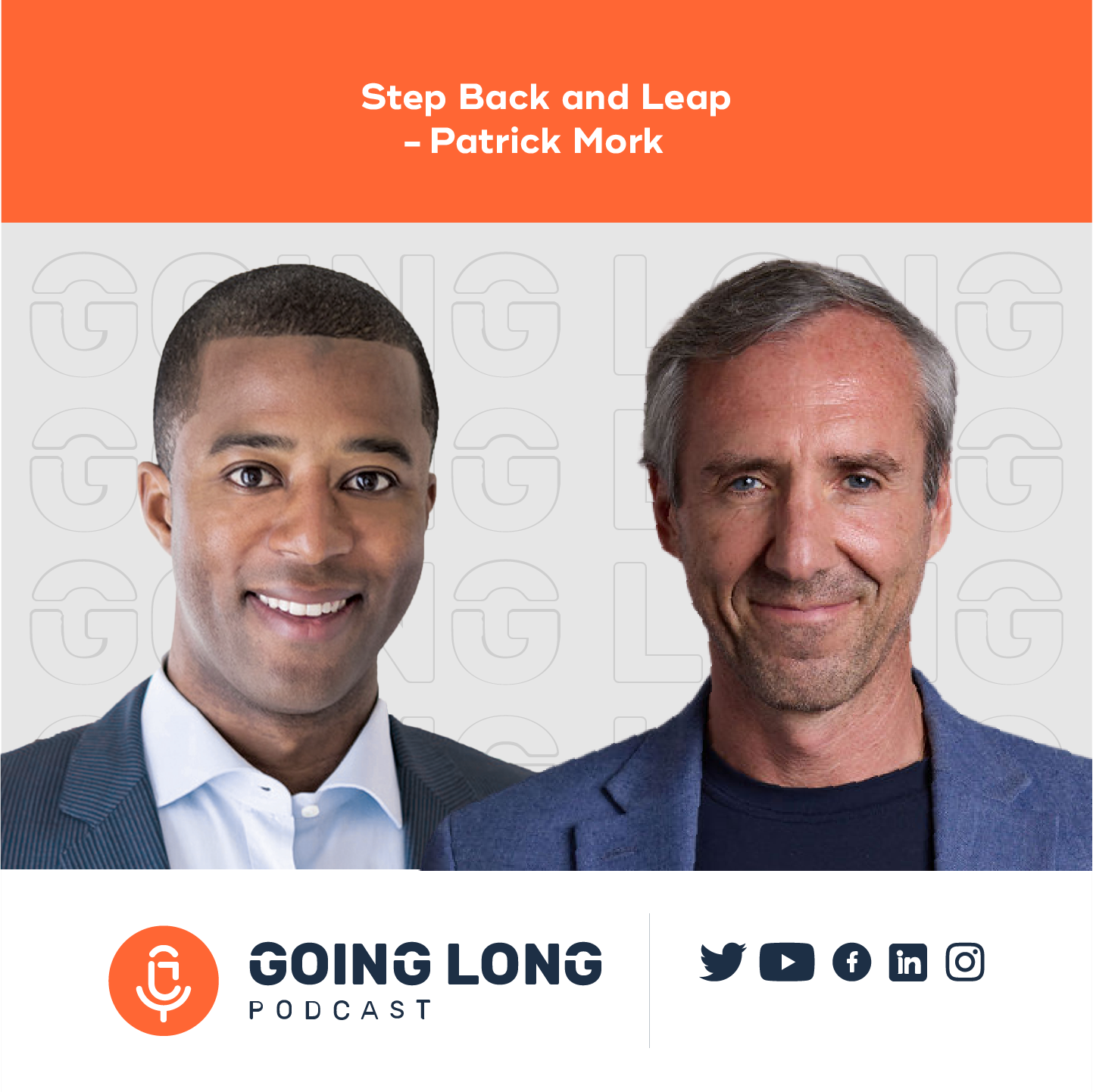
Step Back and Leap - Patrick Mork

Going Long Podcast Episode 606: Step Back and Leap - Patrick Mork
( To see the Video Version of today’s conversation just CLICK HERE. )
In today’s episode of The Going Long Podcast, you’ll learn the following:
- [00:24 - 02:02] Billy welcomes and introduces today’s special guest, Patrick Mork.
- [02:02 - 07:57] Billy asks Patrick to share more about himself in his own words.
- [07:57 - 16:50] Patrick shares insights into what he learned from the process of attempting two start-ups before building the one that achieved the level of success he wanted.
- [16:50 - 20:50] Billy asks Patrick to describe his stance on leadership and what makes a leader.
- [20:50 - 35:21] Patrick describes the role of international cultural living experience and fluency in multiple languages in increasing opportunities and abilities.
- [35:21 - 40:04] Patrick shares the message she would like to hear from herself three years from now.
- [40:04 - 42:12] Billy sums up all we’ve learned from Patrick today and asks hom to share the best ways we can get in contact and find him online.
- [42:12 - 43:14] Billy wraps up the show
How best to get in touch with and find out more about Patrick Mork:
Instagram: https://www.linkedin.com/in/patrickmorkofficial/
Website: https://patrickmork.com/
LinkedIn: https://www.linkedin.com/in/kolson23/
Podcast: https://podcasts.apple.com/gb/podcast/mork-unfiltered/id1824866742
If you're a corporate executive who wants to make your role optional, then grab your FREE ebook with Billy's proven 3 step process at: www.makeitoptional.com
What you can expect to get out of this ebook:
- Learn how to achieve corporate optionality
- Gain true control over your career
- Turn corporate skills into personal assets
With 26 years of experience in corporate sales leadership, achieved optionality through multiple income streams, Billy has helped dozens of executives build their paths to take control of their time.
This free ebook gives you everything you need to identify, plan, and take control of your career while building financial optionality, leveraging your skills, and start living your IDEAL day - today!
Go to: www.makeitoptional.com
Click the above link or just copy and paste the following directly into your browser to sign up and get your free ebook: https://www.makeitoptional.com/?utm_source=podcast&utm_medium=social&utm_campaign=p2olm
To see the Video Version of today’s conversation just CLICK HERE.
How to leave a review for The Going Long Podcast: https://youtu.be/qfRqLVcf8UI
Be sure to connect with Billy! He’s made it easy for you to do…Just go to any of these sites:
- Website: www.billykeels.com
- Youtube: billykeels
- Facebook: Billy Keels Fan Page
- Instagram: @billykeels
- Twitter: @billykeels
- LinkedIn: Billy Keels
Episode Transcript
Billy Keels 0:00
Today's episode is sponsored by Billy Keels advisory services. If you want to learn more about how to make your 99 optional, just go to make it optional.com. Once again, that's make it optional.com.
Speaker 1 0:14
Helping you build freedom without losing your edge. This is the going long podcast with Billy Keels,
Billy Keels 0:27
I get a chance to meet some of the coolest people in the world because I'm behind a microphone. Oh, maybe even if I wasn't behind the microphone. But like today's guest, like, absolutely imagine like, how phenomenal he is, and how much he is helping others to become and find their resilience. He is, well, you know, he's a Silicon Valley veteran. He was a three time CMO, that means chief marketing officer, and also two time founder, you know what, who led a team that launched, I think it's called Google Play brand somewhere around 2012 he may tell us a little bit more about that, but today, in his senior leadership coaching as well as storyteller, he is a personal advisor to top senior corporate executives as well as startup founders. You know what this is? Really, really. I love this part because this guy has actually lived in 11 biases. That means 11 countries, and he speaks not one, not two, not three, but four languages. He's a best selling author. His book is step back and leap. And he is also the host of Mork unfiltered, his amazing speaker, and is helping many people around the globe in the area of resilience. Gives me great pleasure to welcome to today's conversation none other than himself, Mr. Patrick. Moore, Patrick, welcome to the show. Man,
Speaker 2 1:44
Thanks brother. It's great to see you. Billy, great to be here, man,
Billy Keels 1:47
or should I say bienvenido, something like that.
Speaker 2 1:51
Five languages. A lot of people got five languages.
Billy Keels 1:57
Well, you know, it's one of these things. It's one of these things. I love being in Europe. You know how it goes. Listen, I've tried just to tell a little bit of your story, and I am absolutely sure that I have just scratched the tip of the iceberg. Actually, I know that, but I wanted to kind of throw it over your way. Patrick, I would love for you to share your story, your words, and then based on how you talk to us and what you share with this, if you'll allow me just to maybe ask a couple questions here and there, and we'll see where we take this conversation. Man, all right, over to
Speaker 2 2:27
you. So, yeah. So the, you know, the 30,000 foot version is on Belgium originally, despite a very strong American accent, was born in Brussels, 1972 so you know, 54 tender young years of age. Father was Norwegian, mother's Belgian. And yes, I have lived in 11 countries, done 33 moves. It's insane. I know lived in lived in Europe, lived in Asia, lived in Latin America, lived in the US. Moves around a lot in the US, like five or six different states. And originally, you know, I studied history and diplomacy at Georgetown University in Washington, DC. Then after that, I started, you know, my the beginning of my career was at PepsiCo in marketing. Spent about five years doing that, working with them in Florida, working with them in Brazil, then in Chile. After Chile, I decided to go do my master's. I did an MBA at INSEAD, which is in Fontainebleau, although the school has a campus in Singapore, Dubai and San Francisco as well. My MBA, I specialize in entrepreneurship. And so I've been in startups ever since, ever since 2000 I was in startups in one way or another. Started in Barcelona, where you are right now, and then did Madrid, then the United Kingdom, London, then moved to Silicon Valley. So I did six startups. A bunch of them were venture backed. One of them went public. That was glue mobile in 2008 I was part of the management team in Europe at that company, and then was Chief Marketing Officer at one of the world's first app stores, which was early startup called Get jar, which was like early, early App Store, before there was basically any app stores. Then from get jar, I went on to work at Google, where, effectively, as you mentioned, I was involved in Google Play. I was hired with building the first marketing team there, and I led the team that created the Google Play brand, and we launched the store. So I ran all everything that was marketing, product marketing, branding, all that stuff. Did that for a couple of years, then tried to do a couple of startups of my own that was a miserably difficult and and not successful experiment. And you know, it's one of those things where, man, if you go out and you do your own company, you got to realize it, you know, you're going to fail a couple times, and so made a pivot to becoming an executive coach in 2018 after a failed startup and a failed marriage. So, yeah, sometimes those things go hand in hand. We know how it goes. You know, it's sometimes our partners will leave us at the worst possible. Moment, and it's not to assign blame, it's just, this is how it goes. You know, sometimes you know you that's the risk you take when you do startups. So I became an executive coach, specializing working with founders in 2018 although I'd worked mentoring founders in one way or another since 2008 moved to Santiago, Chile in 2018 started a leadership development company in Santiago, where we worked with a lot of the region's top startups in leadership development, and ended up doing a lot of corporate work. So we had clients, you know, including Walmart, Scotia Bank, some of the big mining companies, some of the largest retailers in Latin America, like Falabella, were clients of ours. And basically, we were doing leadership development across the entire organization, from the CEO all the way down to kind of like, you know, mid level managers did that for a couple of years. Exited that business in 2023 moved back to Miami, and ever since Miami, I have really focused on my area of expertise, which is resilience and helping people become unstoppable. And so what I do now is I travel all over the world, and I do keynotes on stage for for startups, but also a lot for large corporate corporations and for events. And I have a signature keynote called become unstoppable, which is all about, you know, my journey, my experience, my tools, and how I help people become people become unstoppable and build their resilience. And I also do workshops, and, you know, one to one advisory work on that. So the whole premise behind that is, you know, we live in a world that is increasingly changing way more and more quickly. A lot of that is fueled by artificial intelligence and a lot of the geopolitical changes that are happening. So my job is kind of to help people build resilience as a muscle to help them become mentally, emotionally and physically tough so that they can get through, you know, a lot of tough times, because we all struggle. That's just, you know, part of the human condition. You've struggled, I've struggled. We all have it,
Billy Keels 6:52
but the
Speaker 2 6:53
people that are most successful and happiest in life are the people that put themselves through the pain intentionally, but also have the tools to do it right. So what you learn is, the more and more you struggle, and the more and more you build these tools and these habits and the support system, the better you get at navigating these setbacks, and the more you are able to get up when you get knocked down, you know. So you know, it's like a muscle. The more you train it, the stronger you get, and the stronger you get, the more likely you are to lead a life of meaning and purpose. So, so that's me. I have two kids, two wonderful kids, 19 and 15. They live with their mom in Santiago, divorced. And, you know, hobbies I like, I like diving, I like sailing, you know, I like lifting, I like Tai Chi and yoga, and I read a ton. And, yeah, that's it. That's about me, right
Billy Keels 7:42
on. Well, listen, Patrick, there's so many different areas that I really love for us to talk about resilience is something that is dear to my heart. I know you and I've shared about this and kind of the green screen stuff, but and so many people want to talk about success. They want to talk about all of the amazing things that happen. And you said it a bit tongue in cheek, but I know that's something that you've as a result of the two founder experiences that you had. I'm pretty sure you've been able to help a lot more people as a result of what happened, what you probably felt like to you in the moment, but now you realize it happened for you. As you said before, you didn't have these fairy tale exits, but I would love for you to maybe share a bit of, I don't know, a lesson or two that you actually now recognized that you learned as a result of going through those. I don't even want to call them failures, man, that look, but they're just, they're events that happen in your life, and as a result of building experiences, yeah, character, Billy, experience, like, we're not gonna, we're not gonna put a, you know, like you said, it's not fairy tale, but like, what did you learn from that? Because, because, in a reason, and I'm just to share this, and I know you see this even with your clients today, is that you get to, you get so used to, in a corporate world, like you're just constantly getting, like you can get in this loop where it's just success, success, success, success, because you're it's artificial, sort of speak, but, and then when you leave those corporate walls, there's potential that things don't go just like a plan, but along with it and way to ask, but what You learn from the two unsuccessful startups?
Speaker 2 9:22
Man, oh, there's a lot of learning. There's a couple of learnings that you know really are top of mind for me. I think that one learning that I had is that in order to be resilient and in order to reach your definition of success, you have to have a very clear sense of purpose. As a matter of fact, in my keynote, I talk about this, right? I talk about five pillars of resilience. The first pillar is seek purpose. It's you have to know why you're doing a startup. If you go in and you're just like, Oh, I just want to make a lot of money, or, oh, yeah, I think I can build a better widget, or I can build a better pair of shoes or whatever, as soon as. Times get tough, you are more likely to break under the weight of the pressure, right? And so when I look at the most successful entrepreneurs with who I've worked, or when I look at how I overcame my own challenges, right, all the moves, the divorce, you know, health issues, financial issues, etc, my sense of purpose is the thing that kept me going right is, is, you know, I kind of exist in order to help people find careers of meaning and purpose, and a large part of that is they need to become resilient. So, you know, when you have a strong sense of purpose, you are more likely to be able to weather the storm. And most people never really start to think about that until they're much older in life. Because as we get older, our values change, what we consider success changes, right? For young people, success is often the money, the house, the car, the bling, the Louisville bag, like all this shit that people think is so important, it's not. Once you have that stuff, you realize that your life fundamentally hasn't changed, and you're not happier, right? If anything, a lot of people end up more miserable, but society conditions us to think that that stuff matters, right?
Billy Keels 11:06
But
Speaker 2 11:06
it doesn't, you know. And as you become older and wiser and you go through more experience, you realize that there are other things that matter much more, like your health, the quality of your relationships, your interests, your ability to impact others and contribute and serve, right? So I think purpose was one thing that really stuck with me. And when I when I work, you know, with founders, or what I'm doing, keynotes, and when I do my my resilience workshops, I talk a lot about this, and I have frameworks and tools on well, how do I find my purpose? Like, what's the purpose of my startup? Right? So that's one thing. The other thing, and you know this, this will come as no surprise, because it's been talked ad nauseum by a lot of different successful entrepreneurs and authors, is, you know, the importance of team and the importance of culture, right? Is the realities, no matter how smart you are or how talented you are, where you went to school or how experienced you are, you know, any great endeavor is built by a team of people, right? And that includes kind of like, you know, if you look at celebrities who seem to be kind of like their own person, like, you know, authors or whatever, there's always a team of people behind those people, right? There's always the person scheduling the podcasts, right? The person doing the research, the person doing the outreach, the person doing, you know, LinkedIn contacts, the person writing the newsletter, right? And so you are only as strong as the team that is around you. And therefore, you know, it's absolutely fundamental to not just build a team, but by build the right team. And that would lead me to point number three, which is even in the smallest organization, no matter how small your company is, if your company is two people or your company's 2000 people, is the importance of culture in your company, right? I remember my last startup in Chile, the first thing that I did, actually, even before writing the business plan, was I was like, Okay, well, what's our purpose and what are our values like? I started with the culture deck. And if you look at the if you talk to the successful entrepreneurs, they will tell you, it starts and ends with culture, right? I'm reading a book right now called the life cycle of a CEO, which is a fascinating study of some of the world's top CEOs and how they pivoted companies and they restructured private equity backed companies and they went public and or they bought companies and turned them around. Every single one of these guys talks about culture. Every single one of them says culture is the make or break factor that determines a good a good company from a bad company. And this is as true in a large company as it is in a small company. And when I look at the successful founders that I've worked with, they all get this and they all intentionally build culture from the beginning. They're very clear about like, why does this company exist? What's our vision, what's our mission? What are we doing? Why are we doing enough? And more importantly, like, they get really, really granular and clear about, like, what are the four or five values that my company stands for? Right? It's like, it's like, growth mindset is really important to you. Okay, great. How do you hire people who have a growth mindset? Right? If integrity is important to you, how do you actually test for integrity in the recruiting process, right? So I would say those are, those are really the three things, you know, it's the purpose, it's the team, it's the culture, you know, those are, those are three things which come back time and time and time and time again. And then there's other learnings, right? I think one of the biggest learnings is, of course, so many founders run out of runway, either because their cost structure exceeds their revenues, very common, right, especially in venture backed startups. And I think the other killer is energy. It's the founders ability to be self aware about like, what are the things that give me energy and what are the things that drain me energy? Because what I always tell people when it comes to like resilience and being successful in life is that the successful people who are able to make big changes and do incredible things, not only are they able to overcome fear. Fear and start their startup journey, or start something very, very difficult. But the reason they succeed is not just because they overcome fear, which is the first step, but they are able to run the distance. They're able to persevere. They have the resilience to go all the way through and that's the thing that most people miss about entrepreneurship, is they're like, oh, you know, if I can get over my fear, I'll be successful. And it's like, no, sorry, dude. Like, getting over your fear is the first step, which a lot of people never actually get over their fear. So they never start, right? But then once you've started, you have to be able to go the distance. You have to be resilient, and so managing your energy like being very conscious of when am I at my best? When am I in my lowest? Okay, you know, I'm at my lowest right now. It's five o'clock in the afternoon, therefore I am not going to make a major decision right now, because my energy level is not where it needs to be, right? So proactively and intentionally managing your energy is absolutely critical. And so there's many different ways to do that, right? There's the physical energy. The physical energy, there's the mental, there's the emotional, there's the spiritual. Right? We can geek out and go into any one of those facets, but, but, yeah, those are some learnings.
Billy Keels 16:11
Yeah, no. So these are, I mean, there's really powerful right, in terms of being able to seek your seek and understand your purpose, then building a team, and then also being able to establish that culture and being able to make sure that, well, from a cost perspective, yes, you have enough runway, right, so that you don't burn up your runway. And then the other thing is, and I think a lot of people, well, no, I don't think I know this for sure, that people tend to underestimate that energy part of things. So I really, I'm happy that you, that you highlight that there's another part. And you've talked about founders, and you've been inside of big corporate, and you have been, you know, outside, and you're decided to do your own thing. One of the things that I hear people talk about, I know you have a particular stance on this, the stance on leadership, right, and understanding if, if leadership is something that is either a position, or do you feel like it is a decision, and what's your reason for thinking that I know you can help to shed a lot of light here.
Speaker 2 17:12
Leadership is a decision. You know, just because you become a manager or you become VP or marketing or director or whatever, that does not make you a leader, right? I think if you look at our government in the US today, there's no leadership. This is why we are in the absolute shit show that we are. There's no leadership in DC, right? Nothing gets done. And the things that get done are the wrong things that are done the wrong way. Right? I don't want to get political, because, you know, people have different opinions, so doesn't matter whether you're, you're you're red, or you're or you're blue, or you're green, right? But leadership is not something that's automatically given to you. It's a conscious choice for you to lead. And then there's a question about, How do you lead? Right? Leadership is all about, you know, What? What? The way I define it is, it is the it is the art, because it is an art, right? It is the art of successful and see successfully, boldly influencing other people towards the pursuit of a common goal. That's what it is, right? And I say boldly because you have to be bold to be a good leader, right? And you are influencing others. You're not telling others what to do, telling others what to do. That's the Army that's giving orders. That's not That's not leading. And so when you talk about leadership, you know it is a skill. It can be developed. I mean, some people an innate have an innate ability to do it better than others. And so it's it's less, it's less, less effort for them. But I believe anybody can lead if they make that decision, they're doing, they're in the right circumstance, in the right context, and they are willing to learn and work at it, because something that it's, it's, there's so many elements to leadership. Leadership isn't just one skill, it's a combination of many different skills, right? And those skills can be developed over time. You know, to be a good leader, you have to be able to communicate, you to be able to listen, you have to be able to prioritize, you have to be able to inspire you to be able to care and want to grow your people. You have to be able to delegate. Right? There's a lot of different facets, but So short answer your question is, it's absolutely a decision. And if you if you look at the people that are intentional about becoming good leaders. They really work at it. I mean, again, going back to that book that I was telling you about life cycle of a CEO. Every one of
Billy Keels 19:30
those guys in that book had a coach, and they worked at their leadership constantly. And it is exhausting. It is really hard to be a good leader, especially in this day and age where you there are so many things for you to deal with. There's people's insecurities, there's artificial intelligence, there's geopolitics, there's culture, there's corporate pressure, there's earnings. So it's hard, but it is definitely something that you make that decision to do it and you work at it the rest of your life. Yeah. So appreciate that, and also just being able to break break it down. And it's something that you you can learn how to do it, do it effectively. And when you have an outside in perspective, you tend to eliminate blind spots, which I think is something that is, is is fundamental. Now, one of the other things we talk about leadership, we talk about influence, and because of the, well, just the life that that you've lived in. I know this is something that is unique. I used to think was unique to me, but then I realized that there are other people who have lived in more countries than me, have made more moves. When you said 33 moves, I was like, Oh my gosh, okay. Well, that makes my 10 and whatever 15 years not seem like a lot, but everything is relative, yeah, but I do know that there is this question of language, right? And I really love languages. We talked about it before. You've lived on different continents, and there is this concept, and I want to bring everybody with us, but what I find is that language and learning language is gives you a great opportunity, but it doesn't actually change unless it gives you the opportunity that you can leverage the language to better understand culture, Right, and also how that will potentially influence leadership. But, like, what do you think about when you when you think about language, and languages role in in culture, especially someone who's lived outside of your own, your own country?
Speaker 2 21:32
I mean, it's fundamental, you know, it's fundamental. And you know, I see so many examples of, you know, especially US companies, who insist in putting, you know, Americans, no offense, in roles in other countries where they don't understand the culture and they don't understand the language, and they don't speak the language, and that massively limits their effectiveness. Massively doesn't mean they can't be successful. My father did it, you know, he was in Mexico. He didn't speak the language. He was relatively successful, but it was, it was a handicap.
Billy Keels 22:02
You
Speaker 2 22:02
know, I saw it firsthand. You know, he was, he was in Asia, working as a marketing director for PepsiCo in the 80s. He didn't speak Chinese, he didn't speak Malay, you know, he didn't speak any of the languages out there was a handicap. So in my own experience, you know, again, you know, after 11 countries, I mean, I'll never forget going into a business meeting in Rio de Janeiro. Or maybe it was, maybe it was sapalo. And I walk into a meeting, and the guys are all speaking Portuguese, and, you know, they're kind of like, you know, not really paying attention to me. And then they say something, and I and I correct them in Portuguese, and they turn around, they're like, holy shit, you speak Portuguese. Holy shit. You speak fluent Portugal. Oh, my God, you speak Portuguese, like, like a carioca, like us, and and the impact was transformational. I mean, they went from being, I wouldn't say, hostile, but kind of indifferent, to, you know, big smiles and come and, you know, shake her hand and be laser, you know, and everything to do being. And so, you know, when you are able to speak a person's language, or at the very least make an effort, it totally changes the dynamic of your relationship with that person or that group of people. And so, you know, it's, it depends what kind of business, the line of business you're in. Some people don't need to worry about learning another language or working in other cultures, so they don't care. And it doesn't matter as
Billy Keels 23:18
much.
Speaker 2 23:19
But, you know, I think, going back to the topic of resilience. You know, being a resilient and being able to bounce back when you have a setback or a failure, partially is due to the experiences that you have had in life and then, and so when you have lived in another country and you've lived in another culture, and you have survived that, and maybe you've even learned the language that just gives you a tremendous advantage over other people who haven't right? I mean, so many people struggle in life, and I meet so many people who are miserable and like, you know, Uber drivers who are working three jobs here in Miami, and they're like, oh my god, it's so expensive and I can't make it. And you know, Miami, so expensive, and blah, blah. And I'm like, How old are you? 27 Why don't you move? Oh my god, you know, move. Where would I go? And what do I do? And I'm like, Dude, you're 27 years old. You can go anywhere. You have a mortgage you want. You know, you don't have debt. You have your car payment, right? You can take your car with you. You can sell your fucking car, right? And it's like, and people don't realize that the world is this big, massive, vast place. And you can go and you can reinvent yourself anywhere. Nobody gives a shit where you live. There are so many things to do, right? And so every time that, you know, for me, it's like, I wouldn't say it's as easy as, like, getting, you know, getting on a bus and going in another city. But every time I have moved city, or every time I have moved country, it becomes easier and easier. I just have, I have a playbook. It's like, okay, I need to do this. I need to do that. You know, bank account, blah, blah, ID card, insurance, Bob, you know, whatever. Say it's, you know, is it a challenge? Yeah, start all over again. New friends. You don't know anybody. You don't know the restaurants, you know, many friends, whatever. It's not easy.
Billy Keels 24:59
You.
Speaker 2 25:00
Like every time you do it, you get better, you get stronger, right? And I think you know the language part of it. It's such a rich experience to learn another language, because you never really are able to fully immerse yourself in a culture unless, until, you speak the language of people who live there, not the same, like you can talk to their own language man, like your relationship with them just completely changes,
Billy Keels 25:21
yeah, I mean, it definitely changes, and it gives you more insight into the culture. And, you know, you're answering that question, and I'm thinking to myself, like, because you like, you have a like, I would that you're based on your your life experience. I'm just curious, like, I was also thinking about AI, right? And this is maybe a little bit off topic, but because there's a kind of a shared experience, and we're talking about language, and we're talking about resilience as well. Like and I watched, I was speaking with a friend the other day, and they were telling me about these different translator tools, so you don't actually have to learn a language anymore. You can go to this place and it won't, and you just put something in your ear, or you just put that on your phone and it does a simultaneous translation, right? That's the scenario that was explained to me in the in my thought was, well, I'll tell you what my thought was when I explained that to you as someone who's lived in different countries, and we're talking about language and the way that it helps you to to connect with with culture, without leading you too much. When I talk to you about that scenario, like, Hey, listen, you may not need to learn a language anymore. You can live in wherever for, you know, however many years. What does that as you think about resilience and you think about just that scenario, what is it like? What does it do to your stomach, or what does it make you feel? Or,
Speaker 2 26:37
I mean, on the one hand, it's cool, you know, because I'll give you a concrete example. You know, I have a virtual assistant, you know, Mark Marcos, who's my right hand, who I couldn't live without. And he is a young man living in the Philippines, and he does all sorts of stuff for me. And no, and he's like, booking flights and, you know, hotel rooms and talking to people in other countries. And he's able to email people in perfect Spanish, even though it doesn't speak the language. So is that cool? Yes. Is it helpful? Yes, but you are not going to build resilience in the same way through a hack. It's like anything right in this country, particularly in the US, we have an obsession with hacking things, everything's like growth hacking, health hacking, and it's like, you're just doing yourself a disservice by cutting corners, right? It's like, Oh, I'm gonna hack my way to the bar exam. Like, okay, fine, whatever. You're not gonna learn all the material. So I, you know, I think, I think we have to be realistic and mature enough to see it for what it is. Is, it is a useful tool. It is a hack. It allows us to be more productive, but it robs us of the ability to truly understand what it means to speak that particular language or write that language, and really communicate and understand the culture. I've been told that when I speak Spanish in Chile to people, I sound like a Chilean and my personality changes.
Billy Keels 27:56
There
Speaker 2 27:57
is a reason for that
Billy Keels 27:58
that
Speaker 2 27:59
makes me part of who I am, right? And so hacking is fine as a tool for productivity, as long as you're realizing your conscious of what you're doing, but if you are trying to become the best version of yourself, you have to put yourself in difficult situations. You have to do hard things.
Billy Keels 28:14
Doing
Speaker 2 28:15
hard things is the second of my five pillars. When I give these keynotes, you have to do hard things. And unfortunately, when I look around at Gen Z and Gen alpha and all these people who are on phones and using AI for everything, my fear is they are going to grow up soft, right? And the risk there is, you know, there's that whole phrase of, you know, hard people create soft times. Which creates soft people which create hard times. That's, that's the risk is we are, we're conditioning a generation of young people to hack their way through everything. And so the question is, how much are they going to have to struggle, and where do they get to that exposure to struggle, so that when things really get hard, they really need to do something difficult, they are ready because they have trained for it.
Billy Keels 29:08
Yeah, that scenario, when I explained it to you, and I appreciate the perspective, because there's one that is the how to from a from a, like a business perspective, you're able to get more things done, because once again, as you talked about before, what's the purpose of your of your of your organization, then you've got your team who needs to do things, and you're building your culture, right? But when I heard that example as someone who has lived in France, in two different cities, who's lived in Italy, who's lived in in Spain, and not being from any of those countries, it made me sad, because I was like, You know what? One of the things that in the moment, I couldn't stand it, but I remember, like literally being in Paris crying, because I was like, I've just moved 1000s of miles, kilometers away. I'm in this place. I can't even explain how the issue is going on with my electricity and. I'm kind of screwed because I don't know how to get it fixed, and it sucked. But then when I look 25 years later, and the what it was to actually go from I don't even know how to explain how the you know, how the electricity gets turned back on, to actually being able to do sales over the phone in a different language and understanding the culture, it was like, wow. And you talk about the same thing in Spain, it was very similar. Like, people don't see me or whatever, and they like, where are you from? Are you from Spain? I'm like, No, I'm not from Spain. It's that your voice changes, your all of these things happen because you do the hard stuff, right? And it's kind of like, yeah. When I heard that scenario, I was like, Yeah, that sounds so cool, but I'm like, but if you've ever lived overseas, if you've ever led a team of people from different cultures and stuff like that, it just it gives you a level of empathy that I believe you can't have unless you've been through the hard stuff.
Speaker 2 30:53
Absolutely, absolutely, I agree 100% you know, I mean, my my son, who's 19, you know, he was in Chile for like, six years, and his junior year, he like, calls me up, and he's like, Hey, Dad, I want to do my senior year in the US. I don't want to graduate high school in Chile. I want to, I want to move back to Miami and live with you and graduate high school. And his mom and I were worried, because, like, this is not a good idea. You know, you're in a stable, good school, good environment, you have friends and everything, and you want to change senior year like you have no idea what Miami is going to be like. And he did it, and kudos to him. It was one of the hardest years of his life. He really struggled with everything, with with school, with grades, with making friends, with being bullied, occasionally. His relationship with me was very strange. The first six months, I didn't think it was going to work out. He made a bunch of like, life changing decisions, you know, which kudos to him. Is that That's his decision. You know, decided not to go to college, decided to stop playing competitive basketball. You know, self taught himself how to sell, you know, door to door. Self had taught himself how to how to trade as a trader, you know, building a portfolio, you know, going online, finding mentors, finding programs, self teaching himself, all this stuff, being hours and hours and hours behind a computer, learning how to trade, learning stock markets, learning everything. And when he went back to Chile, the feedback I got from people who knew him were he's a completely different person. He's so much more grown up. He's so much more mature. And how many kids would have done that? Most kids would not have done that. And I told him, I was like, this has probably been the hardest, one of the hardest years of your life. And there were parts of this year that sucked, and you will look back at this in 20 years as a career defining year that made you the person that you are. And so, you know, life is struggle, and you know the Bible teaches us this stuff. The Lord is has always told us we are, we are not there to have like, you know, an easy time on Earth. And anybody who thinks that is like smoking crack, right? It's life is tough. And if you want to get somewhere, you want to do something special, that that makes you feel fulfilled, and it gives you meaning, and that is of service to others, you are going to struggle, right? And therefore, how do you get through that? You have to do more things.
Billy Keels 33:04
Yeah,
Billy Keels 33:05
so, and also, too, I just want, I do want to recognize you and your son's mother for being able to provide that safety for him, to be able to make such a decision. Because it's not something that's easy. And I think, well, I know that there are moments when we don't recognize one another, but I want to recognize you for that, because I'm sure you and his and his mother to provide that safety, that physical safety, that psychological safety, to say, Hey, listen, I really want to do this. And whether it works out or not, he felt safe that he could, he could do that, which I think,
Billy Keels 33:38
as
Billy Keels 33:39
parents,
Speaker 2 33:40
we need to be able to be able to do that, right? I think, you know, I just finished reading a book which, which really left an impact on me, which I recommend every parent listening to this show read called the anxious generation. And it talks about, you know, the terrible impact on our kids of smartphones, particularly social media, gaming and porn. And one of the other things that it talks about is that, you know, it's created a terrible impact on our kids, partially because we have smothered them.
Billy Keels 34:09
You
Speaker 2 34:09
know, I mean, when I was a kid, dude, I would walk to the school bus stop at seven o'clock in the morning in the freezing cold for 20 minutes, for like, two miles to get the bus stop at seven. That is unheard of. You would go to jail in the US if you did that shit, right? And that's part of the problem is we are raising our kids to be soft and to be whips because we're we're like, Oh, honey, no, I'll take you to the end of the street. It's like, dude, he can walk two blocks. He is not going to die. Oh. What if he gets kidnapped? Okay, well, that's one in 100 million possibilities. And so that is also part of resilience. Is if you're if we are conditioning our children to depend on us for everything, if we are not letting them do things that are risky, then they are going to grow up soft. And guess what, as soon as they get knocked down, once they are not going to be able to get. Back up. So there's a responsibility in us as parents to to to let them go out and get hurt. That's part of the process, right?
Billy Keels 35:10
I definitely skinned my knee many, many times growing up. So oh my
Speaker 2 35:14
god, dude.
Billy Keels 35:15
Yeah, which is, which is insane. But like, I do have one more question that I want to ask you. Actually, it's more of a scenario, right? Because Patrick, one of the things that happened for me I mentioned before, like, things tended to always go really, really well, like, set a goal, over exceeded or overachieved against the goal. Blah, blah, blah, yeah. Well, in a certain moment in life. Well, I had the major, well, I went through divorce and had a big, let's say a business a business associate issue all happened in a short amount, yeah, so, a short amount of time. But the things that happens when we are, like, it's like you talked about before, like, when things are going really well like you. You're in the moment, and you recognize things, but it's when you actually go through these failure events that you really start to learn things. And when you go from like it's happening to me to it's happening for me, and you can reflect on it, you realize that if you're anything like me, I didn't really want to talk to a lot of people, because usually people came to me to help me, have me help them solve their problems, not the opposite. And so what I realized was in the moments of success, that's one thing, but it was the moments that the more challenging moments when those that were around me were telling me, yes, you can do it, do this, do that, all of those things were great, but it was really the conversations that I was having with myself in the silence, the difficult, the challenging things that I needed to say, in that I needed to hear. And so we all go through the highs and we go through the lows, but if you can, because we're talking about resilience, but, and it's one of the things that I want you to think about, Patrick, I want you to think about yourself three years from now, and you know, you're going to have lots of successes, and there's going to be these moments that are like valleys that are really, really hard, and your people are going to be there, but you've got to look yourself in the face, in the mirror, and tell yourself a message right to get you through. And I would love for you to share with with me and with the go along family. What's the one message that you want to leave for yourself, so that when you look three years back go. You know what, Patrick, I'm glad you said that, because I needed to hear that in order to get through the valleys. What's that message you're going to share with yourself?
Speaker 2 37:29
Really simple, every day is a new day, every day that you get up, every day that you are blessed to wake up alive on this earth, is a chance to start over, right? It's like, I had, like, a particularly shitty day yesterday. It happens, right? Even when you're an entrepreneur, even when you're considered quote, unquote successful, you were gonna have shitty days. And I was like, I remember I came home last night. I was like, fuck, man. This thing just really sucked. And then I was like, you know, I sit down and like, one of the things I do every single day is I have a gratitude group, and I write down five things that went well that day. It doesn't matter how bad the day was. I will write down I will find five things that were good, right? The fact that I woke up this morning and I'm healthy, and that my kids are healthy, and that might I still have my parents at 81 years old, and that I live in a decent place, and I do interesting work, like, I think about these things that I give gratitude every single day, and that is because, kind of, like, if you live in a state of grace, grace, as an emotion, counteracts fear. You can't be grateful and be scared at the same time. It's a weird thing, but you can't, right? So, you know, that's the thing is, like if you, if you're a basketball fan, I think the basketball fans you know in the audience will appreciate this, right? You go back to, I think it was the 20, 2015 2015 2016 series, or maybe was the year after. It was the series where you had the Golden State Warriors, because I'm a huge GSW fan, against the the Cleveland Cavaliers. And it's the final. It's the finals, and Golden State is up three one, and everybody's like, this is over, right? So best out of seven this is over, Golden State is going to win this and LeBron and the Cavs come back and win the next four games and win the championship. And the mindset of LeBron and those guys was one play at a time. Just focus on each and every play at a time. And it is the same thing in life you focus on every day at a time. You can have the worst day, the worst week, the worst one, the worst quarter. Doesn't matter, but every day you get a chance to start new. You get a chance to learn something that didn't go well the previous day, and you can course correct. And so if you're able to adjust your mindset and just put that bad day behind you and think about, what did I learn from that bad day? What can I do differently today? That helps a lot, that and gratitude journals, but my message your audience would be one day at a time.
Billy Keels 39:55
Love that one day at a time, every day is a new day, and being able to. To just really reflect on that and do that with with gratitude. So I'm like, these conversations, man, Patrick, they just mean, you know how it is you've been on the side of the mic. They just fly by no matter what. And it's kind of like I'm sitting down thinking to myself, like, did we just start and you were saying, like, breast a guy from Brussels 1972 moved 33 different times, 11 countries. And you kind of took us to the PepsiCo thing, and then you're telling us about your MBA in 2000 and moving to Santiago in 2008 I think you said. And then we left later on, going to Miami in 2023 and realizing the importance of resilience and having gone through it yourself. And you talked about the relationship realities that you went through and you talked about also, well, yeah, five time CMO, but also two time founder, that just didn't work out exactly like you wanted to work out. But as a result of that, you've been able to take those lessons. You've been able to share them, not through only just as a as a best selling author, the way that you're working with people today, one on one, or even more importantly, as you are from the stage and helping people to understand how resilient they can be, giving the five pillars that you talked about before giving us some insight into into some of those pillars, and then also, like, I know people were like, he's also got a podcast. Billy, just ask him the question, man. So listen. So Patrick, here's the thing I would love to know. I know I get to know, and I'm even gonna join you on your podcast, but the going long family wants to know, how in the world can we get in touch with you find out more about what you're doing, about your public speaking, about your books, and also, too, about what you've got going on at your podcast. More come filter
Speaker 2 41:34
very easy. My website is patrickmork.com, so m, O, R, K, patrickmork, o1, word.com, and I'm on socials at Patrick, Mork, official, that's on Instagram and LinkedIn. I don't use X, no offense. It's not my thing. Not really on Facebook either, either, but, but those are the main places you can find me in the podcast is, you know, if you just go on Google and look for more unfiltered, you'll find two channels. One is a channel in Spanish, the other ones in English, Mork, I'm filtered on YouTube, so that's the best way to find me, follow me. And you know you can subscribe to the newsletter on patrickmork COMM, and you know info@patrickmork.com if you have any questions,
Billy Keels 42:12
fantastic. Well, it's in Patrick. I really appreciate you investing some time with me today. One thing, yeah, you said LinkedIn. And so I always like to ask my going along family, when you reach out to Patrick, not if, but when you reach out to him, especially on LinkedIn, just send him a personalized invitation. That way he knows that you've already invested time listening to us here, and then that way, it makes the conversation for you all much, much easier. So So with that, Patrick, listen like I said. Thank you very, very much. Appreciate you investing the time with me on behalf of the entire going along family. Thank you very, very much. Really appreciate
Speaker 2 42:45
it, likewise, man, yeah,
Billy Keels 42:46
all right, you too, and go along family. Thank you very much. Go out and make a date and thank you very much.