
From Academic VP to Global Venture Founder with Chris Gray

Subscribe to the podcast


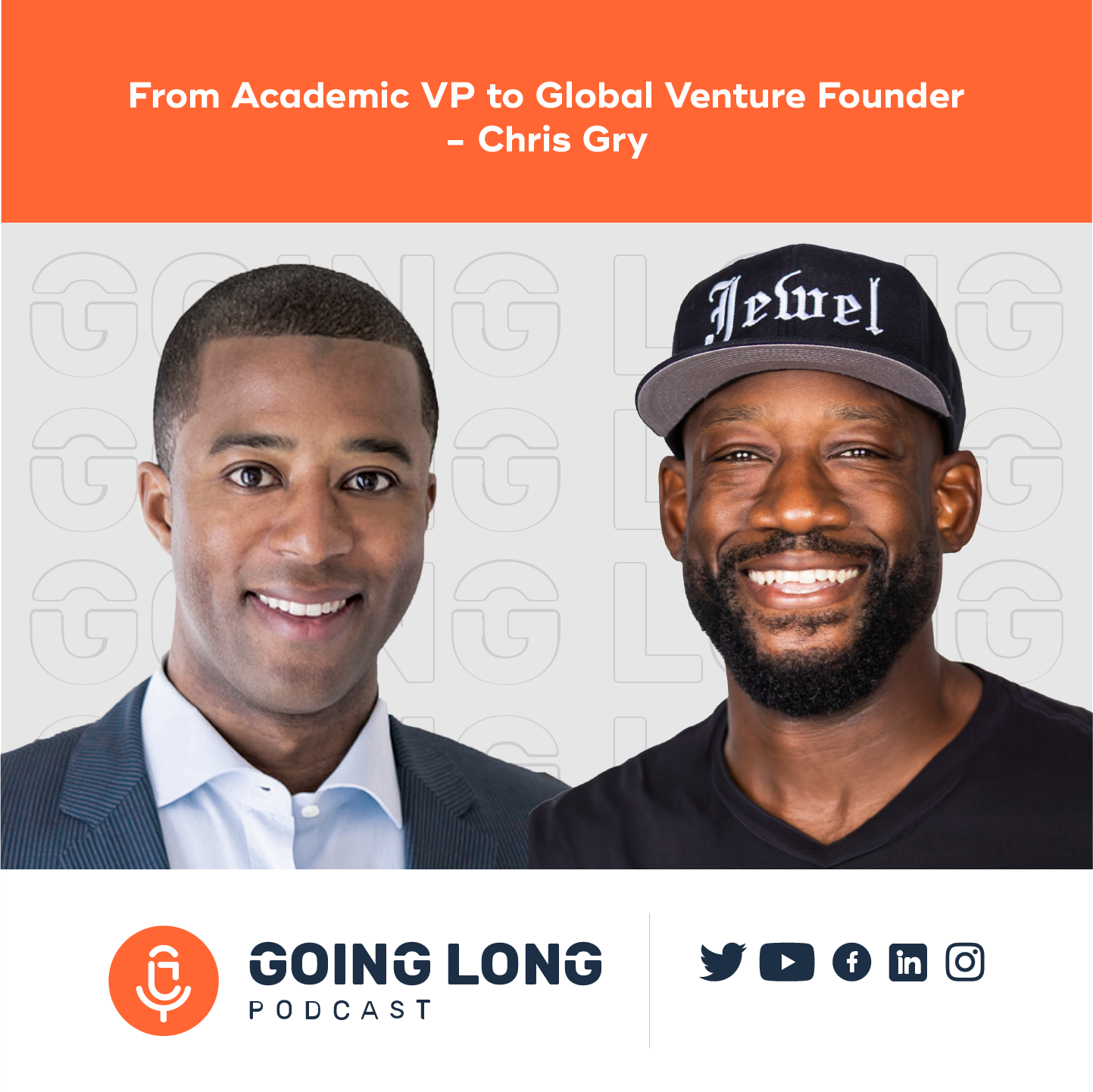
From Academic VP to Global Venture Founder with Chris Gray

Are you a senior executive or high-performing corporate director who cracks your quarterly metrics, but wants to create more personal autonomy over your schedule?
In this transparent guest conversation, host Billy Keels sits down with Chris Gray—a former campus academic vice president who successfully translated his corporate leadership capital into multiple thriving independent ventures, including Red Palm Solutions, Bald Buck, and the Earn Core community of over 4,000 global business owners. Chris pulls back the curtain on his professional evolution, sharing how an honest look out his office window on a random Tuesday afternoon catalyzed his journey toward true lifestyle sovereignty. Discover how to lean into challenging personal seasons, stop letting distractions delay your execution, and use external advisors to unlock the radical self-awareness required to run your career completely by choice, not obligation.
🚀 Want to make your corporate role optional? Grab your FREE copy of Billy's 3-Step Process eBook here: https://www.makeitoptional.com/?utm_source=youtube&utm_medium=social&utm_campaign=p2olm
📌 Questions Answered in This Episode:
- What does it look like to maintain executive excellence while actively developing independent professional options?
- How can a senior leader audit their weekly 168 hours to prioritize high-impact execution over standard entertainment?
- Why is aligning with a mentor who is further along the path essential for an enterprise professional?
- How do you successfully transition corporate team-building and accountability reps into your own ventures?
- Why is letting go of the illusion of absolute personal control the ultimate key to expanding your financial choices?
⏱️ Episode Chapters:
- 00:00 - Maximizing Executive Performance: Moving From VP to Serial Venture Owner
- 01:37 - Shifting the Focus: Understanding Career Alignment in Higher Education Leadership
- 03:40 - The Tuesday Window: Analyzing Strategic Timelines and Lifestyle Design
- 05:20 - Reclaiming Your 168: Making Deliberate Short-Term Sacrifices for Long-Term Autonomy
- 06:32 - Navigating Tough Personal Seasons: Finding Grit in Jiu-Jitsu and Fatherhood
- 10:26 - Shifting Mindsets: Moving Past External Validation Toward Self-Approval
- 14:58 - Upgrading Your Network: Partnering with Advisors Who Are Steps Ahead
- 20:32 - Defeating Imposter Syndrome: Building a High Tolerance for Higher-Level Rooms
- 23:15 - Transferable Assets: Shifting Corporate Accountability Reps Outside the Walls
- 26:42 - Platinum Advice: Why You Cannot React Poorly If You Want the True Data
- 28:14 - Red Palm Solutions: Maximizing Local Business Models Using Smart AI
- 31:52 - Earn Core Community: Creating the Private No-Hide Mastermind Engine
- 36:22 - Letting Go of the Illusion of Absolute Personal Control to Accelerate Growth
- 40:19 - Reclaiming Your Freedom and Connecting with Chris Gray
How best to find and connect with Chris:
Website: https://www.yochrisgray.com/
LinkedIn: https://www.linkedin.com/in/yochrisgray
Instagram: https://www.instagram.com/yochrisgray/
Facebook: https://www.facebook.com/YoChrisGray/
📘 About Billy Keels & Corporate Optionality
If you're a corporate executive who wants to make your role optional, learn how to achieve true control over your career and turn your corporate skills into personal assets.
With 26 years of experience in corporate sales leadership, Billy Keels achieved true optionality through multiple income streams. Today, he has helped dozens of executives build a predictable path to take control of their time and start living their ideal day.
This free ebook gives you everything you need to identify, plan, and take control of your career while building financial optionality, leveraging your skills, and starting to live your IDEAL day - today!
- Get the Free eBook: https://www.makeitoptional.com/?utm_source=youtube&utm_medium=social&utm_campaign=p2olm
- How to Leave a Review for The Going Long Podcast: https://youtu.be/qfRqLVcf8UI
Be sure to connect with Billy:
- Website: https://www.billykeels.com
- YouTube: https://www.youtube.com/@billykeels
- LinkedIn: https://www.linkedin.com/in/billykeels
- Instagram: https://www.instagram.com/billykeels
- Facebook: https://www.facebook.com/BillyKeelsFanPage
- Twitter/X: https://www.twitter.com/billykeels
Episode Transcript
illy Keels 0:00
There is a massive difference between being an effective executive and being a fully aligned leader. In this episode, former academic VP Chris Gray is going to break down how he took the elite team building and leadership reps he mastered in corporate and used them to design true schedule sovereignty on his own terms. Let's dive in and let's get you to optionality. Today's episode is sponsored by Billy Keels Advisory Services. If you want to learn more about how to make your 90-nine optional business ownership, make it optional. Let's get on make it optional.com And today you're going to understand why because today's guest began his journey helping you overseeing Billy without losing your investing on growth. This is the developing podcast of the campus that Keels Academic VP. Now, hold on to your hold on to yourself. Hold on to your seat. Now he's a multifaceted entrepreneur who's building businesses as well as communities, like Bald Buck Seasoning, like Ridgeville Entities, like. Bald Buck newsletter, like did I say Encore Community yet? Which is an more than 4000 entrepreneurs all over the globe. It gives me no greater pleasure than to welcome to today's conversation, mr. Chris Gray. Chris, welcome to the show,
Speaker 1 1:20
Billy. I need to like copy that intro and and and use it. You intro me better than I intro me, so make me feel like I'm doing something. Thank you, man. I appreciate it.
Billy Keels 1:30
Well, that means you may have to come back.
Speaker 1 1:34
That would be a rare honor, from what I hear. That'd be a rare.
Billy Keels 1:37
Hey, listen to this. He already knows. He already knows. Okay, fantastic. Now there's a lot going on, man. Now and and I appreciate the the different areas that you are involved in and how you are working with and helping entrepreneurs and business owners today. There's a question I have for you though, beyond if there was something that I forgot. I did talk about Red Palm Solutions as well, didn't I?
Speaker 1 2:01
You did now.
Billy Keels 2:03
Okay, there you go. So there you go, folks. See, I mean, this is a man of many talents and an expert in so many different places. But I kind of want to jump in because with all of the the vast greatness that you're sharing across the internet, across the globe. globe, something really rings close, and I and I understand, especially when you're in business ownership or just in life, right? It's sometimes it's easier to. Some people would say lie, not tell the truth, especially when you're chasing your dreams. But you know what? I'd love to know what your thoughts are on not telling the truth, and how is it helping you help others today?
Speaker 1 2:54
Wow! Oh man, that's a good one. So I'm gonna go. I'm gonna go anywhere with this. The first thing that lands with that, when it comes to not telling the truth, is is a not telling the truth first to myself. And so let's look back when I was in corporate America. You know, I joined it, got out of college, and needed a job, and went from teaching and coaching, and that was okay. You know, I loved it, but I wasn't getting the money I wanted to get. And so I get into corporate America. I was at University of Phoenix for profit education, and I start to advance there. And there was-I didn't know it then, Billy, but there I wasn't aligned. This is a whole other conversation. But one of the differences there's a difference that has made a difference. It's alignment, right? Knowing what's happening in here, inside here, my chest, and aligning with that. It might sound woo woo, but it's for me. It's real. And so when I was in corporate America, I felt, and I didn't know, but I felt misaligned. I was effective at my job from a leadership leadership standpoint, but I knew that you know I'll give you just one brief quick story. There was one time we were having this one a meeting that I will never forget. We're having a corporate meeting about some some new initiative coming out. Initiative was terrible. It was a terrible idea. It was going to have impact on the the front lines. It wasn't positive, and they're we're in this meeting and they're they're spinning it and I'm thinking, what the hell is everybody talking about here? This is going to be disastrous. And so they they ask us what they what we think, and I told them exactly what I thought. When I got done with that meeting, I get pulled aside and get reprimanded for telling them what I thought. And I'm thinking, oh, you didn't care about what I really thought. The message of this, the purpose of this meeting, was to get behind this this thing that we don't believe in, and then you want me to take that and roll it to my team the same exact way. Oh, now I get the game, and that was a micro example. Of the macro experience in corporate America with me, and I wasn't there was misalignment there because I wasn't being true to myself, and I wasn't being true to my team a lot because that's how it went. There, we can go a lot of different ways not being truthful, but for the purpose of this podcast, that's the thing that came to mind.
Billy Keels 5:20
Yeah, well, and I appreciate you sharing that because a lot of it has to do so much with alignment. There's many times where you are, as you talked about, you can be extremely effective, and at the same time, if there are things that are beginning to happen around you that don't really work or gel with what you want to be able to do or or what you want to achieve, you have this notion of, hey, something's just not right, right? I would love for you because you actually started in a really, well, started at the foundation, right? Because it's the beginning of of what we would call your your corporate career. I happen to know that there was some overlap as we've gotten to know more about your story and things that you have continued to do, and the way that in which you're contributing to others today, it started at that foundation. But then there was a moment where you began to do and create some things in parallel to what you were doing in that VP role. Can you talk to us a little bit about that, and maybe help us understand how do we get to mr. Chris Gray, who's standing in front of us, or as some people may be running on their treadmill or walking down the road that is in our ear?
Speaker 1 6:31
Good question, Billy. I was back in corporate America at office, very successful team. I wasn't the best from a technical standpoint. What I did, I just had really good teams. Always had good cultures, good teams. We did well. One day, I'm in my office. I'm looking out the window, and we were at. It was in a. We worked in a shopping mall, an outdoor shopping mall, so you could see people hustling and bustling, buying stuff, having lunch or whatever. And I'm looking outside this window, and I'm thinking, it's like a you know a three or four, three or 4o'clock on a Tuesday or something. People are just having drinks and eating, and I'm thinking, what the hell do they do? Like, how are they able to just? It's a Tuesday. They're over there just having drinks, and what are they? And so this starts the the path of me with a long story going down, like figuring out internet marketing. At that time, it was affiliate marketing. It's a popular thing today. Back then, it wasn't so popular. It was kind of an underground, almost seedy type thing. I didn't know it was until I got into it. But you could make a lot of money, so I started learning about this thing. So I'm during the day. It's one of these, you know, the old-fashioned story. During the day, I'm working at my job, doing my thing, getting as much done as possible, so that I can finish work, and then start working on the side thing. And I do that again. The classic story: work during the day, come home, work at night, work weekends, stop playing video games, stop watching Netflix, all this stuff. Almost to my detriment because my whole or was to my detriment because it was work during the day, work at night, leaves no time for the wifey or whatever. Like none of that was happening. Now here is the thing that really kicks it into gear, and I start this journey in about 2014, 2015, December 10th, 2015. My wife goes into labor. We get to the hospital. They go check for the pulse, and it's not there. And so, my that day, my wife gave birth to our stillborn son. Worst day of my life. And so, from there, starts a whole other journey. By the way, Billy, that's how I got into jujitsu because I was grieving at the time, and I needed something to help me deal with the grief. And it's hard to grieve when somebody's trying to kill you. So I got into jujitsu. Jujitsu as a bandaid at the time for that grief. Anyways, fast forward to 2017. I'm still hustling, still figuring this thing out. But my daughter is born, and that came with its own challenges. But she she's here, right? I remember the day. I remember vividly. She comes out. She's crying. I'm just happy that she's crying. So best sound I've ever heard in my entire life, and when she's born, I'm like okay. And so I, you know, I I have a daughter now at home, and my wife is taking care of her. I'm going to work. I'm getting pictures of my daughter swinging or you know cooing or whatever. I'm I'm I'm kind of watching my daughter grow through videos and pictures, and then at that point, I really kick it into gear, Billy. I'm like, I need to be home, whatever it is. I need to be home. Kick it into gear, hustling, hustling. Things start taking off in 2018, 2019. I was able to to leave my my job, and even that, there, you know, there's there's there was some discomfort in that, the uncertainty. Your corporate America, you have the illusion of of stability and all that. Well, that's gone when you're on your own. So, anyways, that was it, man. The the the the the my kids.
Billy Keels 9:54
Yeah,
Speaker 1 9:55
my kids really a big catalyst to that. But then also. So I'll land this plane. It was for my kids, and I told myself I was doing it for my kids and my family. But as I get into this point, I look back. I know that I was really trying to patch some big hole that I had inside of trying to like some issues that were happening in here. Yes, I was hustling for my family, but really I was trying to prove something to my parents at the end of the day. That's a whole deep thing, but go ahead, man.
Billy Keels 10:25
So the first point is, I want to acknowledge you and appreciate you for sharing and allowing me and the going along family into what can be at times a very intimate moment, right? The passing of a of a child. So, thank you very much for that. I want to acknowledge you for trusting us enough with that and and sharing that part of your story. You also just hit on something that's really important. We tend to believe we're doing so much for everybody else. Whether you're working and you're moving up the corporate ladder. You have the promotions over and over, or you realize, hey, listen, I want to be able to be there on a Tuesday at 3o'clock with everybody else, and so now I'm going to prove it so that I can be there for show show my family that I'm doing these things. And you hit on something that goes even beyond that. You went up, which is you want to show for your parents, given what you've known now about yourself, and having had a very successful corporate career, successfully serving others now in businesses that fulfill you. How much of what you believe now you were doing at the time, was really working to prove something to yourself.
Speaker 1 11:45
Oh, that's what it was. That's absolutely what it was. At the end of the day, was I thought that becoming you know successful in corporate America and then becoming successful an entrepreneur would show like would validate me to everybody around me, right? So whether I was successful in corporate America and especially as an entrepreneur, you know, I'm looking for I didn't know it, right? This is all retrospect. This is all hindsight. I know now that I was trying to prove something to everybody around me so that they would accept me or believe in me and whatever I was looking for for others, because what happened, Billy, was I didn't really accept myself. I didn't approve of myself. It's cliche. It's the whole the whole cliche. How can you love others if you don't love yourself or whatever it is? That goes for acceptance and validation and trust and all that. If I don't love, accept, trust myself, then I'm always going to be seeking it. And different, very, very unique and complicated ways of seeking this validation. So looking back, I was just trying to like prove to myself, the others that hey, I can do this. Accept me. This validates me. I now know that if I did not accept love, validate myself, I would always be trying to prove something because that goalpost moves, as you know. There's always a bigger fish. There's always oh, there's always this. There's always that. When does it get to the point where, man, Billy, life is good. It is. It is Tuesday, 1030 Central. I'm talking to Billy, and we're just chatting it up. And this and good. I'm in my house, beautiful views. Like life is good, man. It, it, and I know. I know it's cliche. Money, money, money. Make this. Yeah, we got to do these things, and I've already made it. Like what? Everything else is a bonus, man. Anyways,
Billy Keels 13:45
yeah. Well, I appreciate that, and it is, you know, it is a reflection. It is proving to yourself the the things that you can not only achieve but also transform. And so, there's a a lot of that that does take place. And I appreciate you bringing that to the forefront. you started talking a little bit about it, but we talked about Red Palm Red Palm Studios, excuse me, and that was happening at this time where you know you still had your had your had your role. Talk to us about as you were as you were getting things started in what I like to call, as you were describing it earlier, you have the classic nine to five, right? Because you want to excel during your nine to five, and then you've got your five to nine, which becomes five to nine, and then sometimes on the weekend. But you've got these two concepts. Can you develop that story a bit more? Maybe talk to us about some of the the challenges that you faced early on in those days of really getting Red Palm Studios to the point that you were like, hey, this is this could be a thing, because almost 11 years later, it's still a thing.
Speaker 1 14:58
There was two things that made it. Difference when I when I look at that, you know, so we could do a whole podcast just on that segment. But the two things that made a difference: one, it is your network, the people that you meet, the people that you know. Ideally, somebody was ahead of you. I didn't know it at the time, but my my business partner for Red Palm, he was he was helping with like he he was substantial in this, and he was further along than me. And so to to get around people who have been on the other side and can help me see that view was huge because I have the view of somebody who's worked in corporate America, some people come out the womb as entrepreneurs. No, that wasn't me. I had to develop myself into that, and to do that, I had to get around somebody who was a few steps ahead of me. That was huge. I didn't know it at the time, but that was huge because you start to just start thinking different. That's one.
Billy Keels 15:58
Yeah. One
Speaker 1 15:58
of the the next thing that's probably the biggest thing. Is again, it kind of goes back to a a you know, Billy. You know how this is, man. This stuff to to to change these worlds. For me, I've had to like change as a person. Like this, Hermosy says it. The the business works on you as much as you work on it, man. That stuff is real. And so one of the things I learned is like I'm telling myself, oh man, I want to build this business, but I don't have time, and I got to do this, and I'm super tired, and da da da. And it was always, I don't have time. I don't have time. I got to do this. I got to do that. And I, one of my homeboys is like the same guy was helping me mentor. He's like, well, you know, what time do you wake up? Uh, you know, I wake up at like you know 9o'clock or something on the weekends. Okay. Um, what show are you watching? Ah man, you know I'm watching this Game of Thrones and da da da. Um, what team are you following? Ah man, you know like the Mavericks and playing fantasy. He's like, seems like you got plenty of time. You just choose to use it on these other things, and it wasn't a judgment. It was just like a here's an here's it's an observation. Take it or leave it. And that one sat with me because he was 100% right. I did not want it bad enough. I wanted it, but not bad enough to have to wake up to this day. I wake up at six a.m. every day, every day that alarm goes off, getting up, doing something right. Cut out video games, cut out sports, cut out. And I'm not telling anybody go do that. I'm just saying that for me, I needed to make space, and so I took out these things that were entertainment or whatever. Stop hanging out with some of the dudes at the bar. What are we doing? Were we watching some team that we had? Like, what are we doing here? Having some superficial conversation. Things started to change, and so, anyways, to land this plane, the biggest things is one, get around somebody who's a few steps ahead of me on the, or at least on the other side, and number two, start you know making sacrifices at least for the short term to get my thing where I wanted it to be.
Billy Keels 18:10
I love that you said that, and one having steps ahead, and I just will share this because the go along family knows this because I've shared it with them before. But it was you know what it came for me was being having a mentor that I paid almost six figures to. That was the thing that it did two things for me. One, it was someone who was ahead, and financially it got my attention. I was paying investing enough that I showed up for every one of those sessions absolutely prepared. That's the first thing. The second thing is, and I've shared this early on when I was doing the nine to five and five to nine, there was a moment in my life where a moment to Chris to Chris's point where I was wanting it bad enough that I was getting up and my my days started at 330 4o'clock because I needed to get things done early on have my quiet space but because of the time that I was carving out on the on the early mornings and the weekends, I was creating another 31.25 days per year to get more done. Was that going to be sustainable forever? And I want everyone to hear what Chris said earlier. It's for a moment. If these types of things are-they're not sustainable forever. If you're going to be doing these these things, but when it's when you want something bad enough and you have to go from zero to one, there's a moment where you actually need to lean in and make that sacrifice, or you just sit around and play video games and do whatever, and watch sports and hang out, and no judgment. As Chris said. It's just it's the reality. It's about what are the what are the different choices. So, so you get to the point and you recognize where you where you want to go and what you where you want to the the business that you want to build. But there's also there's multiple. Businesses. I talked about you being a serial entrepreneur. So there was one, there was one thing that you were running towards, which was the Tuesdays and being able to have a certain type of lifestyle, life and lifestyle, to be able to be home and not just see your daughter in the videos and while you're traveling and things like that. But what was it that's now led you to want to help solve multiple challenges? Then we're going to have you describe how you're helping others with your communities as well as your businesses.
Speaker 1 20:32
Absolutely, it's again that whole thing of it's you know the more cliche stuff, but you know you show me your friends. I'll show you who you are. Well, I realized when I, you know, met my my business partner who was on the other side of the time. I started putting myself in situations to be around more people like that, and then I eventually got around people who were like that, and I actually vibe with. And so with that, then you start.
Billy Keels 21:04
Can I cut you off? Sorry, sorry, and and I hate to do this, but but it's something that's really important. So you put yourself in these positions, and a lot of people are in corporate life today, and they're moving into they want to build this business on the side. But was it easy for you? Were you comfortable when you began to put yourself early on in these situations?
Speaker 1 21:25
That's a great, great question, and absolutely no. I, I, I wanted, man, you know, not to be too graphy. I wanted to poop myself the first time I was in a room of a bunch of millionaires. The imposter syndrome is soul crushing. It is hard, super uncomfortable, and it's like anything else. It's like if you if you never lifted weights, all right, man, start with the five pound weight. All right, a few months later, let's go up to 10. All right, more month, a few months later, same thing with these rooms, getting around these people. You just after a while, you build up a tolerance, and then it becomes super normal. Even talking on this podcast four years ago, I'd be freaking out. Now, just having a conversation, man. It's all about reps. So that's a really good question, really good point.
Billy Keels 22:11
Thank you. And it's and it's really one of those things. It's so obvious now because we're on the other side of it, but it's part of the process. When you when you are used to doing something and you've done it for so long, it just becomes second nature. But when you want to have different results for your life, you have to do different things. You have to go through the process that Chris is talking about right now. And is it going to be comfortable when you begin the process? No, but I don't I don't remember at this point, Chris. But maybe you do. When I started crawling, it was uncomfortable. When I started walking, it was uncomfortable and wobbly. And when I started running while I was all over the place, but I couldn't have done one without doing the previous step, right?
Speaker 1 22:54
I think Jocko said it best, man. There is no growth in the comfort zone if we are going to make moves or do something big. The I've now noticed that when I get that feeling in my gut, those butterflies, that that imposter syndrome, that like the oh my god, what am I doing here? I'm on the right track. I'm on the right track.
Billy Keels 23:15
Yeah, that's that's great. One of the things that early on you were you had this real skill that you were able to hone over time in terms of being able to build relationships and in terms of being able to to to have even in the corporate environment have businesses grow, being able to yeah build relationships. What would you say are and I don't know, maybe that is one of the key skills, but I find that there are a lot of skills that we can lean into because when we're in the when they're in the corporate environment, we have so many reps that it allows you the opportunity to master skills. Whether or not you choose to do that, it's up to you. But also find that as we move from building someone else's dream to building our dream, I did both for quite a long time, and I was happy building both dreams. Right? There are some certain skills that you use in the corporate environment that then become absolutely essential and easy because you've mastered them in corporate. Can you talk to us about maybe that leveraging skills that you started developing early on, began to master, and then are something that is are helping you today as you have your own businesses.
Speaker 1 24:31
That is a fantastic point. One of the things I mentioned it earlier in um in in this conversation, where like technically at my job, I wasn't the best. Like you'd ask me how to execute something, and I'd be like, I don't know that, like that the technicality of this thing or whatever. But what I was effective at was creating culture, leading teams, right? And I got to hone that. When I say hone. That like I had an a a innate talent for it, but when it came to things like accountability, uncomfortable conversations, these are reps. Like I was terrible at it. I was the worst billy. We just having somebody on my team for four or five months that should have been fired in three or four days. I was the worst, and so you start getting better, getting better. Now this is for anybody listening. You had a corporate job. There's some skills that you were developing, specifically sharpening things that you were already good at, that become very, very useful in this entrepreneurial life. Very useful, and that the the building teams thing has been massive for me. And then there was one more thing too: a a self awareness. I don't know how you teach that one, Billy. Like I don't. I don't know. Yeah, I guess it could be developed or something. But like a healthy self awareness, and we're all blind. We all have blind spots, or blind spots for a reason. But that that ability to build teams, hold people accountable, and then have a self awareness with with some humility combined have been massively helpful for me, and that helped me in corporate America as well. Okay, well, I appreciate you sharing both of those. And as it come as it relates to self awareness,
Billy Keels 26:15
I'm with you. I I believe that that's a challenging one. How much of self awareness do you believe you need to have? Let me find the right words to ask this: the outside in perspective from someone that only cares about the outcome that you get to, not what they want from you. Is that huge? Okay,
Speaker 1 26:42
that's huge. Yeah, again, it it goes back to getting around the right person. Ideally, somebody who's steps ahead of you and can read you and can and can call things out. And here's the thing: if if I want the truth, then I can't react poorly to it. So this person. Can you say that again?
Billy Keels 27:02
Can you say that again? That's like platinum, everybody. So if you're running on a treadmill, hang on a second because he's getting ready to. He's gonna sprinkle it on here a little bit. Can you please repeat that?
Speaker 1 27:13
1,000% If I want the truth, then I cannot react poorly to it. So ideally, if this person steps ahead of me and they're helping me, they're gonna say some things that I'm not gonna like, and they're gonna be true. If I could just get through the actual feeling of not liking it and get to it and examine it, this helps with the self awareness because now I'm making changes that I never would have made.
Billy Keels 27:41
I kind of feel like the mic just dropped. I don't know about you, but nope, nope. Don't worry, everybody. We got. He's got a lot more goodness. He's not. He's not going that fast. No, no, no, no. So we led a bit with with Red Palm Studios. I'd love for you to talk to us, like specifically, like how how are you helping? What is the what is the problem that you are helping individuals, business owners to solve?
Speaker 1 28:14
Oh, 1000 1,000% Right now, we are really good at helping local businesses thrive. We've helped over what is it? 70 at this point crossed a million dollar barrier, or get to their next million dollar barrier. So they're doing three, then they're doing four or five or whatever. If they're doing, we had a guy doing 300,000 He just did 1.2 and we've we really cut our teeth in home services, right? But anything near me-chiropractor, doctor, plumber, electrician-any kind of near me local business thing. That's where we've cut our teeth, and what we're doing now is we've become also, you know, the AI thing is a whole whatever. It's a wave right now, but it is a true thing. We've helped these local businesses. They know that there's AI. There's there's opportunity for AI to maximize their operational efficiency, so we're helping them with that as well as marketing, and that's where I've cut my teeth. I when I do go speak, I slow down, but it's typically about what's happening with AI and what's happening with marketing and the and how those these two things cross. But I think what makes us different is you know we're actually we're using it to help make or save money. Where I think a lot of uses are kind of just for fun or emails or something like that.
Billy Keels 29:31
Oh yeah. Okay. I'm sure if someone wants to know more about that, give this specific thing. Well, don't worry, everybody. I'm gonna give you a way to reach out and and be able to connect with them. So, so I talked about this thing, Bald Buck Seasoning. That's one of the businesses.
Speaker 1 29:48
Yeah,
Billy Keels 29:49
there's a newsletter. Talk to us about that.
Speaker 1 29:54
That's one of those things where you know I let a I let a a hobby become a business. Which I don't always recommend because I don't eat much barbecue anymore. But I used Billy used to love some. I loved smoking food. I just was into it. Would watch the shows when I could and and learn stuff. And part of selling here's something for anybody, whatever whatever it's worth. The seasoning is good, and you know, smoking. I use it for smoking food and all that good stuff. Then I, I was either it was either like, hey, open up a restaurant based on this feedback I was getting about my barbecue, or I could just sell the seasoning. I did that. But here's the one thing that's been huge with that. I'll be quick about this. Is I think when it comes to selling, one of the things I think people underestimate is the power of stories. The seasoning is good. What helps sell my seasoning? I'm a marketer. Is putting stories behind it, and that's something I learned in sales. Period.
Billy Keels 30:53
There's something about a story, right? It makes things memorable, and if you remember, then chances of recalling, going back, and at least being interested in finding out, okay, what was that thing again? Then you can go and find out, find out more about it. And then, I mean, so we've talked about specializing skills. We've talked about following a helping others to to solve a problem, if it's to get to the you know using local businesses to to reach further and doing that potentially with less, even if you have less resource than a large 780 billion multinational, right? But there's still clients that you can serve, and then there's this concept of being able to help entrepreneurs, 4000 plus, in your community, Earncor community. Talk to us a little bit about that, and what's the inspiration for Earncor?
Speaker 1 31:52
I wanted to help people get access to what I couldn't find back then, and so created Earncor community where it's just you know a bunch of entrepreneurs or people who are early and a lot of them happen to be in their in the early stage and then a few steps on the other side right so this mix of these people to help each other to to create the community that I wanted when I was at that stage then what I did, Billy, is I I created and it was just that it was just that let me create it and yada yada. And what it turned into was I had people wanting more, and now I have a private group, like a private community. And I never thought I would lead a mastermind, whatever it is. And but what happened, Billy? And again, I know running short on time, but what I ended up creating from Earncor a smaller group of people where it's more like a team. Again, I my innate ability of help like facilitating culture didn't even think about it, and this thing went from some kind of like mastermind coaching thing to a small team of people who are dealing each other. It's exactly again what I wanted when I was at that stage. I said way more intense. You can't hide. It's a small group of people. There's no hiding here. You said you were going to do this two weeks ago. Here we are, Billy. It's what's up with it, and it's been uh, it's been rewarding in ways I I couldn't have imagined.
Billy Keels 33:25
Fantastic. Well, I appreciate you sharing that as well. I do have a question for you. This whole notion of accountability and being able to no place to hide, I I really appreciate that. And once you go through that part of the process, and you realize like, hey, this is also a necessary part of the process. It's you know, when you find that place, go. So y'all want to reach out to Chris later. You can, Chris. One of the things that happened for me in life was I thought things always went according to plan, always because up until a certain point in my life, the majority of things, with the exception of getting my dream job, which I didn't get, that but ended up traveling to 50-eight countries in five years and meeting a lot of Fortune 500 CEOs, which then helped me to be able to live in Europe for 20-five years and counting. Aside from things like that, most things that I goals that I set out was able to achieve. Now, there was a certain moment in life that I realized everything that I wanted wasn't going to be there. Went through some personal challenges, went through some professional challenges. But what I realized is through that event that we tend to, when things are going really well, like at the top of the wave, we don't really pay attention because things are going really well, and when we're at the bottom, it feels like it's an eternity in that we just stay there forever and ever and ever, right? And then if you happen to be the person who everybody else goes to to get their problem solved, then actually you're the one who now needs some outside. Attention! You're not used to actually telling people, "Hey, listen, this happened. I need some help. I want some help. I want a perspective. But anyway, let me not digress too much. But when I allowed others to pour into me, care for me, that was great. But what I realized is that there came a certain moment in my life where I literally had to accept that everyone was helping me, but most importantly, I literally looked myself in the mirror one day and said a sentence that I I don't share here out loud, but I said that sentence, and every time something seems to be in that like low moment, I repeat that same sentence to myself. So I would love for you to just project one last time, we're gonna say you're gonna be three years from now, three years into the future. We're not gonna timestamp this episode, but three years into the future, and I want you to look back from three years in the future and look back and say, you know what, Chris, we've been through some highs and we've definitely been through some lows, but I'm really, really glad when we were in those low moments that you said this thing to me, because I'm sure that somebody else here is going to need to hear that. And I would love for you to share that one thing that you know you want to share with yourself or tell yourself so that you can stop in the low end and start moving back towards the high end. What's that one sentence you need to say to yourself?
Speaker 1 36:22
Really, really, really good. I don't. This is what's true for me. This is what's true for me. Regard, you know, I, I, I have my beliefs, and whatever people follow is what they follow. I think their source, whatever it is. One of the biggest things I've learned, and if I, you know, following this exercise, if I look back, I'd say, Chris, I'm really glad you didn't try to control. For my whole life, Billy, I have, I'm like, you know, like you, like I'm, this is where I'm going, and I'm I'm in control. I'm driving. That's where I'm going. That's what I'm doing. I'm driving. I'm in control. I'm in control. I'm in control. For me, it's been great evidence that there's something bigger than me, and it doesn't give me the the excuse to be Pollyannish and just sit in my bed and not do anything and yada yada. No, I'm not saying any of that. What I am saying is, I do my stuff, but know there is something greater that I, for me, like even this to be on this podcast, this, this, just happened. I didn't control this. This just happened. When I, again, I'm a jujitsu guy. I go with it, go with it, go with it. I am not in control. That little thing, as whatever it may sound or nuance, has been massive. And if I continue that three years, I can look back and be like, "Man, you got a lot better not giving yourself the illusion of control.
Billy Keels 38:00
Love that. Glad you didn't try to control, which is phenomenal. And then I think about: Have we really been speaking as long as we've been speaking, man? These conversations just literally lie when you're having fun, right? And and we're thinking about you sharing the insight, and and I ask about not telling the truth, and when more importantly, it's how you recognize the the active misalignment that was happening. You took us back to early days of your of your of your corporate experience, and helping us to understand. Well, when you got to a certain point, and it was feeling misaligned, then there were things that needed to change. You you were very gracious in allowing us to listen to part of a very intimate part of your story, and recognizing how that changed your life. You also helped us recognize that it wasn't all just about being able to help people grow and doing daily day operations. There was a moment where you said, "Hey, you know what? I don't want to just continue to see my daughter through videos, through pictures. Something's once again not in alignment. And so, while you were excelling in your corporate role, you were helping others to grow. You were overseeing the day-to-day operations. You said, "You know what? I actually want to be like those people that I was seeing at Tuesday at 3o'clock That seemed pretty cool. And you know what? There's other people in their businesses, their small local businesses, that want to be able to take in this new technology at the time and continue to use that to help them go from one milestone to the next to help them to serve more people. And aside from that, you're like, hey, listen, I actually like this area of being able to season stuff because someone said that I should do this and I like that and even over lifestyle changes, that's still a way that you can continue to contribute. You're even helping entrepreneurs be accountable, stay face forward, and being able to say there's nowhere to hide. And so I know that there's so many. People that have been inspired by you, the conversation that they want to know more about you, what you're doing at Red Palm Studios, what you're doing at Ball Buck, and even with the Earncor community and others. So help us understand, Chris. What's the best way for the Going Long family to find out more about you, more about what you're doing, so we can enter into your world?
Speaker 1 40:19
I appreciate it. I am Yo Chris Gray everywhere, LinkedIn, Instagram, whatever it is. Yo Y O Chris Gray C H R I S G R A Y. But if you want to actually talk to me, DM me on Facebook. Other people run my social, so it it might be a while for me to get back to you if you DM me there. I'm Yo Chris Gray everywhere. Yo Chris gray.com And can I say one thing really quick, Billy? Yes, you can. If you are listening to this, then shout out to you because Billy's doing something that I wish I had at the time that I was getting into this. You could just put on a podcast now and just listen to two people who are on the other side and have a conversation, and you do this enough. I know Billy's got I don't know 600 plus episodes. Whatever, this is a whole library of stuff. So if you're listening to this right now, you got to this point in the conversation. Shout out to you because you're just that much more ahead of somebody who's thinking about it but not taking any action.
Billy Keels 41:13
Love it, man. Love it, Chris. Well, thank you. Really appreciate that. And also going along, family. No matter which platform you reach out to him on at Yoch, Chris Gray. Just make sure you do yourself a favor. Make sure you let Chris know that you've already invested time here on the Going Long podcast with yours truly, Billy Keels, because it's going to help the two of you have the right context. You're going to be able to keep the conversation going even further and even faster because, well, you both know one another a little bit. So, what I'd like to say, Chris, is on behalf of the entire Going Long family, thank you very, very, very much from the bottom of my heart for deciding to invest your time with me, with us, and wishing you continued success. Thank you very much. Thanks, Billy. All right, perfect. Going along, family, same for you. You know where I'll be. I'll be here preparing for another conversation very soon. So go out and make it a great day. And thank you very much. Appreciate you investing your time with me and Chris today. Thank you.