
The Power of "No": How High Performers Eliminate Burnout and Reclaim Focus

Subscribe to the podcast


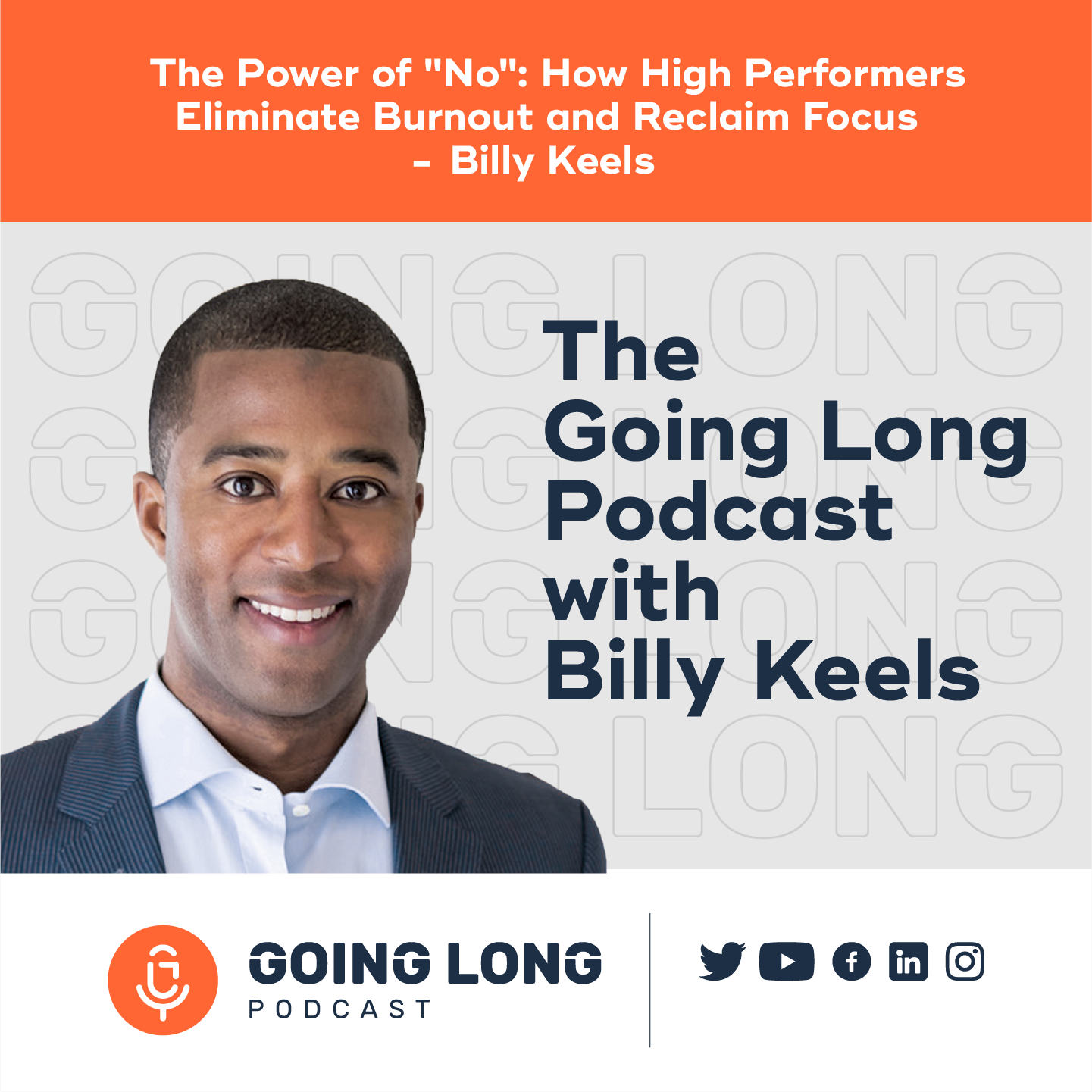
The Power of "No": How High Performers Eliminate Burnout and Reclaim Focus

Are you an overachieving corporate director, VP, or enterprise tech leader who constantly says "yes" to every special project, initiative, and request—only to end up completely exhausted and stretched thin?
In this practical solo episode, host Billy Keels breaks down a powerful insight inspired by a conversation between entrepreneur Jesse Itzler and podcaster Joe Rogan. Billy examines the corporate trap of seeking validation through endless "special assignments" and explains why people-pleasing creates a virtuous cycle that ultimately leads to burnout. Discover how learning to "strategically decline" unaligned opportunities—or simply learning how to say "no"—increases your focus on core priorities, improves your Return on Sleep (ROS), and gives you the exact time capital needed to excel in your 9-to-5 while building your own independent side business.
🚀 Want to make your corporate role optional? Grab your FREE copy of Billy's 3-Step Process eBook here: https://www.makeitoptional.com/?utm_source=youtube&utm_medium=social&utm_campaign=p2olm
📌 Questions Answered in This Episode:
- Why do high-performing corporate executives fall into the trap of taking on too many special projects?
- How does constant people-pleasing at work lead to chronic exhaustion and diluted focus?
- What does it mean to "strategically decline" an opportunity without damaging your corporate reputation?
- How does mastering the word "no" improve your focus and increase your Return on Sleep (ROS)?
- How can you use your reclaimed personal time to build independent side assets while overperforming at work?
⏱️ Episode Chapters:
- 00:00 - Finding Inspiration: Lessons from Jesse Itzler and Joe Rogan
- 01:10 - The People-Pleasing Trap: Why Executives Say "Yes" to Every Special Assignment
- 02:25 - The Exhaustion Cycle: Diluting Your Time Capital When You're Already Overperforming
- 03:40 - The Jesse Itzler Insight: Learning the Value of the Word "NO"
- 04:30 - Strategic Decline: How to Decline Opportunities That Don't Move the Needle
- 05:45 - Maximizing ROS: How Reclaimed Focus Boosts Performance and Eliminates Burnout
- 06:50 - Building the Day Dream vs. The Evening Dream: Using Reclaimed Time for Side Assets
- 07:45 - Moving From Theory to Practice Today
📘 About Billy Keels & Corporate Optionality
If you're a corporate executive who wants to make your role optional, learn how to achieve true control over your career and turn your corporate skills into personal assets.
With 26 years of experience in corporate sales leadership, Billy Keels achieved true optionality through multiple income streams. Today, he has helped dozens of executives build a predictable path to take control of their time and start living their ideal day.
This free ebook gives you everything you need to identify, plan, and take control of your career while building financial optionality, leveraging your skills, and starting to live your IDEAL day - today!
- Get the Free eBook: https://www.makeitoptional.com/?utm_source=youtube&utm_medium=social&utm_campaign=p2olm
- How to Leave a Review for The Going Long Podcast: https://youtu.be/qfRqLVcf8UI
Be sure to connect with Billy:
- Website: https://www.billykeels.com
- YouTube: https://www.youtube.com/@billykeels
- LinkedIn: https://www.linkedin.com/in/billykeels
- Instagram: https://www.instagram.com/billykeels
- Facebook: https://www.facebook.com/BillyKeelsFanPage
- Twitter/X: https://www.twitter.com/billykeels
Episode Transcript
Billy Keels 0:00
If taking on every special project at work is leaving you completely exhausted, I got good news for you. There's a better way. In this episode, I reveal how learning to strategically decline underlying opportunities gives you your time back, eliminates burnout, and lets you overperform on what actually moves the needle. Let's dive in and let's get you to optionality. Today's episode is sponsored by Billy Keels Advisory Services. If you want to learn more about how to make your 99 optional, just go to makeitoptional.com. Once again, that's make itoptional.com.
Speaker 1 0:36
Helping you build freedom without losing your edge. This is the Going Long podcast with Billy Keels.
Billy Keels 0:49
You can still use social media to come up with ideas to help find solutions for problems. I mean, I do it pretty frequently, and this is one of the. But you have to be intentional about it, right? And for anybody who has ever suffered with taking on too much at work and it's causing you to be collapsed, like this is going to be worth the very brief investment of time for you. I absolutely promise, because if you stick with me, I'm just going to give you one nugget that's going to like get rid of the exhaustion, get you to roll into feeling much better, and also accomplishing a whole heck of a lot more by taking one very simple action, and so this whole thing comes from not too long ago. I was actually scrolling through as one of one of the things that I like to do specifically on a Friday is to get some inspiration, and I'll flow through and look at kind of things that I've done in the past over the past week, or even look into social media for specific bits of inspiration. And today's bit of inspiration actually came through a video that I was looking through on IG, and I came across two different people. One is this guy named Jesse Itzler, who, if you don't know who Jesse Jesse Itzler is, he's a guy who's bought and sold like five different companies, bazillions of dollars. He's written two New York Times best-selling books, and he's even a co-owner of the Atlanta Hawks. Right, I'm a big fan of the NBA. My my kids are big fans of the NBA and stuff like that. But anyway, on the other side of the microphone was Joe Rogan. Now, most of you know that our podcast is ranked in the top 1.5% of podcasts, but always looking to do things differently and looking for people who are further ahead than me. And Joe Rogan is way ahead of this podcast, right? And so it's a source of looking for inspiration. And as I do that, and I think more about specific clients, and I was thinking about a specific client that has been going through some challenges that this Jesse Itzler quote actually inspired today's conversation because so many times you're in your corporate career, you're continuing to do the right thing, and you want to continue to climb up the ladder. And it's not really about just climbing up the ladder; it's about the validation that you get. It's about being able to, you know, one of the ways that you can show you about your your value is being able to take on special projects. Who hasn't done it? Let me put my hand up. Yes, if you're watching the video version, my hand was up because for many years I took on special projects, special assignments, because it helped me to move in the right direction. But if someone would have just pulled me to the side and be like, "Well, Billy, why you keep taking all these projects? Why you keep doing all this? Aside from the obvious, getting the promotion, being in the right way to make more money. Like I was just trying to figure out how I could be in in alignment with the version of myself that I was at that moment in time. Not really projecting a lot into the future. In the whole thing, it went something like this. I knew that I wanted to get the promotion. I knew that I want to get the next role. So part of me was saying like people pleasing. I want to be liked, and so in order to be liked, when someone said, "Hey, listen, I've got this special assignment. We've got this special project. It's going to be a lot of visibility. Well, what did that mean? Okay, well, anybody who was looking to be liked or forge alliances and all that kind of stuff, put your hand up. You know, you want to be responsible for getting new requests, and once you got those special requests or special assignments or initiatives, the whole point is like, how can I make sure that I do it really, really well? I want to overperform on whatever this assignment is.
Billy Keels 4:11
I want to make sure that gets to the right people on time, because once they get the results, then it improves the chances of me being liked by that person or the work that was being done. Right? I'm going to use myself as in this example because if I use somebody else, I don't want to be responsible for that. So, but the thing that would happen over and over and over, and and tell me if you recognize this loop, or you know, send me a message or something like that. You can send it on LinkedIn or send it to me here through through your your thoughts around the podcast: What you like, what you don't like. Let me not digress. Let me come back because at the end of the day, when there is so much about responding to the requests and the special projects, at the end of the day, this becomes a a vicious or a virtuous cycle loop, if you will, that ends in exhaustion because you've got so many different things going. On in so much of the way that you're looking to have validation, or at least I was at the time, I started realizing that this could only end in one particular way. And so later in my career, and why am I talking to you about this Jesse Itzler video and and Joe Rogan? It's because I thought it was absolutely phenomenal. This is one of the things that we actually, as I'm working with clients, that we address because it's not really the elephant in the room, but it is when you're constantly taking on special projects and putting your hand up and and and doing it for the reasons that you may not be telling other people. At least I knew that I wasn't at that particular point in time, but I go back to this video because as Joe and and Jesse are having this conversation, I start realizing that I learned this whole thing of being available and being able to produce results because that's was something that was someone else's version of success. That was what someone else said was going to make me more promotable. That was going to also put me in the good light with certain people. But all in all, it was consuming so much of my time. It's taking all the time that belonged to me when I was already overachieving at you know 150, 180% to get into 250% Now, of course, focus on some money. But the the question is, the role was expected to produce 100% and I was already producing well over 100% And so, could I have used some of that personal time back? Well, here's the thing that I promised you that I was going to leave you with, and I'm going to leave this with you now because what I realized that Jesse Itzler was sharing in this video is part of the thing that he went through, like that he learned how to do and become much better at. And this is one of the things that you know, working with clients, helping them to become better at. Because when you have your personal time and you're already overachieving, you're already excelling in your role. The question is, how are you best leveraging that time, either to build a business on the side, which we're really clear about, which is probably why you're here, and or so that you can use that time to be with your loved ones, or be by yourself, or do whatever it is that you want to do. You know what Jesse said? You know what he said that he had to learn how to do. In the most basic way, what he said is he learned how to say no. And when someone said, "Hey, listen, do you want to take on this new special project? the answer was no. Hey, listen, can I pick your brain for three or four minutes because I've got this great new business idea? The answer was no. Hey, listen, I've got this particular opportunity that's really going to make you a lot of money. You know what Jesse said? I'm going to let you guess. He said no. And the thing is, maybe you don't want to say it as directly as no.
Billy Keels 7:40
And this is one of the things we learn how to say no in a different kind of way. Like what what we like to say is strategically declining the opportunity. Did you like that? Strategically declining the opportunity, because what happens is when you learn to say no more, it means that you have less things to do. Therefore, increasing dramatically the amount of focus that you have on the tasks that are your priority tasks. And guess what happens when you can put more focus on the tasks that are going to give you the biggest bang for your buck, i.e. you're getting the best return on your time, or what I like to call, and haven't shouted about, talked about it in a while, the ROS, the return on sleep, because when you begin to learn how to do that, that is when you start to change the game. You have no longer any exhaustion, you because you're completely energized and focused on the things that make and move the needle the most. That's where you start to win. And most people are going to say, "Yeah, Billy, but it sounds great. And and so, how do I just do that from one day to the other. Spoiler alert: doesn't happen from one day to the next. However, there are very specific tactics that you put in place where you can strategically decline certain growth opportunities because when they don't align and you are not focused on them, you give yourself to be the best version of you, which means you win, your company wins, your family and loved ones win, and isn't that what this whole thing is about at the end of the day, anyway? So, if you're concerned, or if you were a little bit concerned, or to saying yes to all of these kinds of things, and you're getting to a point where you're like, "Oh my gosh, this is just so much! I'm exhausted. Well, because you haven't learned how to strategically say, I decline, or as Jesse Itzler says, no. When I learned how to do this in the corporate world, do you like that? Pause. When I learned how to do that in the corporate world, it was one of the best things that ever happened for me, for my family and also for the companies, the one that I was working for, building the dream during the day, the the one that I was building in the evenings, which was mine and continued to be owned by me, and because that's was about getting time back, being focused on the right things that made the biggest impact, that moved the needle. The most, and at the end of the day, the thing that I really, really felt the the best about, and this is one of the biggest benefits that my clients see, is being able to get past that initial discomfort from saying yes to everything all the time, being the yes person, to actually now being focused on the biggest needle moving priorities for you, for your loved ones, for your for the companies. One you're building the daydream for, and the one you're building the dream for in the evening, or getting ready to start doing that. So, like I said, this is one of the biggest needle movers. It's it's the one thing that you have to learn how to do and and and be able to get more of the time that is yours and the focus that is yours to move the needle is to be able to learn how to say that one word, no, be able to strategically decline special projects, those that don't align with where you want to go, so that everybody gets the best version of you, including you. And so if you've not if you're not struggling from this, but you do know someone who is always saying yes to special projects, and you see them consistently exhausted, and you know not able to do that, not able to do the things they want to do, share today's podcast with them. Share the episode because you know what? There's so many different tactics that can be used. I'll just give you one in asking the question: Does this truly align with what my key performance indicators are? My MBOs, my CBIs, whatever the case may be, it's about asking that one question.
Billy Keels 11:33
There's a lot more we can go into, but just to give you that idea, is how do you begin to strategically decline? Like I said, if it's not you, maybe you know somebody who is consistently going through this challenge of always saying yes. Share today's episode. Show them that you care. Get in front of them. Have a coffee. Have your favorite beverage. Whatever that case may be. But just be the person that lets them know that it's not just about sharing. It's also about caring, and you're willing to engage in the conversation. And while you're doing that, guess where I'll be? I'll be right here preparing for the next episode. So until then, go out and make it a great day, and thank you very,
Unknown Speaker 12:06
very much.