
Stronger Bodies, Clearer Minds and More Connected Lives - Kristen Olson

Subscribe to the podcast


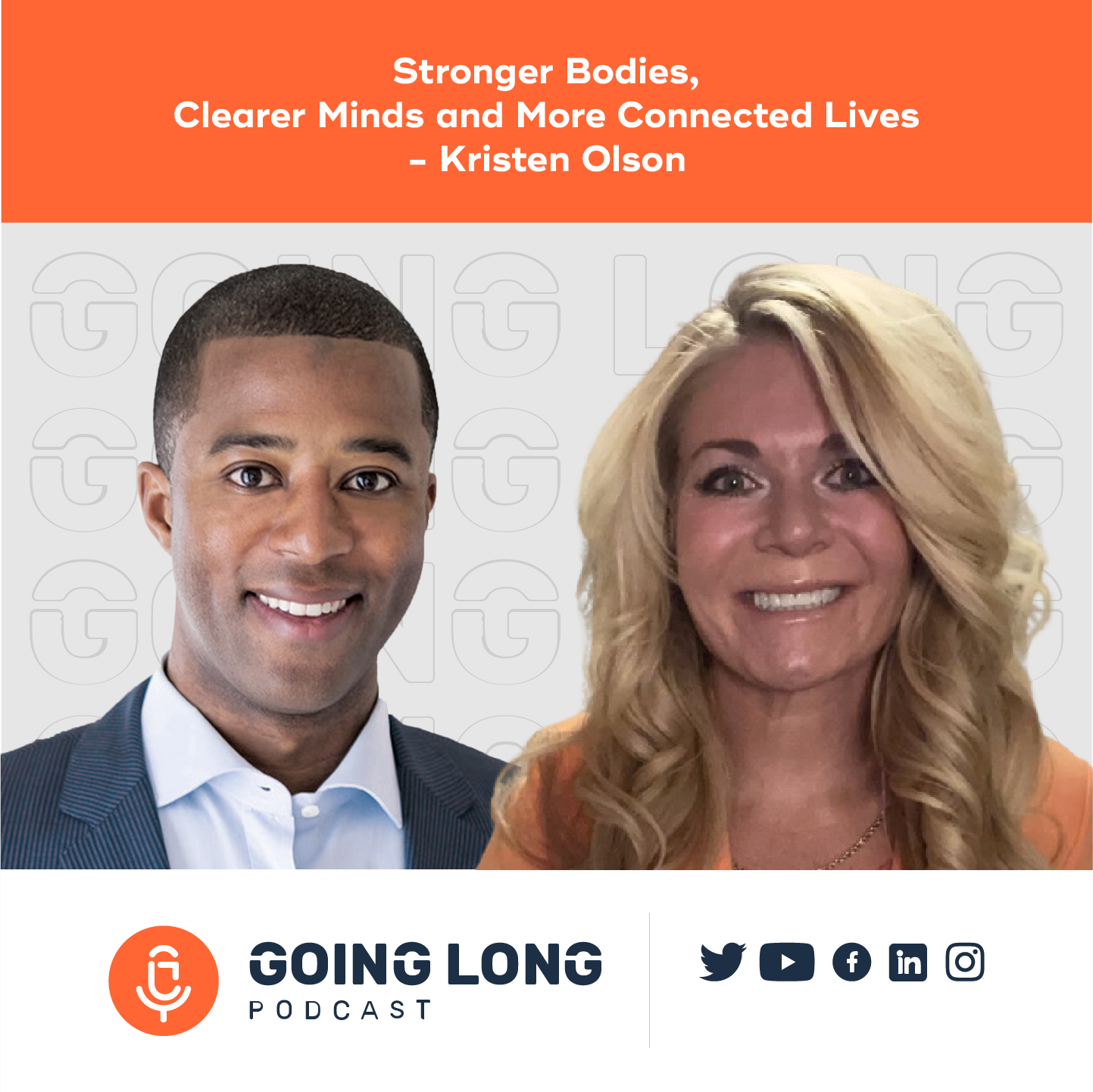
Stronger Bodies, Clearer Minds and More Connected Lives - Kristen Olson

Going Long Podcast Episode 602: Stronger Bodies, Clearer Minds and More Connected Lives - Kristen Olson
( To see the Video Version of today’s conversation just CLICK HERE. )
In today’s episode of The Going Long Podcast, you’ll learn the following:
- [00:24 - 02:23] Billy welcomes and introduces today’s special guest, Kristen Olson.
- [02:23 - 10:20] Billy asks Kristen to share more about herself in her own words.
- [10:20 - 15:14] Kristen shares insights into the highs and lows of working out identity, and the process of it.
- [15:14 - 21:48] Billy asks Kristen to describe and explain the period where she was considering making the move towards starting something new.
- [21:48 - 26:17] Kristen describes how experience with team sports helps in other areas of life and work.
- [26:17 - 30:55] Billy asks Kristen how she sees the world of sales and in what way sales is part of her world.
- [30:55 - 35:06] Kristen describes the experience of intentionality in her life.
- [35:06 - 38:48] Billy asks Kristen to tell us all about her own Podcast and website, ‘Turmeric and Tequila’.
- [38:48 - 43:48] Kristen shares the message she would like to hear from herself three years from now.
- [43:48 - 46:31] Billy sums up all we’ve learned from Kristen today and asks her to share the best ways we can get in contact with her and find her online.
- [46:31 - 47:11] Billy wraps up the show
How best to get in touch with and find out more about Kristen Olson:
Instagram: https://www.instagram.com/turmerictequila/?hl=en
Website: https://turmericandtequila.com/
LinkedIn: https://www.linkedin.com/in/kolson23/
If you're a corporate executive who wants to make your role optional, then grab your FREE ebook with Billy's proven 3 step process at: www.makeitoptional.com
What you can expect to get out of this ebook:
- Learn how to achieve corporate optionality
- Gain true control over your career
- Turn corporate skills into personal assets
With 26 years of experience in corporate sales leadership, achieved optionality through multiple income streams, Billy has helped dozens of executives build their paths to take control of their time.
This free ebook gives you everything you need to identify, plan, and take control of your career while building financial optionality, leveraging your skills, and start living your IDEAL day - today!
Go to: www.makeitoptional.com
Click the above link or just copy and paste the following directly into your browser to sign up and get your free ebook: https://www.makeitoptional.com/?utm_source=podcast&utm_medium=social&utm_campaign=p2olm
To see the Video Version of today’s conversation just CLICK HERE.
How to leave a review for The Going Long Podcast: https://youtu.be/qfRqLVcf8UI
Be sure to connect with Billy! He’s made it easy for you to do…Just go to any of these sites:
- Website: www.billykeels.com
- Youtube: billykeels
- Facebook: Billy Keels Fan Page
- Instagram: @billykeels
- Twitter: @billykeels
- LinkedIn: Billy Keels
Episode Transcript
Billy Keels 0:00
Today's episode is sponsored by Billy Keels advisory services. If you want to learn more about how to make your 99 optional, just go to make it optional.com. Once again, that's make it optional.com.
Speaker 1 0:14
Helping you build freedom without losing your edge. This is the going long podcast with Billy Keels.
Billy Keels 0:27
One of the most amazing reasons that I get to sit behind this microphone is because, well, internally, like a little thing for me, is that I get to speak with absolutely amazing people all the time today? Well, it's no different than any other time, because today's guest is absolutely phenomenal. Today's guest has some early roots in sales and marketing strategy. I guess that was kind of a corporate career kind of thing. But you know what? Since then, has continued to elevate and is now a coach, is an entrepreneur, is a speaker and former elite, what did I say? Former elite and still elite athlete who's dedicated to helping people build stronger bodies, clearer minds and more connected lives. Absolutely love that. And believe it or not, I spent 25 plus years as an entrepreneur, right? 25 plus years as an entrepreneur, if you're watching the video version, you're not even gonna believe. You'll be like what that's impossible. And you know, today she has her own amazing podcast, and that is to American tequila. So check that out. And also, she is the CEO of the ko Alliance. It gives me great pleasure to welcome to today's conversation none other than Kristin Olson Kristen, welcome to the
Speaker 2 1:42
show. Good morning. Thank you for having me. Or good afternoon for you. I'm excited to be here. Let's go. Yeah, this
Speaker 3 1:47
is
Billy Keels 1:47
one of those things. It's like, All right, cool. Yeah. Billys way in the afternoon, and you're gonna tell us in your backstory, I'm sure, if you want to, where you are and all that kind of jazz, which is why we get that, good morning, good afternoon. It's just one of those things that we love about the podcasting space. So there's a couple, like, there's just other things that I want to say, like five time cross cross, fit athlete as well as former division one athlete, so, and team captain as well. So, so many awesome things. But listen, Kristen, I want to turn the mic over to you because I've highlighted a couple things, but I like for you to start being able to tell your story in your own words. And then here's the catch. Depending on how you talk about your story, we may go one direction. We may we may go in a completely other direction. So everything from this point is up to you, and we'll see kind of where the conversation goes. From there. Sound like a plan?
Speaker 2 2:36
I love it. Let's go. Let's
Speaker 3 2:38
do
Billy Keels 2:38
it over to you.
Speaker 2 2:39
Yeah, well, I'm excited to be here. As I said, leadership and entrepreneurship and being a competitor was in my blood. Very, very early, two athletic parents, three younger brothers, and I was the oldest of four, so only girl and three younger brothers. So I was kind of, I like to say, shoved into this leadership role very early on, and unknowingly, I think I took it pretty seriously, especially with them being boys and me being a girl. I saw two strong parents, and thankfully, my mom was very much a strong female. We grew up like water skiing and snow skiing and all this. And I don't know if people out there know what barefooting is, but my mom used to do like, long line barefooting and tumble turns like with she was the only female on the shore doing it. So I saw all these like, you know, strong woman roles, and that my grandma and a great grandmother all like, my grandma owned a house really early in Denver, so a lot of things that were just kind of like, positioned and, you know, modeled for me early on that just planted seeds I didn't really appreciate until today, but played sports, and was fortunate to actually walk onto a division one team. I was a Colorado kid that played lacrosse, and, you know, 25 plus years ago, it wasn't a big lacrosse sport, so the East Coast coaches were like, We don't care about you as a Colorado athlete. And I was like, Well, I care, and I'm going to do this. So I actually got scholarship offers and turned them down because I really wanted to go top 20, and blindly and naively believed. And so that was that recruiting process. Obviously, if you know the N i l now what things are today, it's so wildly different. But just that process back then of me kind of blindly believing and shopping myself and literally writing handwritten letters to coaches videotape on a VHS, which was laughable. Yeah, if I had a VCR today, I'd re watch it, but it's just thinking back. It was so crazy, how different the processes are, but how much like, you know, as in, 17 and a half, 18 year old kid, I just blindly believe it. That was really, like, the first steps to my entrepreneurial journey, and really having that pull from within of like we got to just follow what it is. I couldn't justify it. I couldn't explain it. I just knew I wanted to compete, and I knew, you know, if I could get the training and the exposure, I could do it. So fast forward from there, I had I tore my ACL my sophomore year. So I did get on the team. I walked on I was eventually a scholarship athlete and a three time Captain because I had a red shirt my sophomore year. So this is a longer podcast in itself, but I finally got into the team my sophomore year was starting in. And freshman year, we had like, 12 seniors, so none of us freshmen really played, finally got a starting role, and we actually got to come to Denver and play Stanford and du. So it was like a, you know, a life dream right there. We got to come to my hometown, my entire family was there, and play against du, and we won both games, my team, George Mason University, shout out. Did amazing. I had four goals in one game. And blah, blah, blah. We come back that next game, we're playing at UMBC, and it's that old school, crappy turf, and I tore my ACL. So it was, like, super high to super low. And my first experience with, like, mental health and depression and my might, because my identity was taken away, I tore ACL. I was out for the season, and ended up having to have a second surgery. There's some complications with it, but that was really my first experience of kind of like being an entrepreneur, going out on my own, building my situation, and then you hit your first major road rump. And, you know, as a kid, we didn't know, and we didn't really have a ton of conversation on mental health back then. So I was okay, but I was just, I truly lost my identity. I couldn't play, and this is what I put all my chips on. So building that back, figuring out myself, like I'd lost, like, I think, 25 pounds back then I didn't really have that to lose, and just didn't do anything but rehab my knee. So, long story short, made my way back. And then once I graduated, I was like, Okay, we're done having a boss. I had kind of started a business when I went home for summers coaching. And then when I graduated, that's like, I can say 25 years entrepreneurship, because I really started around 19 years old, and then when I graduated, I took on, I established everything colored our rising stars. Lacrosse was our first business, and I did camps, tournaments, Team sales, anything to satisfy the market for lacrosse in Colorado, there was almost nothing back in the day. And about a year in, we started to get our professional teams, the mammoth I can't move the outlaws were first, English mammoths first, but it was expensive. This is a wealthy white kid sport that's traditionally just at public or private schools. I was lucky. My public school had lacrosse, so I had some exposure to it prior to college. But most schools at the time, unless your private school didn't, and this game had taken me everywhere for my college. We played in Japan, we played in Prague, we played in England. So I had incredible just like, life exposure through lacrosse. So I really wanted to allow any kid that wanted to play it to really play. So that's when I really started to learn what I now call strategic partnerships. I didn't have this language back in the day, but we, I went out to Cliff bar, and I was like, listen, we've we're going to do camps and tournaments, and we're going to go into like, schools. We can bring Clif Bars. We'll teach lacrosse. The school can save some money on not buying pop schools, they can bring Cliff bars for their snack. Everybody wins. I don't know if you could do that to this day, because schools are a little bit different, but back then, it was kind of genius, because this is a place, you know, companies couldn't get into and we Cliff bar back in the day was, you know, it's healthier than most things. We were pretty picky on who we worked with, because we were working with kids, but we started like this quote, unquote marketing strategy, and it worked. You're partnered with Clif Bar for like, eight years. We worked with Sports Authority. They're no longer like a list of people, but we just were basically doing sponsorships, and then we could do camps and tournaments and expose the game we love for free. So it was like diversity and inclusion and accessibility and like, just some of these larger conversations through entrepreneurship that, you know, me and my team, we had no idea that that was these are just like passion plays and things we experienced of like, you know, lack of exposure and whatnot that we wanted to provide. So from that base of Sierra's lacrosse, then CrossFit came in the game, and it was kind of a similar thing. It was hard to get into, and companies didn't know how to work with athletes. Athletes didn't know how to work with companies. And then Instagram, social media started to take off, and we were at the CrossFit Games. So, you know, I was working three back on lacrosse, and a guy, his now wife, played with it, George Mason, she went to James Madison, he went to Reebok lacrosse, then went to Reebok CrossFit. So he hired me, like all these interwoven relationships that were just tried and true over time, that presented opportunities. And we are replicating this system. We are doing basically that I was doing is recruiting myself as an individual athlete, then
Speaker 3 8:45
with La Crosse,
Speaker 2 8:45
then with CrossFit, and then social media took off, and now I'm kind of doing it to this day as an influencer and a key voice. So this entrepreneurial journey was really unfolding naturally. I always had intention around it, and it was within my heart to be a leader and be outspoken and kind of stand for some of these things, but without intentionality, some stuff was just unfolding. And I was just, I really was following that poll and that the moments where I was, I did have corporate experience, you know, with Reebok, or with c9 by champion, or some of these, you know, name drops. It was great, but I always, it always felt like I didn't belong, like every time I was in that room, and it seemed like they only lasted, like, one or two years, and it was never because, like, I failed, I got fired. Or, you know, many of those things happened too, but it was more like contracts and ended, or we bought, cut an entire program, like, so weird stuff happened where kind of just kept pushing me back to being on my own. And then now Keels is, you know, 10 plus years old, so we've been doing this for a long time, and then you insert the podcast, because, you know, we believe in the power voice and sharing the journey. And I wanted to tell the truth in sports marketing, which is, it's a hard thing. So that's a quick 411 you tell me where we want to mine the gold there.
Billy Keels 9:50
Oh my gosh, I don't even think it's not gold. It's platinum. You just dropped all over the place. I'm like, yo, where are we going with this? Like, there's so many things. But you know the as you were talking, and I think about so many people that are that are listening to us, maybe they're running on a treadmill, or maybe they are, did you say barefooting? Is that what you said? Okay, bare Yeah, okay, it's or whatever they're doing, right? They're listening, or maybe they're watching this on the on the video, you said something that I know will hit at a lot of people, especially when you are in your corporate role. You're enjoying it, you're liking it. You're not liking it. It's stressful. You can't stand it. But no matter what it's like at a certain point, it's part of your identity. You talked about that same thing as part of your identity when you were in your as you were in a team sport, and you were, you know, like you were coming back home and you were gonna go, like, the highest high, and then the and then you went to the lowest low because of a physical injury that took place. But the thing that really stuck with me was you talked about the identity and how important you can get stuck to or just think that your identity is just this one thing, right, that you are an athlete or you are a corporate exec, or you are whatever. How did that experience going through the highs and lows and the identity? Can you maybe walk us through or extend out on that? Because it touches so many different facets of your life when you realize or understand truly what your identity is or can be?
Speaker 2 11:22
Yeah, absolutely it was. I was actually very thankful that happened to me early on. I think my sophomore year, I was like 19. I was like a little bit of an older kids. I think it was like probably 18 or 19, but it was very because I don't know we you see people get injured around you all the time, and you know, like things can, can can happen, but you never in your mind, are you thinking, what if I can't do whatever it is I do, or I'm taken away from my church, my community, my identity? And you don't really have that conscious process. I think, especially as a young person, maybe our young people, they're privy to the game a little bit better than I was, because they're exposed to so much more, for better or for worse. But going through that experience, I was thankful it happened young, because I really, it was in such a raw, like, abrupt way that I had to, like, really sit and unpack it. One I literally had to sit because I couldn't move. And I my knee was, like, torn. ACL, MCL, everything, like, locked out for six weeks. You're literally physically being put still to process stuff. And I had also put, you know, I was 2000 miles away from my family. My parents are paying for college when I had a scholarship offers. So, like, I was just like, this gambling young person, then all of a sudden it's taken away so and I felt, you know, guilt with that, there's so many emotions I had to sit and unpack, and I see many of like, my friends or people close to me, or that doesn't happen till later on, you know, with maybe like a divorce or loss of a job, and we're not really having conscious conversation even as adults. Of like, yes, you know, you're a father, you're a professional, you're an athlete, you're all these things, but you are all these things. Like, it's not just one thing. And when you wake up and you identify with something, particularly in the corporate space, that ultimately is not yours, you know, if you work for someone for 20 years, the reality is like you're building someone else's dream, and they're very conscious of that. So and corporate, you know, the drop of a hat, if things in, you turn on your computer, you cut off your email, like, think it is like a hard cut and close and mental health wise, it's brutal. I mean, I've been in those situations too, and it really, you know, and it cuts off your friends and your daily practice and things. So I think it's really important for all people, particularly young people, to have some exposure to everything around you. Is can change in a drop of a hat, and that's with loved ones or loss or gain. You know, you could win the lottery. So, you know, it can work both ways, but things can really change drop a hat. So it's very important to know who you are, like in your soul and your heart space, like your feet on the ground. If I don't play lacrosse, who am I? If I'm not a podcaster, who am I if I don't have, you know, this passion I love turmeric and tequila, who am I and what am I doing? And it kind of comes back to that being an individual. And I would say this conversation, even in relationships, because you get so wrapped up to who you're dating or married to whatever, you're still an individual. And you have to know who you are, alone by yourself, without your spouse, without your job, without your dogs or your brand or whatever. And begin that process now if you're 45 or if you're 16 or 72 like I think it's so important to take that time away and say, who am I? What do I care about? What do I stand for, and what am I doing in this world? And I think had I had those skills, you know, at 1718 which was not going to happen, but I think I could have processed the injury and my recovery so much better knowing that I'm a lacrosse player, but I'm also, you know, a sister and a leader, and you know, I love music or whatever else I have many I wear many, many hats.
Billy Keels 14:27
No, I absolutely love that. And the fact that you realize now that you do wear many hats, and it's one of the things that you know you talked about, you lost 25 pounds. And most people that, people that know me, I like when I went through divorce, I lost 20 pounds. And so all of these things, they affect you, but you start to realize that it is just a part of you. It is not the totality of who, of who you are. And when you have a moment, as you said, you were literally forced to sit down and sit in silence, as you said, because you were, you know, you had an ACL thing going on. It's great to hear you share this for. With that person who is 20 years old or 25 years old, who was who's realizing that, oh, okay, well, hang on a second, Kristen was telling me that, okay, it's not, I'm not just this elite athlete. I'm this elite athlete, and also an older brother or sister or whatever the case may be. Another thing that you mentioned, and hopefully people really understood it, you're like, Well, yeah, so 25 years, because I've kind of started this thing in advance, and that's a lot of what happened for me during corporate I, you know, I was drinking the corporate Kool Aid. I was doing my thing and blah, blah, blah, but something, there was an awakening. I missed my son's third birthday party, and it really just I was out of alignment. And that was the thing for me. You talked about, there are moments in life that happened, and it happened for me, because that's what then inspired me to take action, stop just overthinking, overthinking, to build this do this thing on the side. And you were actually like, at 19, you started doing this thing on the side while you had something else. A lot of times, people can't figure out how to do that, because they're only focused on the one thing. And I would love for you to maybe take us if you could go back to that moment and what really, I know you talked about it high level, but maybe dig into a little bit of what that was like, also too for you emotionally, because sometimes people feel that it's the time to do something,
Speaker 2 16:15
yeah,
Billy Keels 16:15
but it goes against what everything you've been taught or you don't see, like maybe where it's going to go. Can you unpack that maybe a bit more? Please,
Speaker 2 16:23
absolutely. Well, this New Year's, I actually took time to, like, write a letter to my young self. This is like a suggested practice from another coach. I was like, I'm meaning to do this. We'll do it. So I did it, and when I when I thought about it or went back and I just wrote, I didn't overthink it, but reading it back, I actually started, like, the entrepreneurial, you know, mindset, and just kind of doing what I do, or being me, like in middle school, I mean, I was the oldest, like, I said, of four. So, like, I was, kind of, I always had this, like, leadership. I felt taking being an older sister. I felt very protective, and they were boys. So, like, even we played, like, pond hockey and we were not good. But, like, I remember my brother got a fight, and I stepped in and, like, because, like, I always had, like this. I was just positioned to be in that role very early. So it was not really something super conscious. But even in middle school, we used to write letters to snowboard companies, and I for some we were at some skate shop, which I wasn't a skater, but we found this, or I found this magazine where it listed shops and addresses, and I was like, I'm gonna write these shops and see if they'll just send me stickers for my binder. So you as little as that was, I was thinking recently, and I'm like that just then I, you know, I had the audacity to, like, write letters to companies and get stickers. And then I found one of the letters. It was like, if you send me stickers, I'll put up my binder, kind of like advertising blah, blah. And I'm like, oh my god, I was like, a marketing human back then, just kind of, like, wanting stickers to, like, work with the brand. So like, who I was was, and I say this even on my podcast, like, who you are. It was really written in the stars, very, very early, and there's signs of it. So as we get older, we can look back. But it was very awakening. I'm like, God, I've been doing this forever. So it started with, like, writing companies, getting stickers, and then I had other friends starting to do it. So it was like, influencer type stuff back then. And I got tons of stickers, like type A, all these companies that aren't even around to this day. And I found, like, my sticker book, where I saved them, and then when I got the draw, which is, if you know the cross, it was every single school in the country, Division One, two and three, listed the coach. He addressed, whatever, and that's what I wrote letters to each coach saying, like, I'm an athlete, I want to be recruited. So I was repeating these processes unconsciously. But it was like working. It was training me then to do what I do now without me really knowing. So if you're out there and you're like, you know, what's the first step? What's the plan I take? Step one for me is Reflect, what are, what have you been already prepared to do, or already doing that are entrepreneurial skills that you didn't even know? Because I really think of myself as a vehicle, like, I'm good at things. I've had privilege in education and training and all these things, and also breakdowns and breakthroughs, but really, like, as intentional I've been my process. There's been so many things that where I've had to let go, just enough to let it happen, and then I look back and I'm like, God, I'm way more qualified than I even thought. Or I've been doing these hard things that are exactly marketing and sponsorship and blah, blah, blah, you know, for 20 years. Or, you know, 30 years when I was, you know, eighth grade on how you are 12 or 13 of doing this marketing process without even knowing so many times I when I coach like my entrepreneurs, I'm like, what have you already been doing where you already makes you qualified to be an entrepreneur? And every conversation I've ever had with that there's already skills and like a runway for them to walk down, as it was for me. So when I came home from the from George Mason to start my lacrosse company or further build it, I was nervous in like, how are we going to make money? Like, how is this going to work? But this, the feeling of not wanting a boss and not being controlled, was larger and more important for me than any sort of strategy. And I, like, in proven time, I was the kid that just believed I had no idea so I just would, like, step on the field, and it's stuff I had to channel as an adult to this day that I really appreciate. But like, I just didn't care. Like, I wasn't listening to anyone. I didn't want to be told what to do. And I was like, we're gonna make this work. If I live under a bridge and don't have money, like, that's fine, but I'm not going to just have a boss and whatever. And,
Speaker 3 19:55
you know,
Speaker 2 19:55
and it's nice too, when you don't have kids or a spouse or overhead, like, you can just, you know, live off. Nothing and make it work. I would suggest, you know, do the side thing. If you're in a corporate space, just put some money aside, start to build the dream slow. Just plant seeds like you did. So you don't have to do like, a hard exit or hard, you know, launch like I did, without, like a real plan or funding or any of that. The flip side of that is, you know, invention comes when you have nothing. So, you know, the I didn't have money. So we learned sponsorships, we learned strategic partnerships, and it worked, and I didn't have a choice. Like, we it had to work. So I don't know, I always say, like, have some backup and and plan. But on the flip side, if you're ready and you felt the pull and it's time, like, just take the leap and know that it will work out. I think if you're a good person doing the right thing, you have a little bit of strategy, maybe a little bit of funding to get through.
Speaker 3 20:41
But
Speaker 2 20:42
if the poll is bigger than your daily and it really starts to chip away at you, and like you said, you're out of alignment, it's only a matter of time before it will happen, and you're likely more qualified than you even know as of like, right this second.
Billy Keels 20:54
Yeah, and I appreciate the perspective on that, and it is working with clients today, it's the same thing, like, you start to see the pattern. Do you hear the patterns? I'm a big believer, just like you like I did not I, well, I didn't quit my job. But also, too, I had responsibilities of family, kids, all this kind of stuff and so but at the same time, it got to a certain point Kristen, it wasn't even about making money, it was just, I had to quiet the voice going on because it was, like, you are out of alignment. This does not work. Like, this is like, you have to figure it out, and whether it was going to work or didn't work. I just had to find out, because I couldn't keep waking up in the morning with this, like noise getting louder and louder in my head, like not a real noise, but like the noise was getting louder in in my head and going on. And so being able to walk others through, through that process. So I'm glad to hear that I'm not the only one, but we both knew that. So it also too, because you've talked a lot about sport from the very beginning, and I believe guys, I was also I was never as an elite an athlete as you were to compete at such a high level. But having done individual sports, done team sports, and then recognizing really around the team sport aspect, right? I ran track and field, on one hand, 800 meters, and then I also ran that four by 800 so it was like there and then baseball, basketball, that other kind of stuff. But one of the things that I find, and even with clients today, is those that have had exposure to team sports, they tend to be able to get to a different level of understanding when it relates to like working with a team. Sometimes you see that in corporate, but then even outside of corporate, as they start to build businesses on the side, and since you've competed at a very high level on a team level, and you continue to coach others, both on and off the pitch, I would say, can you talk to me about what you see for those individuals who have been participating in team sports, and how that can translate? Because it goes back to the same thing we're talking about before. Sometimes you miss these very obvious skills and skill sets that you've developed in the past that can really help you today.
Speaker 2 23:05
Yeah, absolutely. I'm a massive advocate for life skills through sports, particularly for my young humans that, you know, don't love authority, which was me, or just I didn't, it's not even that I really wanted to rebel. I just didn't understand why people are telling me what to do. But I always kind of had this, like, internal, you know, moral compass of what to do, what not to do, not from a righteous standpoint, but just like, I never wanted to break those, but I just didn't want to be told, be told what to do. So having, like, a coach or a third party voice, it wasn't like my parents or my teacher, and it was through, like, some activity. It wasn't like, because I said so it's like, now you can be a better athlete, or, like, there's some in games. Like, it just made sense to me. But you learn, you know, attitude, leadership, working with others, how to, you know, be on time, get your uniform together. There's so many life skills that come through sport. And I love the idea of humans coming together to work towards a common goal. Like, it's so cliche and it and I remember when, like, in corporate situations, like, you know, leaders would try and, like, sell us on that, like, you're working together, and I'm like, I don't care about this shoe or, like, this thing that's like we're living and dying on this one energy drink, and it's like, in five months, no one's gonna care about this. Or this shoe will be in a bin at TJ Maxx. So it's hard for me to buy into some of those stuff. So if you're like, you know, again, all ages but young people, if it's hard for you to buy in to some of these other things, or you're looking for a way to level up, and it's, you know, leadership, or, you know, teachers or those kind of things don't speak to you. I think athletics are the number one way to go, and you don't need to compete at a high level. Just, do, you know, basic stuff at a small level, you know, community kickball or whatever. You can still have some of these life skills that come through it. And as adults, we get away from that. So I even think, like, go do adult sports, which can kind of be a whole podcast in itself, but leave the drinking and fighting out. Yeah, yeah, but just get back to that, like, community work with people that you know you don't know, or you wouldn't normally be friends with, or, like, you know, they do things differently than you, or whatever, and it kind of like kicks those skills back in, but that the leadership and all of this stuff that you're learning without, like, intentional sitting down, like, this is how you be a leader. This is how you'd be a good teammate. You get through it. So I would hope every. Every kid. It doesn't even have to be sports, I'd say music or drama or anything. You have to commit to and train with humans that are like minded or have a common goal, but are likely differently you're going to get some of those same skills. And I just think that is just a it's a fun way to learn all these things, and really, you know, level up without having to, like, take a master class on how to be a teammate or a leader.
Billy Keels 25:19
I love that explanation. It reminds me when I was when I moved to France in 2001 I wanted to learn how I wanted to learn French. And I was telling you about this because you were so kind. Invited me onto your podcast as well. But I was talking about living in Paris, and I wanted to learn a skill, which was language, but I also wanted to learn how to Salsa dance. And so I went out and learned how to Salsa dance. So you're learning to this skill with other people. And it was improving my language at the same time. So it was something that was completely foreign to me, like the, well, the language one, and then also dancing. But it like so much skill was, like active listening and being able to understand, follow directions, etc, etc. So it's Yeah, so I'm a
Speaker 2 26:03
body language there. Oh,
Billy Keels 26:04
thank you very much. So one other thing, just because you mentioned that, I've got a couple questions about your podcast, because I want, I really want you to talk about your podcast. So because I spent a lot of time in sales and sales leadership, right almost three decades, you talked about earlier being very intentional, and I know that a lot of times, sales gets a really bad rap in terms of, you know, just maybe some of the things, we watch too many movies or whatever. But at the end of the day, yes, you can also generate income, right? It is the one function in a company that generates income or generates sales should. But also there's a part of it, which is really about how I look at the sales profession as the greatest profession ever, because ultimately, at the end of the day, you're helping someone, either an individual or an entity, solve a problem, right? That's how I see it, and you come up with a solution for the problem. But because that's the world that I come from, and I know that you had an experience there and now continuing to help others through influence, etc, maybe you could talk to us about what your perception is of the and I asked this, like very wide open question of of the sales profession, how you how you perceive it, and how it is a part of your world?
Speaker 2 27:17
Absolutely, well, the end of the day, we're all in sales, whether you're selling inspiration, or you're selling energy, or, like, you know, if there's not a monetary exchange, like you're everyone's kind of selling something, and hopefully it's from the right space. The key, like you said, is believing in what you're selling. If you believe it and it is genuinely solving a problem, you you know what it is, you know how it can help, or whatever that changes your energy around it, and you're happy to share the gospel and share what's going on. And if someone pays you for that, even better, because they're going to put value towards it, and it's going to make their world better. So I'm excited when I get to go out and talk about, you know, sponsorship, sponsorships for turmeric and tequila and build our team. And we've had some incredible sponsors that saw, you know, 200 plus ROI, and what we dig to this, you know, very specific way we do things. And I'm not pitching it right now. I'm just saying it was, it's exciting to me to talk about it, because I know how we can help small companies that are nichey, like us, like, really get off the map and, like, find the right voices, etc. So when you believe in what you're doing, and like you said, you know you can do it the right way. And in 2026 when you know people, there are needs, there are problems, there's ways to be solved. But you can, not only like, sell something, but you can highlight the human behind the mission and behind the product and what it is. And our consumers are so savvy now that they're like, that's so cool. This there's other things that you do that solve the problem that I can get from someone else, but because it's you, or because you're from this country and you're doing things this way, or you believe in this thing, or you're, you know, a woman owned business, or you're from Colorado, whatever it might be, people can intentionally purchase from you. So this whole sales experience has changed over time, and the consumers are so much more savvy. Of like, you know what a sale is, or when they're being quote, unquote sold. And I work a lot with influencers on this, I'm like, please don't just sell anything or align with any brand, because you are the key factor in what you're doing and your voice. If it's polluted with all these signs in your front yard, no one's gonna buy from you. And you're kind of destroying your own brand. But most importantly, you're messing with your own heart, space and your own energy. So for me, I think sales are great when you, number one, believe in it, and you're excited to talk about what it is, and, you know, it's a solution for the right people. And doing it from a very moral standpoint, I feel very confident when you know, if there's three podcasts, we'll see in their mind, like comparing us, because I think every podcast is so deeply important, and there's billions of humans, when people say, oh, there's millions of podcasts, I'm like, yeah, there's billions of humans. And like, less than, like, 10% have more than 10 episodes. It's a whole thing. But there's, there's, there's tons. There's a mindset of abundance, like, there's tons out there. But, you know, if they, if people are comparing three similar widgets, let's say or objects, and two of them are just big old corporate things, and they're not really connected to the cause, there's just margin there, so they're selling, and then there's a small own business. Or, like, they built this because, you know, their kid couldn't eat gluten, so they built. These crackers, or these other two crackers are just corporate. You know, you can intentionally purchase from this company. So if I come into that salesperson like, I'm pumped to, like, disrupt the space, and say these crackers are the best, or this podcast is the best because of XYZ, we're working with intentional humans, it's exciting to me. So I think it's just about connecting the head and the heart and the mission and working with the right people. And sales are awesome, and people are kidding themselves that they don't think they're in sales, we're all in it. You just have to do
Billy Keels 30:24
it the right way. Yeah, I love that. Yeah, definitely do it the right way. And I said I wasn't gonna ask one more question, but you just mentioned something else, and you've mentioned it a couple times, and it's something that I used to struggle a lot with, and I've finally understood that it's something to embrace since you mentioned it, I would love for you to talk about just maybe how you, if you've had an evolution of this word in your life, I'm holding it back because I want people to actually, like, I want to keep the loop open, kind of thing. And then, well, anyway, let me just go ahead and ask. You've mentioned being intentional. You've talked about intentionality, and I used to struggle with it a lot. Like I wanted to meet this person because blah, blah, blah, blah, blah, I wanted to grow. I thought that they could help me in this area and blah. And over time, I've started to realize, like, maybe it's just a function of also age and experience, which is being very intentional about specifically one thing, which is time and how I invest it. But I know it's been a really big evolution for me. Some friends, I know that they've been very intentional from the very beginning, so it's always been the same, but just what your expense, your experience has been with intentionality in your life?
Speaker 2 31:35
Yeah, this is something, yeah, I've really learned and unpacked over time in going back and reflecting into, like, thinking how I was as a young person. I was, I think my mom was a bit of a worrier. And, like, you know, she really, she loved being a mom. So I think we had this conscious mindset of, just like, kids growing up fast. So I think some were being the oldest I like, unpack that. Like, time's moving and it's happening. So I had some feeling of that as a young person and my family recorded a lot with like, big, huge, RCA like cameras. So I was kind of, I knew I got the smaller camera, like, when I was in college. So I was even kind of doing the quote, unquote influencer thing back then, not to share any of this. It was just like the idea of recording time, or like capturing it, because somewhere in my heart I knew time was moving so fast, and I didn't really have this realization until later. So for some reason, I've always felt like time's moving fast, and I think that's why, as an entrepreneur, like, I can't waste my time doing the wrong thing in corporate or be feeling out of balance. Like I like you, I'd have, like, a physical, visceral reaction of, like, I got I'm wasting time, like, I got to get out of this. Like, I got to start doing what I'm doing. So on one side, I want to be intentional, but I've also learned to slow down and let go, because I was always stressed out about, like, Am I doing enough? Can I train harder? Can I do more for my business? And it was like, while Time was passing, I was spending so much time, and still, to this day, this happens a lot, where I'm just so stressed out that I'm not doing enough. And when you're an entrepreneur, there's no like, eight to five, like, you're on all the time, and there's no off button. There's always something to do. There's always more people to call. Everyone's always getting better and faster than you like being an athlete, that's like, you're throwing back your mind, you're gonna fall behind. So managing my own mindset and intentionality has absolutely been a process, but also just learning like, as time's going by, like you're you're seeking these grandiose goals, and you know, maybe mile markers are making a certain amount of money or landing a big deal, but the in between, like, your relationships with your people, your kids, your family, my dogs, like, you don't get your dogs long enough. Like, so many things around you in the daily are moving fast and like, that's really the gold. Like, all that stuff, like, we're working out here to build the dream and save society, or whatever it is, but everything right in front of your face is the stuff that matters, and this is things that I've had to, like, just really sit and feel lately, because I'm like, God, Time is moving fast. And like, you know what if I know I didn't put a lot of intentionality around relationships, and I don't have kids in this, and I have no regrets, and I've constantly unpacked this. And I'm like, okay, but at 45 like, what do I really care about now? What do I want to be doing now? So I think it's important your intentional as a young person. It happens, but as you get older, it's really important to sit there and say, What am I doing because of time, but also, like, if you are in the camera on your the mic, you know we're going to be dealing with this mindset 30 years from now, this conversation will be able to be replayed. So you have to be intentional, of like, what you're doing, what you're saying, because we're in uncharted territory of how accountable will be held 30 years from like, your kids can see you in this moment right now, 3040, 50 years from now, replaying this podcast. So it's kind of like Wild Times. Of like, old school mindset, time doing fast you got to enjoy, you know, the little things. But also, like this stuff's on record, like, digitally. It's weird, you know, two markets, killer mindset. Of like, we're on both sides of the coin, but the intentionality is really, really important, I think, slowing down and then we have a energy, and is also a finite resource. Where are we putting, like, our energy and our focus?
Billy Keels 34:50
Yeah, no, it's just, and I appreciate you just taking a step back to because that intentionality thing, it is such an important part of life, my life, and I know. Listeners and viewers life, and since it was something I struggled with, I just was curious what your perspective was. And speaking of intentional and intentionality, you talked about TNT, turmeric and tequila. Did I pronounce that correctly?
Speaker 2 35:14
Some people say turmeric. Some say turmeric. I say
Speaker 3 35:17
turmeric,
Billy Keels 35:18
TNT, you know, so intentionality, right? You're you. You love the podcast space. I know you and I talked about it before, as I mentioned, already been a guest on your podcast. So I think it's super awesome. I would love to know Genesis, maybe talk to us about, as you leaned into being very intentional, getting to this space, what that has allowed you to do, and the impact that it's allowing you to to have and make,
Speaker 2 35:42
yes, I'm such an advocate. I think everybody she had on the mic. People say, like I said earlier, everyone has a podcast. They don't the stats. I give a whole speech on this. There's not as much as you think, but there's billions of humans. And how cool would have been, you know, as a young person, if you could find your specific voice that spoke to you and you could have some sort of like inspiration growing up, or even as adult, you know, where you have access to all these different voices and perspective. It's really such a cool thing. I'm so excited about it. But I started this, literally, to just start telling the truth. I was in the health and wellness space, or still am, but was at like, the peak of it, you know, really working with influencers and reality star type people and really in the depths of it, and then tons on, like consumer package good side and human optimization trackers and protein shakes, like, you name it. I've done it in health and wellness and athletic space, and, you know, there's so much good within it, but there's also just a lot of marketing dollars and people not telling the truth, or really great leaders that have zero desire to be an influencer, but have incredible stories, many of which I trained with at CrossFit or, you know, worked with. And I was like, God, we got to get you guys going. So when I was coaching my young humans I coached for, you know, really 30 years, but 2010, years at the varsity high school level after college, and that's when Instagram stuff started to really pop off. So I was seeing my young humans get their reality through their phones, and I'm like, All right, if I'm marketing and reality is nothing more than applied meaning, kind of old school philosophy that's coming through the phone. I'm like, I'm part of that situation, like I'm marketer. So that's when I was like, All right, we're just going to start this podcast situation. Podcast situation. It's almost 9889, years old now, you know, just very raw. And I'm like, let's just, I'm just gonna get good people telling the truth, just for my own soul, knowing that, like, we're part of the solution here, and we're gonna figure it out. And it wasn't like an over Thought Marketing situation, it was just tumeric and Keels my soul. I loved health and wealth, or health and happiness, and I, you know, mental health, wealth and all these things, but like, I love to have fun. Like, that was always been a key piece of my journey. He's like, I always had the, you know, the big old radio for my lacrosse team. Or I always had, you know, a backpack full of supplies of whatever, alcohol, nothing crazy, like, when we're 21 plus, like, we always were ready for, like, the fun moment. So I had to merge those two things. And I'm like, we're just gonna get good people do good things, get them on the mic. On the mic and start telling the truth. And now, you know, eight years later, it's evolved into what it was talking to intentional humans and kind of like you like, tell me how you did this. Tell me how you're doing it, because I want our people out there to know you can question a better way. And I call it graceful disruption on the podcast, where you don't have to run through the wall or burn down the building or do the biggest thing, just gracefully start to chip away at doing things a better way, and be that voice or that role model or share the journey. So, you know, our people out there that are that want to do something different, know that there is that proof of concept. There are these people doing it, and you can do it too, and through that mental health and community and all this other stuff that's really, really important, comes from those you know, first few steps of questioning a better
Billy Keels 38:22
way. Well, questioning a better way, I think it's fantastic. And being able to to elevate your voice and the voice of others through podcasting is, is phenomenal. Yeah. So one of those things where you say there's, like, 3.8 million, I think at this point in time, the number of podcasts in the billions of people around the world, and I think it's 90% never get past episode three, is something like that. So which is, which is pretty which is pretty amazing. So I guess there's one, just one last question that I do have for you, because I also learned a lot through life, right? I think you Well, I know that you learn a lot when things are going well, and then when things don't go according to plan, when you take that step back, sometimes, like you said to you, let go, to let it happen. You realize that there are a lot of lessons that you can unpack, and when applied to your life, can allow you to impact others. And so I think about like, just one of those, one of those moments like you talked about, hey, everything's being recorded now. And I know that in 2023 when things, for the kind of first time in my life, were not going according to plan, and happened pretty, pretty major. I realized that doesn't always have to go to according to plan in order for you to be able to move forward faster. But there were moments and no matter how many people loved me, cared for me, that I allowed to let in, right? Because I'm this kind of like I didn't want to let a lot of people I lot of people help, because people came to me to if and I helped. I helped other people to figure out things. But I realized that no matter what anybody else said at a certain point, I had to have a conversation with myself. I had to look myself in the mirror. And it was really being able to be clear on what it was. That I wanted to do, understanding why I wanted to do it, but I had to have the conversation with me. I had to tell myself, this is the moment, no matter what anybody else said. And so I would love for you to just kind of a little exercise, like imagine Kristen three years from now, right? You know that you're going to experience lots of success, lots of success here in the next three years, and they're also going to be these moments where things are not going to go according to plan, because they never do. And I would love for you to share with me and a bunch of other people kind of listening, what is the one lesson or one the one thing that you know that you need to tell yourself now that is going to allow you three years from now to look back and say, You know what? Kristen, thanks so much for sharing that with me. I needed to hear that. What's that one thing that you want to share with
Speaker 2 40:48
yourself? God, this would go right back to my young self of like you just have to believe in yourself. You have to believe that it's bigger than you. Whatever your thing is, it's important that you do it. It's your duty to do it, and that God universe, Madonna, I say that on my podcast, whatever you believe is somehow gonna have your back. And this is such a challenge for me to this day, because I'm, like, I don't, I mean, actually, throughout my entire life, I've never known how it's gonna go. Like, I didn't know. You know, CrossFit wasn't really. Lacrosse was barely a thing when I was doing it. CrossFit wasn't a thing. My company, the way we do things, influencer marketing and all this, that wasn't a thing. Podcasting wasn't a thing. So so much of my path, like, wasn't even a thing that I could think of or have a goal or a plan to do. And thankfully, I'm crazy enough to just, like, lean in and let's roll with it. And I'm even an athlete like that, which is good. But on the back end, you know, as I get older and you start to feel adversity or pain or disappointment, and you build these, you know, these walls and like, you have this fear of, like, I've been there, I don't want to do this again, or I know what can happen if this doesn't work out. I've been there where I can not pay bills, or, like, you know, I don't have an answer, or whatever, you disappoint people. It doesn't work out for people, whatever this thing is. But the point is, is you have to go back and like, know that as bad as it's going to get, and the things that you've come through is like, it's going to be okay. You got through it. Like, we did this at this point, we have proof. Of concept, of concept, and we know we failed really, really hard. You've gone through stuff, and it's going to probably be harder down the road. We're not manifesting that, but the reality is, like, stuff's still gonna come so you just know that, like, like I said earlier, looking back at your young self, I've done this, like, I'm gonna be okay. As hard as it's gonna get, I'm gonna find a way to get through it, or if I'm meant to be doing this, or I'm pulled in a certain direction, God universe, Madonna, is going to provide some sort of way for me to continue to do this. I just have to keep showing up and let go, just enough for it to happen, but also being intentional enough to keep showing up and do the things that I need to do. So it's a really tricky balance, you know? It's kind of where the TNT play comes in of, you know, walking that line of intentional but letting go. But the baseline is you just have to believe, like you've got to know this is more important and worth the risk and showing up is bigger than me. Like I've always had this clear feeling like I'm the vehicle. I'm down to take credit for hard things, and, you know, I've done hard things, failures and accomplishments. But I also think, like I really am a vehicle to do and serve some sort of sort of larger order, not from ego or anything else, because I've been humbled many times, but there's just some larger pull so that internal self belief that you're serving the greater good and that you're somehow positioned to do whatever this thing is, and you don't have to have it all figured out. You really do just have to believe it's so cliche. But as you could, but as you get older, it's true, and you have to have that blind faith. Because you at this point, we felt pain, we felt disappointment, we felt, you know, our heart ripped out of our chest. And, like, what, what am I doing? And why am I doing this? Like, does this even matter? And the answer is always yes. And somehow you pull through, and you kind of take that next step forward and and it continues just to build. I
Billy Keels 43:40
love it. Take the next step forward. Keep building. Most importantly, believe and believe in yourself, and continue to take action. So these conversations just literally fly by. Kristin, I'm thinking to myself, like we're just like we just started, and you're telling me about these amazing parents of yours, and they're, you know, you had a strong mother figure, who you also were able to see, and you were thrust into the first right as the as the eldest child, and you and your three brothers, and all of a sudden you're like, Hey, listen, I kind of, I like being able to move things around and be able to help things move in the right direction. And you believed early on in yourself, and you recognized that there were also things like team sports that you wanted to be able to do. And you took action like you believed, and you took action, even to the point you were literally writing to different college coaches around the world, or around around the US, not around the world, around the US, as you said, and you got the ear of someone, and they were able to see what you were doing. And you were able to even go to to your university and George Mason, and you're and once you get to the point you were able to even come home right, and you're you're coming home and you're getting ready to live this really, really high, high wave, and in the same moment, you experience one of the lows, which is recognizing, like, Okay, your identity was somewhat in play. But through that, you realize that that wasn't just you, not just the athlete. There were so many more facets to your personality. To your identity. And through it all, you've continued to have that thought of being able to believe, being able to being able to to let go, to let it happen. And as a result, not only are you making impact through the different coaching and entrepreneurial ventures that you've done, but also making a much more larger influence around the globe using the podcasting platform to be able to make more impact. And like everybody's listening, they're watching like Billy, just ask her the question. So let me just ask you the question. Kristen, what is the best way for the go along family to find out more about you and all the different things that you have going on at TNT? Ko Alliance, etc, etc.
Speaker 2 45:36
Yeah, absolutely. Come join us. Come learn from our successes and our failures. Or just come have fun with us. Whatever it is, turmeric and tequila.com. At turmeric tequila on Instagram or Twitter or social media. Madonna's hero is my personal Instagram. Ko alliance is our professional Instagram. You search any one of those things, you'll find us@keals.com but we're out here. We're on everything. We're doing the Tiktok thing. We're doing the YouTube thing. So we're everywhere. I love my like minded humans coming through, like I said, as a young athlete, people getting together to serve a greater good or just have a good time. That's why we're here, and we I love to connect with all my fellow varsity humans doing the thing. So come find us. Come join what we have going on.
Billy Keels 46:17
All right, fantastic. We appreciate that, Kristen. And listen, everybody, don't worry if you're running the treadmill or you're walking or you're barefooting, even we're going to include that in the show notes. So all you have to do is click a link and you can connect with Kristen and her crew. So listen, Kristen on behalf of the entire going along, family and yours truly. Billy Keels, just want to say thank you very much for deciding to invest your time, your stories and your energy, with me and with us today. Thank you so much. Really appreciate
Speaker 2 46:42
it. Thank you. I appreciate you.
Billy Keels 46:43
All right, take care and going long family. Thank you very much. Appreciate it. Glad to make it a pretty day. Thank you very much. Bye.